Meta glasses · Gen 2 vs Gen 3
Ray-Ban Meta Gen 2 vs Gen 3: what differs, and who should buy which
Meta sells Ray-Ban Meta Gen 2 from $379 and Gen 3 from $449. This guide sets Ray-Ban Meta Gen 2 against Gen 3 row by row, using Meta's own launch posts and store pages plus one named outlet, all checked on October 31, 2026, says which differences Meta has actually stated, and ends with who should buy which.
Still deciding? Get the M02C, M08 and M08C comparison in your inbox, with your new-customer price already applied.
One email with the comparison, one follow-up a few days later. Unsubscribe any time.
1. Ray-Ban Meta Gen 2 vs Gen 3, row by row
Meta’s Gen 3 post presents these as new or improved: an hour more rated battery, a 6-mic array, a customizable action button and dynamic photos. It also lists two styles, Aviator and Zena, that Gen 2’s launch post did not, and adjustable temple tips without comparing them with Gen 2. Gen 3’s starting price is $70 above Gen 2’s. Everything in the table is from Meta’s own posts and store pages unless an outlet is named, checked October 31, 2026.
| Row | Gen 2 | Gen 3 |
|---|---|---|
| Meta announced | September 17, 2025 | September 23, 2026 |
| Price, per Meta’s post | Starting at $379 | Starting at $449 |
| Wayfarer, Matte Black Clear, on meta.com | $379 | $449 |
| Styles at launch | Wayfarer, Skyler, Headliner | Wayfarer, Aviator, Zena |
| Wayfarer colour and lens options on meta.com | 7 | 8 |
| Wayfarer sizes listed | Standard, Large (High bridge fit) | Standard, Large (High bridge fit) |
| Battery | Up to 8 h with typical use | Up to 9 h |
| Extra charge from the case | An additional 48 h | 50 h (reported by Android Headlines; not in Meta’s launch post) |
| Fast charge | Up to 50% in 20 minutes | Not in launch post |
| Camera | No megapixel figure in launch post | 12 MP |
| Video | 3K Ultra HD; post also cites ultrawide HDR, up to 60 fps and more than twice the pixels of the previous generation | 3K Ultra HD |
| Microphones | Count not in launch post | 6-mic array; Meta says it cuts more than 90% of background noise |
| Button | Not in launch post | Customizable action button for instant access to Meta AI |
| Fit | Not in launch post | Professional-adjustable temple tips; Android Headlines also reports slimmer frames |
| Photos | Not in launch post | Dynamic photos |
| Prescription lenses | Supported | Supported |
“Not in launch post” means Meta’s announcement for that generation (checked October 31, 2026) does not describe the feature. It does not mean the feature is missing. Meta’s product pages hold more detail, such as weights, dimensions and phone requirements; we did not re-check those today, so for them see the Wayfarer spec table on our Gen 3 guide, last checked September 30, 2026.
Sources, checked October 31, 2026: Meta’s Gen 3 announcement, Gen 2 announcement, Gen 3 Wayfarer page, Gen 2 Wayfarer page, Meta’s styles page and Android Headlines (September 28, 2026). Prices change; confirm on meta.com before buying.
2. Battery and charging: one hour on paper
Gen 3 is rated up to 9 hours and Gen 2 up to 8. Meta’s own words are “up to nine hours of battery life (an hour more than Gen 2),” and its Gen 2 post says “up to eight hours with typical use.” That is 12.5% more rated runtime. Both are “up to” figures, so your own day may differ on either pair. If your Gen 2 already lasts you to bedtime, the extra hour changes nothing for you. If you regularly hit the wall at hour eight, it is the change aimed at that problem. Our battery life guide covers every model.
For the case, Meta’s Gen 2 post gives “an additional 48 hours” of charging and fast charging of up to 50% in 20 minutes. Android Headlines reports the Gen 3 case figure at 50 hours. The Gen 3 launch post does not restate case hours or fast-charge time, so check Meta’s Gen 3 page for those two before relying on them.
One catch for owners: Meta lists a $99 Gen 1 and Gen 2 charging case and a $99 Gen 3 charging case, and their compatibility lists differ. Meta’s page for the Ray-Ban Meta (Gen 1, Gen 2) Charging Case lists Wayfarer, Headliner and Skyler as compatible and lists Ray-Ban Meta (Gen 3) as not compatible. The Gen 3 case page lists Wayfarer, Aviator, Zena, Headliner, Skyler and the two Optics styles, and says it is identical to the case in the Gen 3 box. Neither page includes a USB-C cable. Before buying a spare for either generation, read the compatibility list on that exact page; our Meta glasses charger guide lists every case.
3. Camera, microphones and the button: what you would notice
The camera is the row that, on these sources, does not appear to move. Meta’s Gen 3 post lists “a 12 MP camera and 3K Ultra HD video recording,” and Android Headlines describes it as the same 12 MP sensor with 3K video. Meta’s Gen 2 post announces 3K Ultra HD video capture and, in the same passage, cites ultrawide HDR, up to 60 frames per second and more than twice as many pixels as the previous generation; it gives no megapixel figure. Neither Meta’s Gen 3 post nor Android Headlines (checked October 31, 2026) describes better stills or video than Gen 2. What Gen 3 adds on the capture side is dynamic photos, which Meta calls new and says let you “choose the best frame.”
The microphones are where Gen 3 changes. Meta says “a new 6-mic array cuts more than 90% of background noise.” Android Headlines says a sixth microphone was added and the microphones were repositioned, and ties that to calls and voice commands in windy or crowded places. That is Meta’s claim, not a test result of ours, and Meta’s Gen 2 post does not give a microphone count to compare against.
The action button is the change you would use directly. Meta calls it a customizable action button for instant access to Meta AI; Android Headlines says it opens Meta AI instantly and can be customized for a different shortcut. If you already talk to Meta AI by voice, skipping it may cost you little. If you want a customizable shortcut button, the two Meta posts we checked describe one only for Gen 3.
Meta’s Gen 3 post also says the built-in LED that alerts people nearby when you take a photo or video is on every generation of the glasses, so the capture light is not a reason to pick one over the other.
4. Styles, colours and sizes: the real split
The shape is the one decision the spec table cannot make for you. Meta’s Gen 3 post lists 27 colour and lens combinations across three styles: Aviator, Zena, which it describes as a cat-eye frame, and Wayfarer, plus a limited-edition Aviator for that style’s 90th anniversary. Gen 2’s launch post names Wayfarer, Skyler and Headliner. Aviator and Zena appear in Meta’s Gen 3 post and styles page but not in the Gen 2 post or Meta’s Gen 1 and Gen 2 case page; Skyler and Headliner are not in the Gen 3 post (all checked October 31, 2026).
On the Wayfarer, the one style named in both launch posts, meta.com showed 8 frame and lens options for Gen 3 and 7 for Gen 2 on October 31, 2026, in Standard and Large sizes with a High bridge fit option on both. Meta’s styles page says all Ray-Ban Meta glasses support prescription lenses, so that is not a tiebreaker either. For frame shapes across the whole line, see our Ray-Ban smart glasses guide.
5. What the $70 buys
Meta’s posts give starting prices of $379 for Gen 2 and $449 for Gen 3, and meta.com showed the same $379 and $449 for the Matte Black Clear Wayfarer on October 31, 2026. That is $70, about 18% more. We confirmed one configuration of each, so a different lens option may widen or narrow the gap; treat $70 as the starting-price difference, not a quote for your pair. Meta’s Gen 2 page still offered the frame, with a link reading “For newer styles and tech: Shop Gen 3.” That page (checked October 31, 2026) does not say how long Gen 2 stays available, so do not plan around it. Our Meta glasses price guide tracks the range.
What the money buys, per Meta’s posts and Android Headlines: an hour of rated battery, a 6-mic array, the action button, dynamic photos, slimmer frames and access to Aviator and Zena; Gen 3 also lists adjustable temple tips, which Meta does not compare with Gen 2. What the sources do not show is a camera change: Android Headlines reports the same 12 MP sensor with 3K video. Its verdict was that “Most of the changes appear to be small.” Whether they are worth $70 is a judgement about your day, and the next section turns it into cases.
6. Who should buy which
- Buying a first pair, Wayfarer shape: Gen 2 at $379 is the lower starting price. Against Gen 3 you would not get the extra rated hour, the action button or the 6-mic array; the camera is reported as the same.
- Want an Aviator or a Zena: Gen 3. In the Meta pages we checked, both shapes appear only for Gen 3.
- Want a Skyler or a Headliner:those were Gen 2 launch styles, and Meta’s Gen 3 post lists only Wayfarer, Aviator and Zena. Check Meta’s store for the one you want.
- Own Gen 2 and it works:staying put is reasonable. Android Headlines reports the same camera and wrote that most of the changes “appear to be small.”
- Own Gen 1:the rated-battery step from Gen 1 to Gen 2 (up to 4 hours to up to 8 on Meta’s styles page) is larger than from Gen 2 to Gen 3 (8 to 9). See Gen 2 vs Gen 1.
- Make a lot of calls outdoors:the 6-mic array is the change Android Headlines ties to calls on windy or crowded streets, though the 90% figure is Meta’s claim.
- Do not want to pay for Meta’s camera at all:Android Headlines notes the camera-free Ray-Ban Meta Audio costs $100 less than Gen 3; Meta’s styles page lists it at up to 12 hours.
For the Gen 3 release date and the full Wayfarer spec sheet, see Meta glasses Gen 3; for the current generation’s predecessor, Ray-Ban Meta Gen 2.
7. How to tell which generation you have
Start with the shape. Meta’s styles page lists Wayfarer, Aviator and Zena for Gen 3, and Aviator and Zena are not on Meta’s Gen 2 launch post or its Gen 1 and Gen 2 case page, so those two shapes point to Gen 3. A Wayfarer can be any generation. Skyler and Headliner are not in Meta’s Gen 3 style list, but Meta’s Gen 3 case page also names them as compatible, so case lists cannot date a pair. That is inference from Meta’s pages, not a Meta label, and Meta’s posts (checked October 31, 2026) do not describe how to tell a Gen 3 action button from earlier buttons by sight, so do not rely on a button.
Meta’s help article on serial numbers (checked October 31, 2026) says the glasses serial is printed on the inside of the left temple on Ray-Ban Meta, and that both the glasses and case serials appear in the Meta AI app under Glasses, Device settings, General, About. The article does not say a serial encodes the generation, so ask Meta support rather than decoding it yourself. The price you paid and the date also help: Gen 2 was announced on September 17, 2025, and Gen 3 on September 23, 2026.
8. Where OXIVUE fits, and where it does not
OXIVUE frames are a different kind of product from either Ray-Ban Meta generation, not a like-for-like swap. The M08is $99 at checkout for one pair, with an 8 MP camera, open-ear speakers, microphones and translation in 40+ languages through the free companion app, at about 42 g. It has no display, takes no prescription lenses and has no Meta AI, and it is not a Ray-Ban frame. It is for someone who wants a camera and open-ear audio in a pair of glasses without Meta’s price or platform. If you are weighing that against Meta’s range, see alternatives to Ray-Ban Meta and cheap Meta glasses. We make the M08, so weigh this section accordingly.
Shipping, refunds and warranty. Free shipping from $99. US orders typically arrive in 5–9 business days. International orders take 9–14 business days after shipment. Import VAT or duties outside the US are paid by the recipient. No refunds except transit damage (replaced or refunded); faults are repaired or replaced under the 2-year warranty; change of mind and unmet expectations are not refundable. Read the refund policy. None of our frames take prescription lenses. Compare every model on the comparison page.
Frequently asked questions
What is the difference between Ray-Ban Meta Gen 2 and Gen 3?
Meta's Gen 3 post presents these as new or improved: up to 9 hours of battery against 8 for Gen 2, a 6-mic array, a customizable action button and dynamic photos. It also lists Aviator and Zena alongside Wayfarer, which Gen 2's launch post did not. Gen 3 starts $70 higher, at $449 against $379. Android Headlines reports the camera as the same 12 MP sensor with 3K video, and Meta's Gen 2 post gives no megapixel figure (all checked October 31, 2026).
Is Ray-Ban Meta Gen 3 worth $70 more than Gen 2?
The starting-price gap is $70 (about 18%), and whether it is worth it depends on what you value. Android Headlines (September 28, 2026) wrote that "Most of the changes appear to be small." For $70 you get up to 9 hours of rated runtime against 8, a 6-mic array, an action button and dynamic photos, with the camera reported as unchanged. If you want a Wayfarer and none of those matter to you, Gen 2 from $379 is the lower starting price.
How much does Ray-Ban Meta Gen 3 cost?
Meta says Ray-Ban Meta (Gen 3) starts at $449, and meta.com priced its Matte Black Clear Wayfarer at $449 on October 31, 2026. It priced the same Gen 2 Wayfarer at $379, a gap of $70, or about 18%. We confirmed one configuration of each, so other lens options may be priced differently; check meta.com for the exact pair you want, and for the current price.
How do I tell which generation of Ray-Ban Meta I have?
Start with the style. Meta's styles page lists Wayfarer, Aviator and Zena for Gen 3, and neither Meta's Gen 2 launch post nor its Gen 1 and Gen 2 case page lists Aviator or Zena, so those two shapes point to Gen 3. A Wayfarer can be any generation. Skyler and Headliner are not in Meta's Gen 3 style list, but its Gen 3 case page also names them, so case lists cannot date a pair. Meta's serial-number help article (all checked October 31, 2026) says the serial is printed inside the left temple but does not say it encodes the generation.
What can Gen 3 Meta glasses do?
Per Meta's Gen 3 post (checked October 31, 2026), they take photos and record 3K Ultra HD video with a 12 MP camera, and add a customizable action button for instant access to Meta AI, dynamic photos, professional-adjustable temple tips and a 6-mic array that Meta says cuts more than 90% of background noise. Meta's Gen 2 post does not describe a button, a mic count, dynamic photos or temple tips, so the table says "not in launch post", not "absent".
Can I use a Gen 2 charging case with Gen 3 glasses?
No, according to Meta. Its page for the $99 Ray-Ban Meta (Gen 1, Gen 2) Charging Case lists Wayfarer, Headliner and Skyler as compatible and lists Ray-Ban Meta (Gen 3) as not compatible (checked October 31, 2026). Its $99 Gen 3 case page lists Wayfarer, Aviator, Zena, Headliner, Skyler and the two Optics styles, and calls itself identical to the case in the Gen 3 box. Read the compatibility list on the exact case page before buying a spare.
What is the difference between Ray-Ban Meta Gen 1 and Gen 2?
Meta's Gen 2 launch post describes better battery and 3K video. Meta's styles page (checked October 31, 2026) rates Gen 1 at up to 4 hours and Gen 2 at up to 8. Meta's Gen 2 launch post describes 3K Ultra HD video with more than twice as many pixels as the previous generation, plus a case that adds 48 hours. Meta announced Gen 2 on September 17, 2025, starting at $379. Our Gen 2 vs Gen 1 guide has the full sourced comparison.
OXIVUE frames side by side
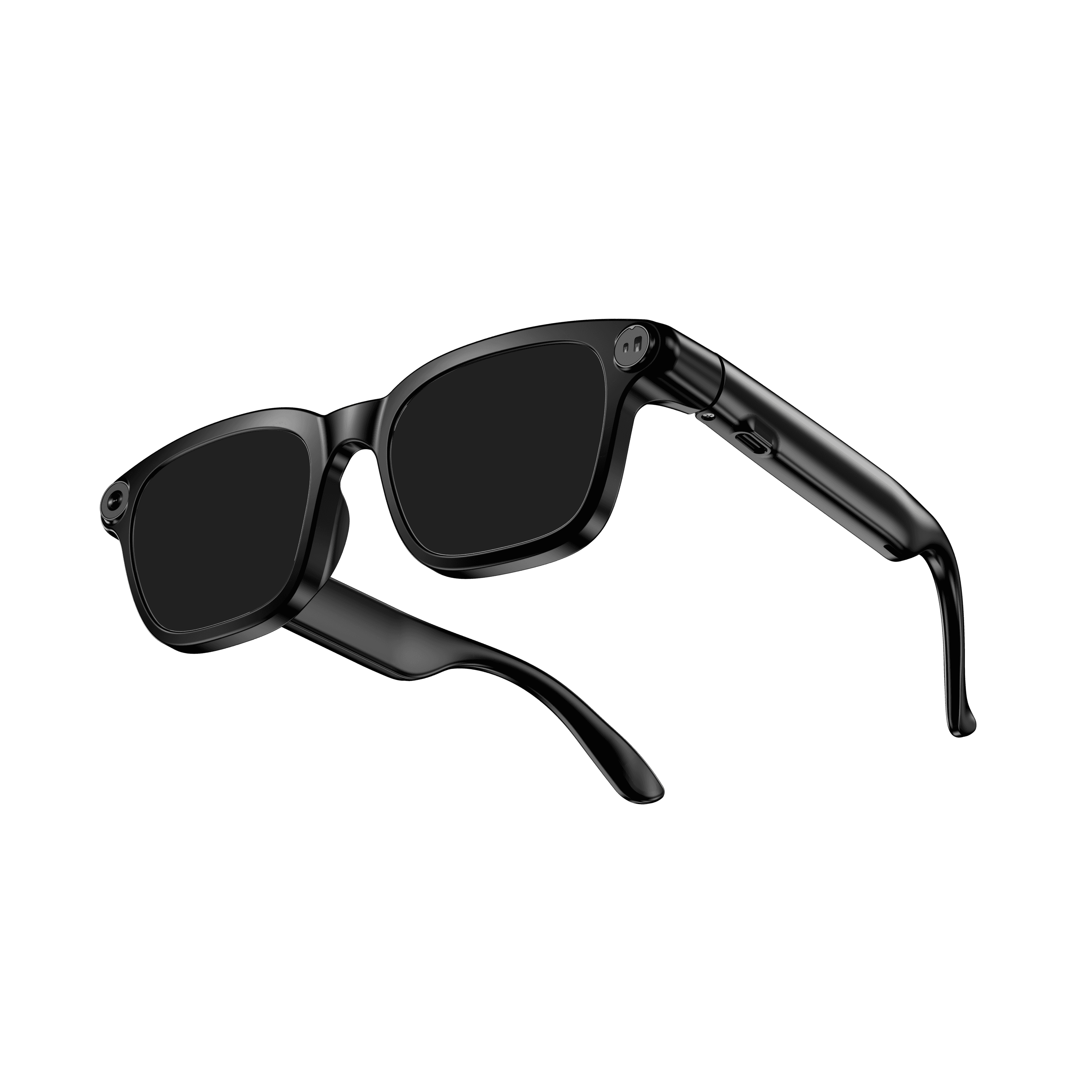 OXIVUE M08$99 at checkout | 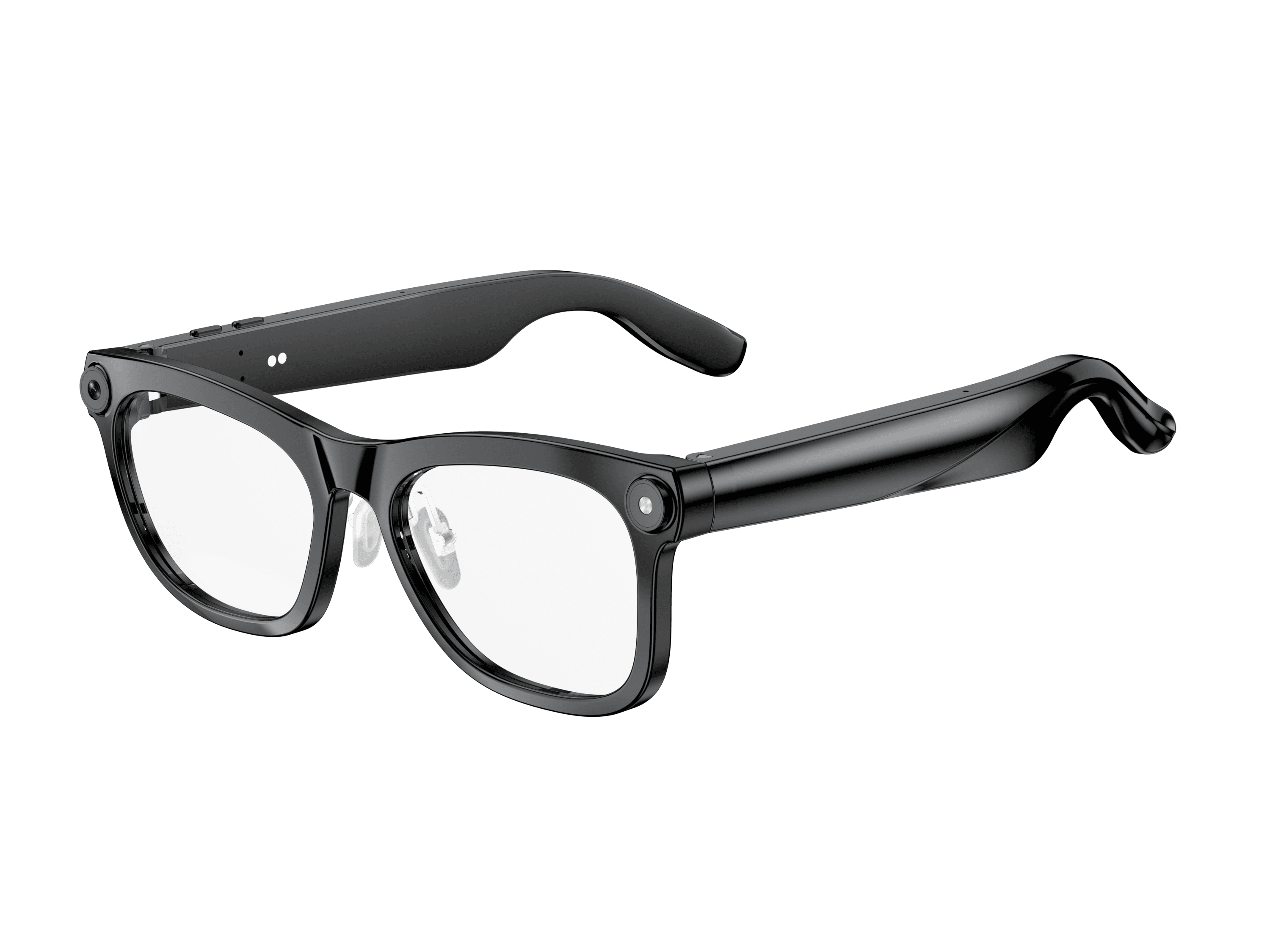 OXIVUE M02C$109 at checkout | 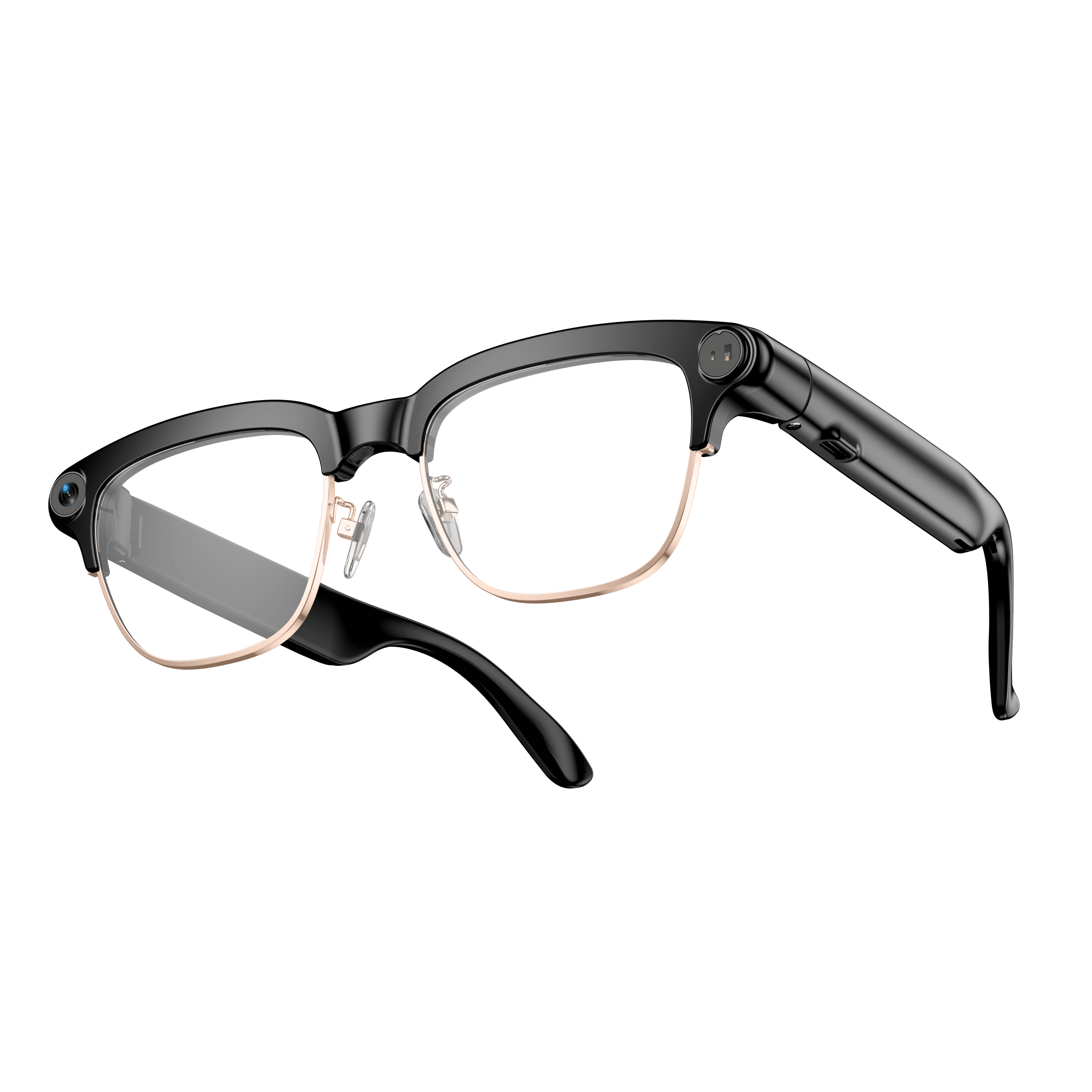 OXIVUE M08C$119 at checkout | |
|---|---|---|---|
| Camera | 8 MP | 8 MP | 8 MP |
| Weight | ~42 g | ~41 g | ~42 g |
| Water rating | — | IP65 | — |
| Lenses | Sunglasses · Photochromic · Clear | Sunglasses · Photochromic · Clear | Sunglasses · Photochromic · Clear |
| Translation | 40+ languages | 40+ languages | 40+ languages |
| Visual AI | — | Yes | — |
| Metal trim | — | — | Gold · Silver |
From each frame’s product page. Every model: open-ear audio, Bluetooth 5.4, no subscription. Full spec table
What these frames won’t do
- No prescription lenses yet, on any model. If you need vision correction all day, these can't replace your glasses.
- No display. Nothing appears in your view; you hear answers and capture photos and video.
- Open-ear speakers leak some sound at high volume and won't block out a loud train or a windy road the way sealed earbuds do.
- Translation, music, calls and the assistant need your phone nearby and connected. Translation pauses after each sentence, and only you hear the translated audio; the other person reads the reply on your phone.
- M08: no published water rating, so keep it out of heavy rain and spray.
Check these before you order: see the warranty and refund policy.