Meta glasses · What comes next
Meta glasses Gen 4: what Meta has announced, and what is only reported
Is there a Meta glasses Gen 4, or a second Meta Ray-Ban Display? This guide reads what Meta published around Connect on September 23, 2026, sets it beside the press reports about unreleased models, and labels each claim as announced, reported, or not found. Every Meta statement is dated and every report names its outlet. Facts checked October 31, 2026.
Still deciding? Get the M02C, M08 and M08C comparison in your inbox, with your new-customer price already applied.
One email with the comparison, one follow-up a few days later. Unsubscribe any time.
1. Has Meta announced a Gen 4?
We found no Meta announcement of a Gen 4. On October 31, 2026 we read three Meta pages from Connect week: the newsroom post “Introducing Ray-Ban Meta Audio and More AI Glasses Styles” (September 23, 2026), the Meta blog’s “Everything We Announced at Meta Connect 2026” (September 23, 2026) and the newsroom’s “The Biggest News From Connect 2026” (listed September 24, 2026). None mentions a Gen 4, and none mentions a successor to Meta Ray-Ban Display. The highest generation number any of them uses is Ray-Ban Meta (Gen 3), which the newsroom post calls “the next generation” of Meta’s AI glasses.
That is a statement about what Meta has published, not a prediction. It does not say a Gen 4 will never exist, and we are not guessing when one might. The two Ray-Ban Meta launch dates we cite are both in the past: Gen 2 was announced on September 17, 2025, starting at $379, and Gen 3 on September 23, 2026, starting at $449. The three posts give no date for any further generation. The closest the newsroom post comes is a general line about software: it credits “regular software updates,” new AI features and a growing ecosystem of apps for making AI glasses better over time. For what Gen 3 itself changed, see our Meta glasses Gen 3 guide.
2. What Meta has put dates on
The table lists the main forward-looking items we found in Meta’s Connect 2026 posts, in Meta’s own timing words, as read on October 31, 2026. It is not exhaustive: the Connect recap also dates some software features for Meta Ray-Ban Display. “Announced” means Meta itself said it. Several dates have already passed.
| Item | What Meta says | Timing Meta gave | Status |
|---|---|---|---|
| Ray-Ban Meta (Gen 3) | Wayfarer, Aviator and Zena, 27 color and lens combinations, from $449 | “Available today” (September 23, 2026) | Announced |
| Ray-Ban Meta Audio | Clubmaster and Burbank styles, 43 g, from $349 | Pre-orders open September 23, 2026; ships October 13 | Announced |
| Meta Ray-Ban Display | Online ordering; on sale in Canada and the UK; pre-orders in France, Italy and Germany | Availability October 13 in France, Italy and Germany | Announced |
| Dolby Atmos capture | Video capture in Dolby Atmos on Meta AI glasses (the newsroom post lists it under Ray-Ban Meta (Gen 3)) | “Later this year” | Announced |
| Hearing enhancement | Add-on for supported AI glasses, $149.99 or with a Meta One subscription | Launching in the US “later this year” | Announced |
| Muse on AI glasses | Meta’s personal AI agent, hands-free | “In the coming months” | Announced |
| More styles | Meta says there will be “over 100 styles of AI glasses” across Ray-Ban, Oakley and Meta Glasses | By the end of 2026 | Announced |
| Meta VR Glasses | VR glasses, $1,299.99 (a separate product from the AI glasses above) | Spring 2027 | Announced |
| Gen 4 or Display 2 | Not mentioned in the three posts we read | None | No announcement found (checked October 31, 2026) |
Two things stand out. The latest date we found in Meta’s posts is spring 2027, for Meta VR Glasses, which the Connect recap puts under its own heading. And for the display glasses, the forward-looking lines we read are about where they are sold and how they are ordered (more countries, online ordering) and about software such as cycling and transit directions, not about a new model. Our Meta Ray-Ban Display guide covers the current one.
Meta has also said something longer-term. In its September 2025 launch post for the Display (published September 17, 2025, updated September 30, 2025), Meta wrote that it is “continuing to work on a consumer version of our Orion prototype” and asked readers to “stay tuned.” That is a direction of travel. The post gives no product name, date or price for that consumer version.
3. What is only reported
The reports in this guide trace back to The Informationand Bloomberg. We found no Meta statement confirming the details below (checked October 31, 2026), so the status of every row is “reported.” We add nothing of our own, and a codename in a report is a label, not a product.
| Outlet and date | Original source | What it reported | Meta’s position |
|---|---|---|---|
| heise online, February 19, 2026 | The Information, two unnamed people | A second Ray-Ban Display (“Hypernova 2”) planned for 2026, with unclear differences; consumer AR glasses (“Artemis”) for 2027 according to one source | Heise noted there was no official Meta statement |
| 9to5Google (Ben Schoon), June 1, 2026 | The Information | Codenames and timing: “Modelo” as soon as June, “Luna” in fall, “RBM2 Refresh” in fall (likely a variation on existing Ray-Ban Meta glasses), “Mojito VIP” in December; “Artemis” and “SSG” (supersensing glasses) not necessarily in 2026 | The article includes no Meta comment |
| Tom’s Guide, republished by Yahoo Tech, September 23, 2025 | Bloomberg’s Mark Gurman | Glasses with a display in each lens; an original 2027 target reportedly brought forward; the article gives no release window | The article cites no Meta confirmation of the dual-display details |
Read these with three cautions. First, no source we read ties any codename to a product Meta has since announced, so we do not say which, if any, of Ray-Ban Meta (Gen 3), Ray-Ban Meta Audio or the new Meta Glasses styles match a reported name. Second, reports give seasons and months, while the Meta pages we read give no timing for any of these codenames, and we found no Meta mention of a “Mojito VIP” in the three posts we read (checked October 31, 2026). Third, the descriptions are thin. The February report itself says how a second Display would differ is unclear, and the June list gives no features for most of its codenames.
4. Hypernova, Display 2 and Gen 4: what the names mean
“Gen 4” is a search phrase, and we found no Meta product with that name (checked October 31, 2026). The Connect 2026 posts label one Ray-Ban line Ray-Ban Meta (Gen 3), and the 2025 launch post used Ray-Ban Meta (Gen 2). Other names in the Connect posts are Ray-Ban Meta Audio, Meta Glasses and Meta Ray-Ban Display, with Oakley named as a brand. Someone typing “Meta glasses Gen 4” is asking about whatever follows Gen 3, and in the pages we read, Meta has not said.
“Hypernova” is a reported codename. Heise’s February 19, 2026 article, citing The Information, describes a new version of the Ray-Ban Meta Display as internally codenamed “Hypernova 2.” MIXED’s January 21, 2025 article, on a Bloomberg roadmap, described a Hypernova model expected in 2025 with a display in the lower part of the right lens, but did not say it was the Meta Ray-Ban Display. The three Meta pages we read use the name Meta Ray-Ban Display and do not use “Hypernova.”
“Display 2” is likewise a press phrase: heise’s headline uses “Ray-Ban Display 2.” None of Meta’s three Connect 2026 pages uses it. If you see a shopping page or video promising Gen 4 or Display 2 specs, check whether it cites a Meta page; the three we read do not.
5. How to tell an announcement from a rumor
A claim about unreleased glasses is announced only when Meta says it, on a Meta page. Four checks sort most stories quickly:
- Who said it.Meta’s newsroom (about.fb.com/news) and blog (meta.com/blog) are Meta speaking. A story that says “according to people familiar” is a report, even when the outlet is respected.
- Codename or product name. Modelo, Luna, Mojito VIP and Hypernova are labels from reports. A product has a name on a Meta page.
- A price or date with no Meta page behind it. If neither is on a Meta page, it is not announced, however confident the headline.
- The publication date. A story from 2025 about 2026 plans may already be out of date. Every report above, and the MIXED article in the previous section, was published before Connect 2026, and the Connect 2026 posts we read do not announce a second Display or dual-display glasses.
That last point is only an observation about the Connect 2026 posts we read. It does not mean the reports were wrong; it means those products do not appear in the three Meta pages we read (checked October 31, 2026).
6. Wait for the next model, or buy now?
The Meta pages we read give no date to wait for, so the question is whether a pair you can buy now does what you need. If you want a display, Meta’s Connect 2026 posts discuss the Meta Ray-Ban Display, and press reports of a second generation come with no confirmed date. If you want camera glasses without a display, Ray-Ban Meta (Gen 3) is the model those posts call “the next generation,” and our Gen 3 guide and Gen 2 guide set out the differences between the generations. For prices across the range, see how much Meta glasses cost and which Meta glasses to buy.
What Meta does date, for existing glasses, is software. Muse is coming to its AI glasses “in the coming months,” Dolby Atmos capture and a US hearing feature are due “later this year,” and Meta describes the hearing feature as “coming to supported AI glasses.” Check Meta’s site for which models are supported before assuming yours is included. If you are thinking of selling an older pair first, our Meta glasses trade-in guide covers the options.
7. Where OXIVUE fits
OXIVUE publishes this guide and sells the M08 described below. We do not speculate about anyone’s future products here, including our own. What we can state is what you can buy now: the M08 is $99 at checkout for one pair (listed $149; two or more pairs are 50% off all eyewear), with an 8 MP camera, open-ear speakers, about 42 g of weight and listed figures of 7 hours of listening and 4 hours of calls. It also does translation in 40+ languages through its free companion app; the translated audio is heard only by the wearer.
It is not a substitute for what Meta is reported to be working on. The M08 has no display, no prescription lenses and no Meta AI, and it is not a hearing aid: it is an open-ear audio frame. A capture starts only with a visible touch on the temple, and you should ask before recording people. If a display or Meta’s assistant is what you are waiting for, our smart glasses with display guide explains the three display types. If you want camera, audio and translation in a frame you can buy now, compare every model on the comparison page.
Shipping, refunds and warranty. Free shipping from $99. US orders typically arrive in 5–9 business days. International orders take 9–14 business days after shipment. Import VAT or duties outside the US are paid by the recipient. No refunds except transit damage (replaced or refunded); faults are repaired or replaced under the 2-year warranty; change of mind and unmet expectations are not refundable. None of our frames take prescription lenses. Read the refund policy and the shipping policy.
Frequently asked questions
Is there a Meta glasses Gen 4?
We found no Gen 4 announcement. Meta's Connect 2026 posts, dated September 23 and 24, 2026, call Ray-Ban Meta (Gen 3) "the next generation" of its AI glasses and do not mention a Gen 4 (checked October 31, 2026). Press reports describe unreleased Meta glasses, including a second-generation Ray-Ban Display, but we found no Meta statement confirming them. Treat any Gen 4 release date or price you see as unconfirmed.
What are the new Meta glasses called?
Ray-Ban Meta (Gen 3) and Ray-Ban Meta Audio are the new Ray-Ban models, announced on September 23, 2026. Gen 3 starts at $449 in Wayfarer, Aviator and Zena styles. Audio pre-orders started at $349 for a 43 g frame, with shipping from October 13. Meta also announced new Meta Glasses styles, such as the Adventurer with a plug-in case from $249, and Meta VR Glasses at $1,299.99 for spring 2027. Prices are as given in Meta's September 23, 2026 posts, read October 31, 2026.
When is the Meta glasses Gen 4 release date?
We found no Meta release date for a Gen 4. None of the three Meta pages we read mentions a Gen 4 (checked October 31, 2026), so any date you read is not from those pages. The furthest-out date in Meta's Connect 2026 posts is spring 2027, for Meta VR Glasses; the nearer ones are "later this year" for the US hearing feature and Dolby Atmos capture. Meta's posts date the Gen 2 announcement September 17, 2025 and the Gen 3 announcement September 23, 2026.
How much will the Meta glasses Gen 4 cost?
We found no Meta price for a Gen 4, because we found no Gen 4 announcement. The nearest numbers are the starting prices in Meta's September 23, 2026 newsroom post: from $449 for Ray-Ban Meta (Gen 3) and from $349 for Ray-Ban Meta Audio. Gen 2 launched from $379 on September 17, 2025. Check meta.com for the live price before you buy, because it can change.
Is there a Meta Ray-Ban Display 2?
We found no official announcement of one (checked October 31, 2026). On February 19, 2026, heise reported, citing The Information, that a second Ray-Ban Display was planned for 2026, and noted that there were no official statements from Meta. Meta's Connect 2026 Display news concerns availability (sales in Canada and the UK, and availability in France, Italy and Germany from October 13) and software features.
What is Meta Hypernova?
Hypernova is a reported codename, not a product name on the Meta pages we read. Heise's February 19, 2026 article, citing The Information, describes a new version of the Ray-Ban Meta Display as internally codenamed "Hypernova 2". MIXED, citing Bloomberg on January 21, 2025, described a Hypernova model expected in 2025 with a display in the lower part of the right lens, without saying it was the Meta Ray-Ban Display. The three Meta pages we read use the name Meta Ray-Ban Display and do not use "Hypernova".
Should I wait for the next Meta glasses?
Not for a date: the Meta pages we read give none. We found no Meta announcement of a Gen 4 or a Display successor, so waiting means waiting for an unannounced product. What Meta does date is software for existing glasses: Muse "in the coming months" and a US hearing feature "later this year" on supported models. Our Gen 3 guide compares Gen 2 and Gen 3 specs, so you can decide on what is on sale.
OXIVUE frames side by side
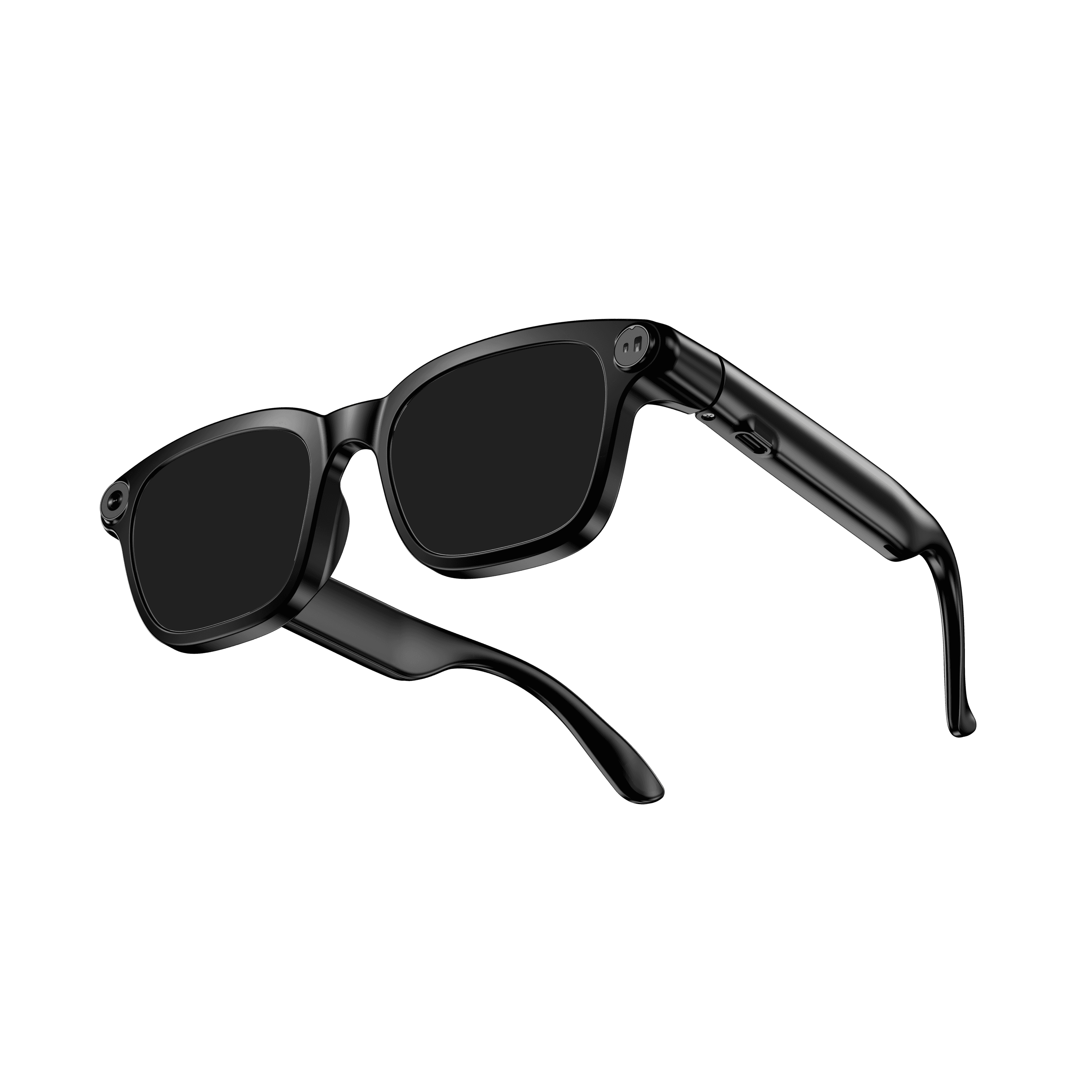 OXIVUE M08$99 at checkout | 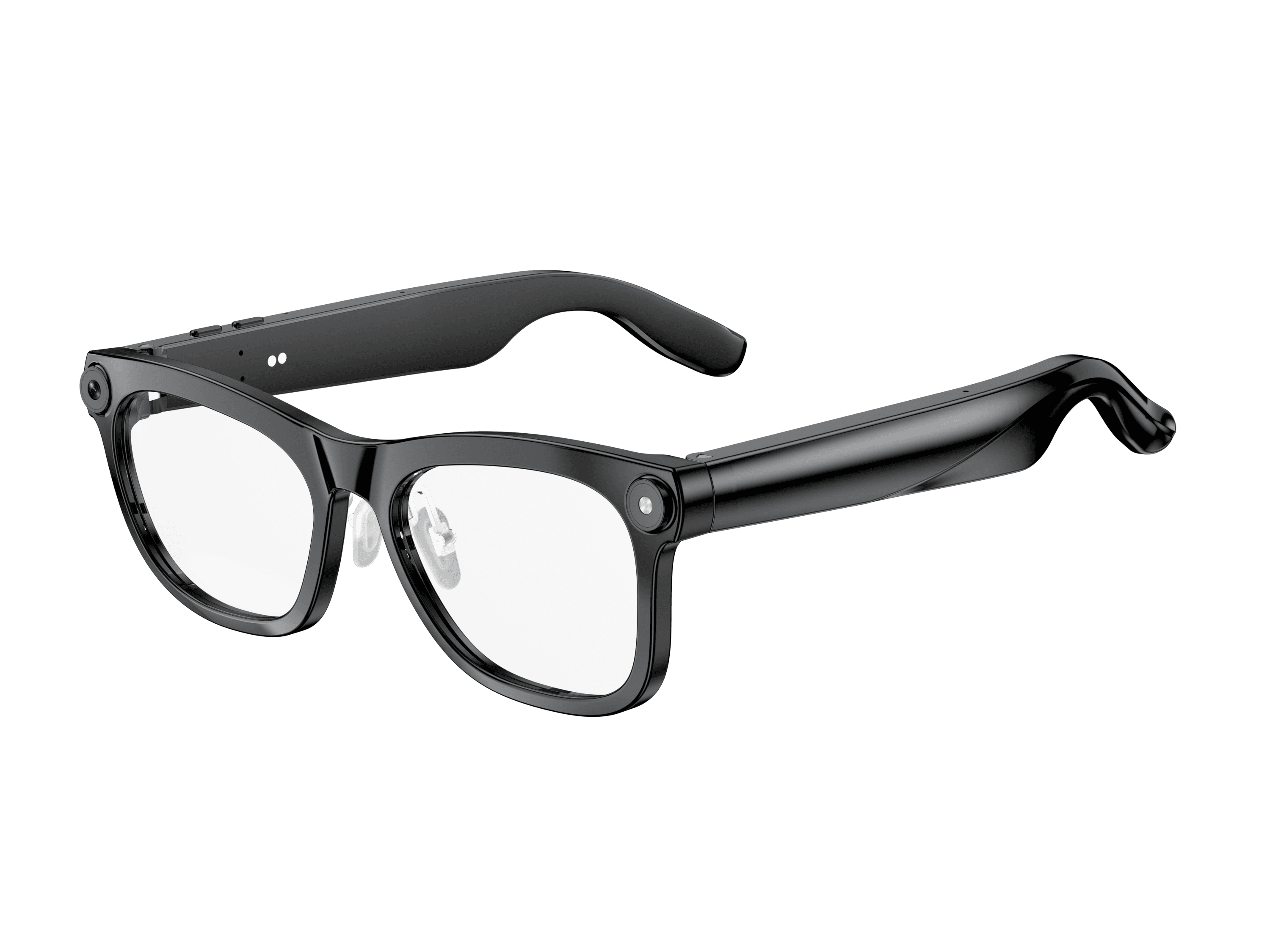 OXIVUE M02C$109 at checkout | 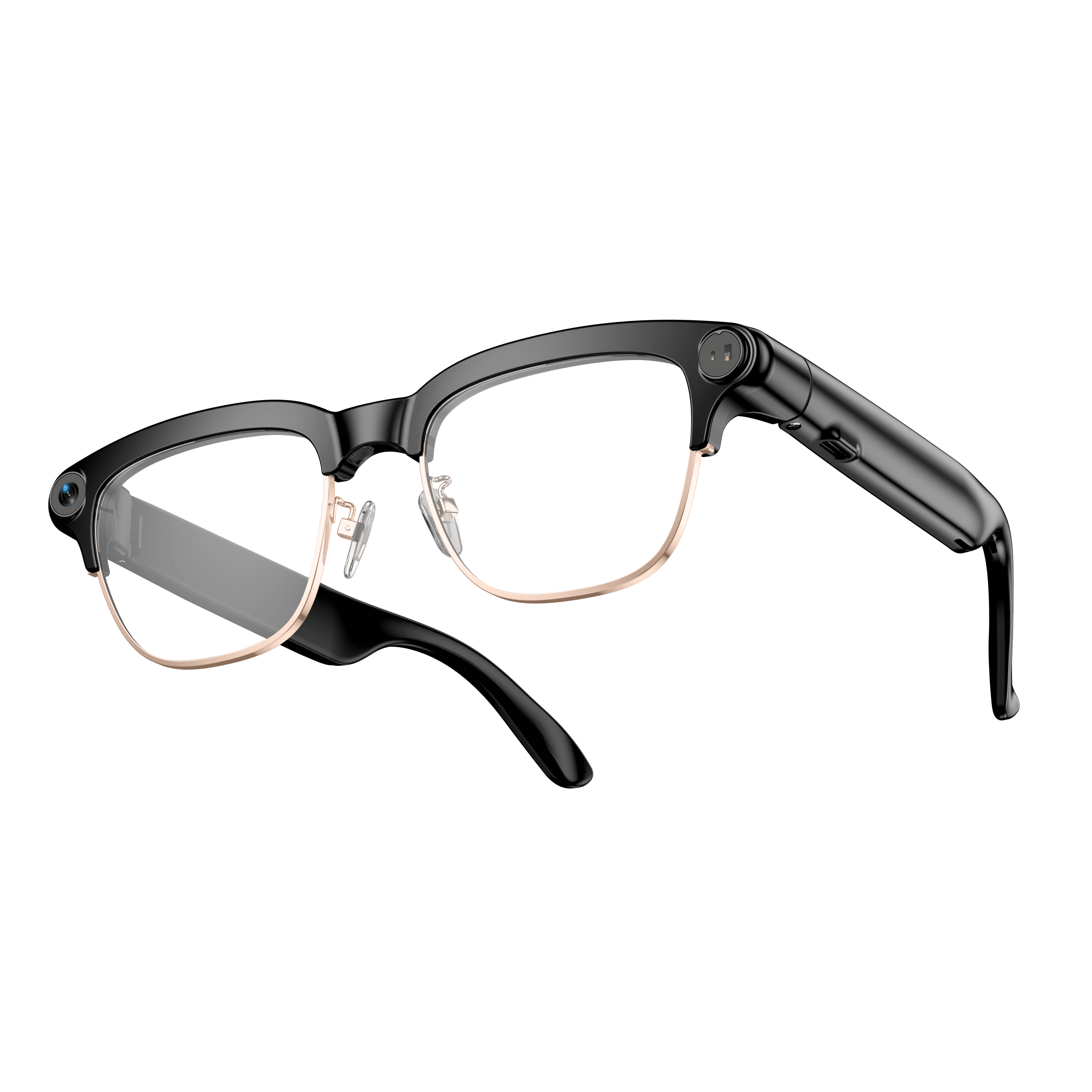 OXIVUE M08C$119 at checkout | |
|---|---|---|---|
| Camera | 8 MP | 8 MP | 8 MP |
| Weight | ~42 g | ~41 g | ~42 g |
| Water rating | — | IP65 | — |
| Lenses | Sunglasses · Photochromic · Clear | Sunglasses · Photochromic · Clear | Sunglasses · Photochromic · Clear |
| Translation | 40+ languages | 40+ languages | 40+ languages |
| Visual AI | — | Yes | — |
| Metal trim | — | — | Gold · Silver |
From each frame’s product page. Every model: open-ear audio, Bluetooth 5.4, no subscription. Full spec table
What these frames won’t do
- No prescription lenses yet, on any model. If you need vision correction all day, these can't replace your glasses.
- No display. Nothing appears in your view; you hear answers and capture photos and video.
- Open-ear speakers leak some sound at high volume and won't block out a loud train or a windy road the way sealed earbuds do.
- Translation, music, calls and the assistant need your phone nearby and connected. Translation pauses after each sentence, and only you hear the translated audio; the other person reads the reply on your phone.
- M08: no published water rating, so keep it out of heavy rain and spray.
Check these before you order: see the warranty and refund policy.