Buying guide · 2026
The best smart glasses of 2026, sorted by what you need.
A display, a camera, only audio, or a pair under $200: those are four different purchases, and one winner cannot cover all of them. This list of smart glasses and AI glasses sorts the field by need, uses each maker's own published specs and prices, and says plainly where we sit and what we have not tested.
Still deciding? Get the M02C, M08 and M14 comparison in your inbox, with your new-customer price already applied.
One email with the comparison, one follow-up a few days later. Unsubscribe any time.
How this list was built, and what we did not do
We make AI glasses, so read this as a list written by a maker, not by a lab. Two rules shape it. First, every spec and price for another brand comes from that brand’s own product page, read on October 20, 2026. Where a maker’s page does not state a number, the table below says so instead of filling the gap from memory or a review. Second, we have not tested the other brands hands-on. We are not going to give them scores, sound ratings or photo verdicts we cannot back up.
What we can do honestly is sort. A display frame, a camera frame and an audio-only frame solve different problems at very different prices, so a single winner would mislead whichever buyer it does not fit. The picks below are grouped by the job, and OXIVUE appears in one group only: under $200, where it genuinely fits.
A note on words: “smart glasses” and “AI glasses” overlap. Smart glasses is the umbrella term for any connected eyewear; AI glasses are the ones built around an assistant or translation. Every camera frame on this page is both. Our guide to AI glasses vs smart glasses defines the categories, including display and AR glasses.
Answer four questions before you look at models
- Do you need to read something in your eye? Directions, messages, teleprompter notes, subtitles. If yes, you need a display frame, and the price floor on this list is $599. If no, you save a lot of money and weight.
- Do you want a camera on your face? A camera is the feature people buy these for, and also the one that makes some offices, gyms and classrooms uncomfortable. If you want none, look at display or audio-only frames. Our guide to camera-free smart glasses covers that choice.
- Do you need your prescription in the lenses? Some makers glaze prescription lenses; many camera frames do not. OXIVUE frames do not take prescription lenses today. See prescription smart glasses.
- What is your budget? The field on this page runs from $149 to $799 and up. The biggest jump in price is the display, not the camera.
Best smart glasses with a display
Even Realities G2 · from $599 · display, no camera
Pick it if: you want text in your eye and no camera at all.
Even Realities describes the G2 as display smart glasses. Its own page lists a weight of 36 grams, calls the frame camera-free by design, says input comes from a built-in microphone instead of a camera, and offers custom prescription lenses from −12.00 to +12.00. It quotes up to two days of battery life. The price on its store page is from $599 (checked October 20, 2026). If you want a camera, this is the wrong pair, and that is the point of it. Our Even G2 alternatives guide covers the trade.
Meta Ray-Ban Display · from $799 · display, controlled from the wrist
Pick it if:you want a display and you already live in Meta’s apps.
Meta lists the Meta Ray-Ban Display starting at $799 (checked October 20, 2026). Its page describes a private in-lens display for messages and alerts, navigated with the Meta Neural Band, worn on the wrist and controlled with hand gestures. The same page lists a 12 MP camera and up to 6 hours of battery, and says you can watch Instagram reels, stories and posts on the display. It did not state a weight, so we leave that blank rather than guess. See Meta Ray-Ban Display alternatives for what a display costs you and what it buys.
Best AI camera glasses
A camera frame costs from $379 at Meta and $499 at Lucyd on their own sites, read October 20, 2026; neither of the two below lists a display.
Ray-Ban Meta Gen 2 · from $379 · camera plus Meta AI
Pick it if: you want the camera glasses most people already know, tied into Meta AI.
Meta lists Ray-Ban Meta Gen 2 starting at $379 (checked October 20, 2026) and pitches it around Meta AI. Its page states an ultra-wide 12 MP camera, open-ear speakers and up to 8 hours of battery, in styles including Wayfarer, Skyler and Headliner. It did not state a weight, so the table leaves that blank. Our Meta glasses price guidecovers every Meta model’s price, and Ray-Ban Meta alternatives covers what a cheaper frame gives up.
Lucyd VIVE Eagle · $499 · camera, with prescription through partners
Pick it if: you want a camera frame that can be glazed to your prescription through an optical partner.
Lucyd lists the VIVE Eagle at $499 (checked October 20, 2026). Its page states a 12 MP ultra-wide camera, up to about 4.5 hours of continuous music playback, an IP54 rating and a weight starting at 48.5 g, with AI services powered by Google Gemini and OpenAI GPT depending on region, and live translation in 90+ languages. On prescriptions, Lucyd’s own FAQ says the VIVE Eagle can be fitted with prescription lenses through participating optical retail partners, subject to an in-store evaluation by an eye care professional. If you need your prescription in a camera frame, confirm that with a partner before you order.
Oakley Meta Vanguard · $499 · camera for sport
Meta lists the Oakley Meta Vanguard starting at $499 (checked October 20, 2026) and describes it as AI glasses designed for high-intensity activities. Its page states an ultra-wide 12 MP camera and up to 9 hours of normal use, and pairs it with a compatible Garmin device, sold separately, for training insights. If you want a sport wrap at under half that price, the OXIVUE M14 below is the one to compare. Our Vanguard alternatives guide sets them side by side.
Best audio-only AI glasses
Lucyd Armor · $149 · no camera, safety-rated
Pick it if: you want calls and music in a safety frame, and no camera on your face.
Lucyd lists the Armor Photochromic at $149 (checked October 20, 2026), with ANSI Z87.1-certified lenses, open-ear speakers and a noise-canceling mic, and up to 8 hours of music per charge at moderate volume. Its page lists no camera, and says the Armor takes single-vision and progressive lenses from −2 to +8 sphere. An audio-only frame is a way to try the category without a camera; our smart glasses vs earbuds guide explains when open-ear audio beats a pair of earbuds and when it does not.
Best smart glasses under $200
This is our own group, so we keep it short and let the numbers speak. All four OXIVUE frames have an 8 MP camera, open-ear audio, Bluetooth 5.4 and live translation, with no Meta account and no subscription. The differences:
- M02C · $109 at checkout. The one to buy if you are buying one. Sony 219 sensor with dual stabilisation, IP65, the voice wake word with visual AI, magnetic pogo charging, about 41 g, 40+ languages.
- M08 · $99 at checkout. The lowest price in the line. About 42 g, 7 h listening and 4 h calls on a ~300 mAh cell, 40+ languages.
- M08C · $119 at checkout. The same battery budget as the M08, with gold or silver trim, for people who wear them to meetings.
- M14 · $149 at checkout. A 52 g wrap shield built for motion: 8 MP Sony IMX219, stabilised 1080p video, IPX4, 139 languages through the companion app, and a battery split the other way round (4 h listening, 7 h calls).
None of them has a display, and none takes prescription lenses. For the full four-way comparison, read the best AI glasses under $200.
Side by side: makers’ own numbers
A blank cell means the maker’s page we read did not state it. That is more useful than a guess.
| Glasses | Price | Display | Camera | Weight | Battery (maker’s figure) | Prescription |
|---|---|---|---|---|---|---|
| Meta Ray-Ban Display | From $799 | Yes, in-lens | 12 MP | Not stated | Up to 6 h | Not on page read |
| Even Realities G2 | From $599 | Yes | None | 36 g | Up to two days | −12.00 to +12.00 |
| Lucyd VIVE Eagle | $499 | None listed | 12 MP ultra-wide | From 48.5 g | Up to ~4.5 h music | Via optical retail partners |
| Oakley Meta Vanguard | From $499 | Not stated | 12 MP ultra-wide | Not stated | Up to 9 h | Not on page read |
| Ray-Ban Meta Gen 2 | From $379 | None listed | 12 MP ultra-wide | Not stated | Up to 8 h | Not on page read |
| OXIVUE M14 | $149 at checkout ($199 list) | No | 8 MP Sony IMX219 | 52 g | 4 h listen · 7 h call | No (fixed shield) |
| OXIVUE M08C | $119 at checkout ($169 list) | No | 8 MP | ~42 g | 7 h listen · 4 h call | No |
| OXIVUE M02C | $109 at checkout ($159 list) | No | 8 MP · Sony 219 | ~41 g | ~290 mAh cell | No |
| OXIVUE M08 | $99 at checkout ($149 list) | No | 8 MP | ~42 g | 7 h listen · 4 h call | No |
| Lucyd Armor | $149 | None listed | None listed | Not stated | Up to 8 h music | −2 to +8 sphere |
Read October 20, 2026.Prices and specs change, so check the maker’s own page on the day you buy. Every OXIVUE spec is side by side on our comparison page.
If you buy OXIVUE: the terms, stated plainly
- Price. $149 to $199 for the four frames above. While the New-Vision Event runs, one pair of eyewear gets $50 off, and two or more pairs of eyewear in one cart get 50% off every pair. The discount is applied at checkout; watches are excluded.
- Shipping.Free on orders from $99 to most destinations. US orders, every model and lens, typically arrive in 5–9 business days; international orders take 9–14 business days after shipment. The shipping policy has the country list.
- Warranty. 2 years on eyewear, handled by repair or replacement. See the warranty.
- Refunds. No refunds except transit damage (replaced or refunded); faults are repaired or replaced under the 2-year warranty; change of mind and unmet expectations are not refundable. Statutory rights where you live still apply. Details are in the return policy, so decide with the table above before you order.
For what launched in 2026 and what is still only announced, see our dated list of new smart glasses in 2026, sorted by on sale, pre-order and announced.
Bottom line
The best smart glasses, AI or not, are the ones built for your job. If you need text in your eye, pay for a display: Even Realities G2 from $599 without a camera, or Meta Ray-Ban Display from $799 with the Meta Neural Band to control it. If you want a camera inside Meta’s apps, Ray-Ban Meta Gen 2 starts at $379, and if you need that camera in your own prescription, Lucyd’s VIVE Eagle is $499. If you want capture, open-ear audio and translation without the ecosystem or the price, the OXIVUE M02C at $109 at checkout is the one pair we would pick, the M08 at $99 at checkout is the lowest price, and the M14 at $149 at checkout is the frame for sport. Not sure the category is for you at all? Start with are smart glasses worth it.
For VIVE’s own price, specs and retailer list for the VIVE Eagle, see our HTC VIVE Eagle smart glasses page.
Frequently asked questions
What are the best smart glasses in 2026?
It depends on the job. If you need to read text in the lens, the display models are Even Realities G2 (from $599, camera-free) and Meta Ray-Ban Display (from $799, with the Meta Neural Band). If you want AI glasses with a camera inside Meta's ecosystem, Ray-Ban Meta Gen 2 starts at $379. Lucyd sells the VIVE Eagle at $499 with a 12 MP camera. Under $200, OXIVUE sells four camera frames from $99 to $149 at checkout ($149 to $199 list). Prices were read on each maker's site on October 20, 2026.
What are the top 10 smart glasses?
There is no honest fixed top 10, so we do not publish one. A display frame, a camera frame and an audio-only frame are not competing for the same buyer, and a single ranking mixes them. This guide sorts the field into four needs (display, camera, audio only, under $200) and names the picks in each, using only specs and prices from the makers' own pages, read October 20, 2026. We have not tested the other brands hands-on, and we say so rather than rank them on an invented score.
Are any smart glasses worth it?
Yes, when the feature you want is one you would otherwise reach for your phone to do: taking a photo at eye level, taking a call with your hands full, asking an assistant a question or hearing a translation. They are not worth it if you expect phone-grade photos, or a screen in your eye for the price of camera glasses. Our longer answer is in the guide on whether smart glasses are worth it.
Is there a difference between AI glasses and smart glasses?
Only a small one, and the terms overlap. Smart glasses is the umbrella term for connected eyewear: audio, a camera, a display or a mix. AI glasses are smart glasses built around an assistant or features such as translation, with or without a display. Ray-Ban Meta Gen 2 and the OXIVUE frames on this page are both: smart glasses with an AI assistant and no display. Our guide on AI glasses vs smart glasses defines the categories in full.
Can I watch Netflix on smart glasses?
Not on most of them, and not on any OXIVUE frame, because they have no display. Video needs a display in the lens. Of the display glasses on this page, Meta's own page lists watching Instagram reels, stories and posts on Meta Ray-Ban Display; neither Meta's nor Even Realities' page we read on October 20, 2026 mentions Netflix. If streaming films is the goal, check the maker's own list of supported apps before you buy.
What are the best smart glasses coming out in 2026?
We only list glasses you can buy on the maker's site today, with a price shown, because a launch announcement is not a spec sheet. Makers keep announcing new frames, so check the maker's own page on the day you buy. The current display, camera and audio-only picks and their prices as of October 20, 2026 are in the comparison table on this page.
Are there any knock-off Meta glasses available?
Yes, there are cheap look-alikes, and there are also independent AI glasses from named companies that do a similar job under their own brand and warranty. They are not the same thing. OXIVUE is the second kind: its own model line, prices from $149 list, a 2-year warranty on eyewear, and no Meta account or subscription. Our guide to Meta glasses dupes explains how to tell them apart.
What are the best AI glasses under $200?
Among OXIVUE frames: the M02C at $109 at checkout (about 41 g, Sony 219 sensor with dual stabilisation, IP65) for one pair that does the most; the M08 at $99 at checkout (about 42 g) for the lowest price in our line; the M08C at $119 at checkout with gold or silver trim; and the M14 at $149 at checkout, a 52 g wrap shield that translates 139 languages. All four have an 8 MP camera and Bluetooth 5.4. Our under-$200 guide compares them in detail.
OXIVUE frames side by side
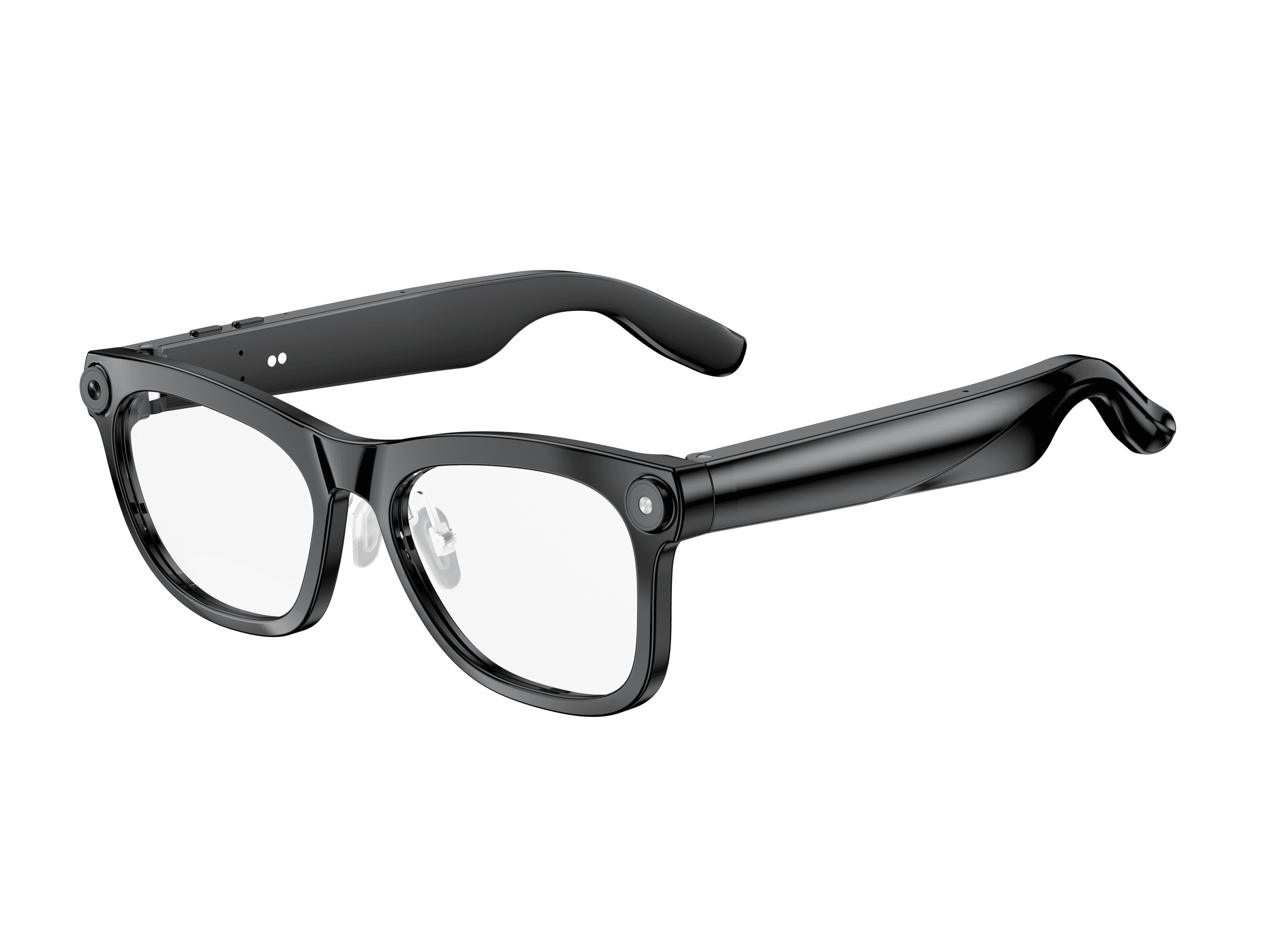 OXIVUE M02C$109 at checkout | 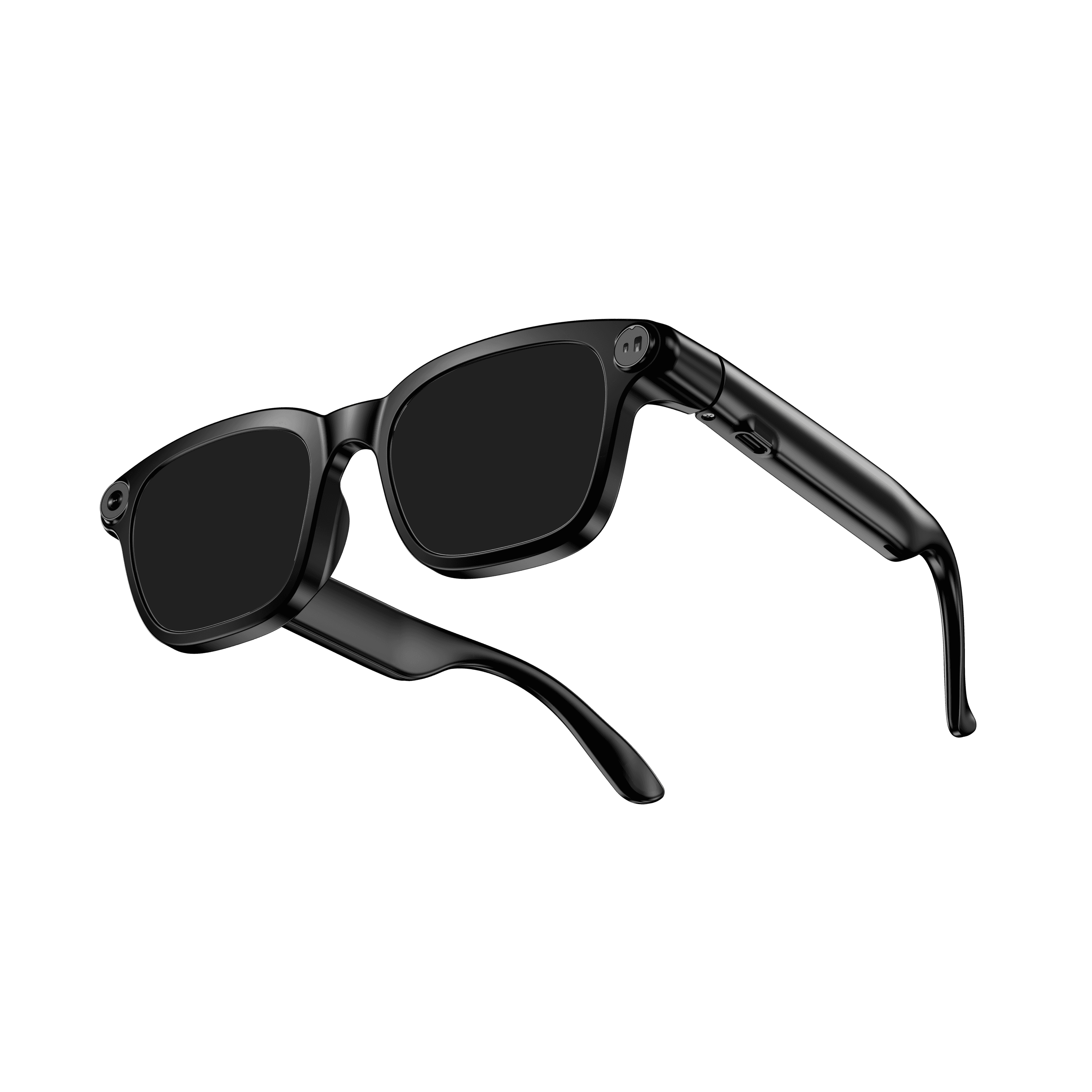 OXIVUE M08$99 at checkout | 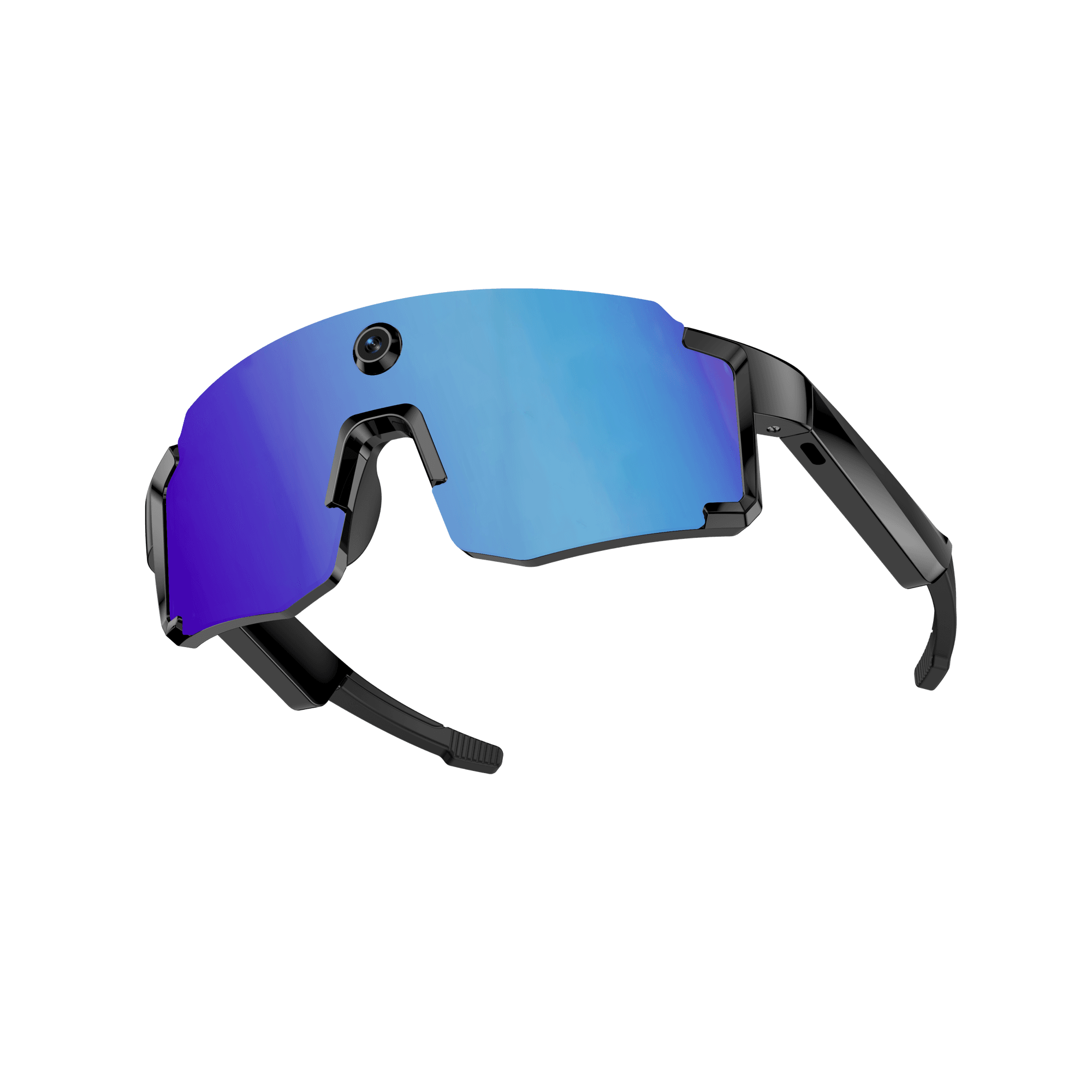 OXIVUE M14$149 at checkout | |
|---|---|---|---|
| Camera | 8 MP | 8 MP | 8 MP |
| Weight | ~41 g | ~42 g | 52 g |
| Water rating | IP65 | — | IPX4 |
| Lenses | Sunglasses · Photochromic · Clear | Sunglasses · Photochromic · Clear | Fixed wrap shield · 4 colours |
| Translation | 40+ languages | 40+ languages | 139 languages |
| Visual AI | Yes | — | — |
| Onboard memory | — | — | 4 GB onboard |
From each frame’s product page. Every model: open-ear audio, Bluetooth 5.4, no subscription. Full spec table
What these frames won’t do
- No prescription lenses yet, on any model. If you need vision correction all day, these can't replace your glasses.
- No display. Nothing appears in your view; you hear answers and capture photos and video.
- Open-ear speakers leak some sound at high volume and won't block out a loud train or a windy road the way sealed earbuds do.
- Translation, music, calls and the assistant need your phone nearby and connected. Translation pauses after each sentence, and only you hear the translated audio; the other person reads the reply on your phone.
- M02C: IP65 resists dust and water jets, not immersion. No swimming, no saltwater.
- M08: no published water rating, so keep it out of heavy rain and spray.
- M14: one-piece shield, so the lens can't be swapped for clear or photochromic.
- M14: IPX4 covers splash, spray and rain only, and at 52 g it is heavier than the 41–42 g frames.
Check these before you order: see the warranty and refund policy.