Lens guide · Ray-Ban Meta
Ray-Ban Meta sunglasses: which sun lens, and is it polarized?
Ray-Ban Meta sunglasses are not a separate model on Meta's store: the sun lens is a lens colour you pick on the same product page as the other lenses. Meta's store is organised by frame. This guide is organised by lens: which styles come with a plain tint, which offer polarized, what each costs on meta.com, and when Transitions or clear make more sense.
Still deciding? Get the M08 and M02C comparison in your inbox, with your new-customer price already applied.
One email with the comparison, one follow-up a few days later. Unsubscribe any time.
1. The four lens types Ray-Ban Meta comes in
Ray-Ban Meta lenses on meta.com come in four types, and each product page names the lens type under Lens information → Treatment. Checked on October 31, 2026, they are:
- Sun.A standard tint: Green, Grey, Brown or Gradient Brown, depending on the style. It costs the frame’s base price.
- Polarized. A sun lens with a polarizing filter: Polarized Green on Gen 3, Polarized Gradient Graphite on Gen 2 and Polarized Grey on the Audio line. It costs $30 more than the standard sun lens.
- Transitions®. A light-adaptive lens, $80 more than the base price.
- Clear. The base price, on most styles but not all.
The Gen 3 Wayfarer page puts it in one line: “Available in sun, clear, transitions, and polarized lenses.” On the Gen 2 Wayfarer pages, Meta describes the standard Green lens as “for outdoor use with 100% UVA & UVB protection” and the polarized Gradient Graphite lens as adding “polar technology that intercepts reflections and reduces glare for better contrast, improved clarity and 100% UVA & UVB protection.” Both state the same UV protection and only one is polarized, so there the extra $30 buys glare control rather than more UV protection.
2. Every Ray-Ban Meta frame, its sun lenses and the price
The table lists the Ray-Ban Meta styles on Meta’s US store by lens rather than by frame; the Gen 1 Skyler and the Optics frames are in the notes below it. The frame colour is in brackets, because on meta.com the lens and the frame colour are sold as a pair: you cannot pick the polarized lens on any frame you like. All prices are as shown on meta.com, checked October 31, 2026.
| Frame | Standard sun lenses | Polarized option | Sun / polarized / Transitions |
|---|---|---|---|
| Wayfarer (Gen 3), Standard and Large | Green (Havana) · Grey (Matte Black) | Polarized Green (Shiny Black) | $449 / $479 / $529 |
| Aviator (Gen 3) | Brown (Havana) | Polarized Green (Shiny Black) | $449 / $479 / $529 |
| Zena (Gen 3) | Gradient Brown (Havana) · Grey (Shiny Black) | Polarized Green (Shiny Black) | $449 / $479 / $529 |
| Wayfarer (Gen 2), Standard and Large | Green (Shiny Black) | Polarized Gradient Graphite (Matte Black) | $379 / $409 / $459 |
| Skyler (Gen 2) | Green (Shiny Black) | Polarized Gradient Graphite (Shiny Black) | $379 / $409 / $459 |
| Headliner (Gen 2) | Green (Shiny Black) | Polarized Gradient Graphite (Matte Black) | $379 / $409 / $459 |
| Wayfarer (Gen 1) | Green (Shiny Black), out of stock | Gradient Graphite Polarized (Matte Black), out of stock | Out of stock / out of stock / one Transitions version (Large) in stock |
| Clubmaster (Audio, no camera) | Green (Shiny Black on Gold) · Gradient Brown (Havana on Gold, pre-order) | Polarized Grey (Transparent Iron Grey) | $349 / $379 / $429 |
| Burbank (Audio, no camera), Standard and Large | None; clear, polarized or Transitions only | Polarized Grey (Matte Black) | — / $379 / $429 (clear $349) |
A few notes from the same pages. On the Gen 1 Wayfarer and Skyler pages, the sun lenses, and the Gen 1 Wayfarer’s polarized lens, showed “Out of stock”; only some Transitions versions were available. A Limited Edition Gen 3 Aviator in Milky Warm Beige with Transitions Brown lenses is $579. The Blayzer Optics and Scriber Optics (Gen 2, $499) come with clear lenses and are, in Meta’s words, “designed for prescription wearers”, so they are not in the table. And Ray-Ban Meta Audio, Meta says, “is audio-only and does not include a camera.”
The pattern is the useful part: on every current line, a standard sun lens costs the base price (the same as clear where both are sold), polarized costs $30 more and Transitions $80 more. For the frames themselves (shape, size and generation) see our Ray-Ban Meta Wayfarer guide and the full Ray-Ban smart glasses lineup.
3. Are Ray-Ban Meta sunglasses polarized?
Only the lenses Meta calls Polarized. The standard Green, Grey, Brown and Gradient Brown tints are listed with the treatment “Sun”, so a dark Ray-Ban Meta is not automatically a polarized one.
The bigger catch is the frame. On meta.com today each Gen 3, Gen 2 and Audio style has exactly one polarized version, in one frame colour:
- Gen 3 Wayfarer, Aviator and Zena: Polarized Green on Shiny Black, $479. The Wayfarer comes in Standard and Large.
- Gen 2 Wayfarer and Headliner: Polarized Gradient Graphite on Matte Black, $409. Gen 2 Skyler:the same lens on Shiny Black, $409. Meta describes it as “a two-tier tint that fades from the top down”.
- Audio Clubmaster: Polarized Grey on Transparent Iron Grey, $379. Audio Burbank: Polarized Grey on Matte Black, $379. Neither has a camera.
So if you want a Havana (tortoiseshell) frame or a gold-trim Clubmaster, the sun lens meta.com sells with it today is a standard tint, not a polarized one. If polarization matters more to you than the frame colour, start from this list and choose the style.
Polarization earns its $30 where reflected glare is the problem: on or near water, on wet roads, off car hoods and on snow. Away from those, a standard tint cuts the brightness, which is most of what a sun lens is for. Our guides to smart glasses for fishing and smart sunglasses for driving go into those two uses.
4. Polarized lenses and phone screens
Polarized sunglasses can make some screens look dim, tinted or black at certain angles. Many LCD screens give off light that is already polarized in one direction. When that direction crosses the filter in your lens, less light gets through and the screen fades; tilt the screen or your head and it comes back. How noticeable it is depends on the screen: some barely change, some go dark when turned sideways.
With smart glasses the phone is part of the routine. On Ray-Ban Meta you manage the glasses, change settings and share photos in the Meta AI app on your phone. Other places it can show up are a phone in a car mount, a dashboard or navigation display, fuel pumps and ATMs, bike computers and fish finders. None of this is specific to Ray-Ban Meta; it is how polarizing filters work.
The test is simple. Before you pay for polarized lenses, look at your own phone and car display through any polarized sunglasses and rotate them. If the screens you use most go dark at the angles you hold them, a standard sun tint may suit you better.
5. Sun, Transitions or clear: who each suits
- Standard sun lens (base price). For a pair you wear outdoors on walks, on vacation or at the beach, while you keep ordinary glasses for indoors. It has the widest choice of tints. The trade-off: it is too dark indoors, and a tinted lens should never be worn for night driving, so you will carry a second pair.
- Polarized (+$30). For daytime driving, days on or near water, and snow, if you can live with a fixed frame colour and the screen effect above.
- Transitions (+$80).For a pair you wear all day, indoors and out. Meta says its Transitions lenses “transform from clear or lightly tinted indoors to darkly tinted outdoors.” Light-adaptive lenses react to UV, which most car windshields filter, so they stay lighter in the car. Our Ray-Ban Meta Transitions guide covers the prices and behaviour in detail.
- Clear (base price). For wearing indoors, in the evening or in meetings, when the glasses are mainly for audio, calls and photos. The Gen 3 Aviator has no clear version in its colour list today. See clear Meta glasses for every clear option.
If you can decide only one thing first, decide where you will wear them most, then choose the frame that comes with that lens. To compare light-adaptive lenses across brands, read our photochromic smart glasses guide.
6. A non-Meta sun lens, without the polarized claim
We make OXIVUE camera glasses, so read this as our pitch rather than a review. The M08, M02C and M08C come with a choice of three lenses when you order: Sunglasses (full tint), Photochromic (darkens in UV and turns close to clear indoors) or Clear, all at the same price. One pair is $99 (M08), $109 (M02C) or $119 (M08C) at checkout, listed at $149, $159 and $169, and two or more pairs are 50% off all eyewear. The M14 ($149 at checkout, listed $199) has a fixed one-piece shield in four colourways (Nero smoke, Azzurro blue mirror, Ghiaccio ice-blue mirror and Tramonto sunset-red mirror), and the shield cannot be swapped.
They are not a Ray-Ban Meta replacement. OXIVUE publishes no polarization or UV rating for its lenses, so if polarization is why you are buying, choose one of the polarized pairs above. Our frames have an 8 MP camera, open-ear audio and translation through their own free companion app; there is no Meta AI, no display and no prescription option.
Shipping, refunds and warranty. Free shipping from $99. US orders typically arrive in 5–9 business days; international orders take 9–14 business days after shipment, and import VAT or duties outside the US are paid by the recipient. No refunds except transit damage (replaced or refunded); faults are repaired or replaced under the 2-year warranty; change of mind and unmet expectations are not refundable. None of our frames take prescription lenses. Compare every model on the comparison page.
Frequently asked questions
Are Ray-Ban Meta sunglasses polarized?
Only the versions Meta labels Polarized. On meta.com (checked October 31, 2026), the standard Green, Grey, Brown and Gradient Brown tints are listed with the treatment Sun. A separate polarized lens is sold on most styles: Polarized Green on the Gen 3 Wayfarer, Aviator and Zena ($479), Polarized Gradient Graphite on the Gen 2 Wayfarer, Skyler and Headliner ($409), and Polarized Grey on the camera-free Audio Clubmaster and Burbank ($379). Each style offers it in one frame colour.
How much more do polarized Ray-Ban Meta lenses cost?
$30 on every current line we priced on meta.com on October 31, 2026: $479 against $449 for a standard sun lens on Gen 3, $409 against $379 on Gen 2, and $379 against $349 on the camera-free Audio line. Transitions lenses cost $80 more than the base price on the same lines ($529, $459 and $429). Meta's prices change, so check the product page before you buy.
Should I get polarized or Transitions lenses on Ray-Ban Meta?
It depends on where you wear them. Polarized ($30 extra) is a full-time sun lens that cuts reflected glare from water, wet roads and snow, so it suits daytime driving and days by the water, but it stays dark indoors. Transitions ($80 extra) change from clear or lightly tinted indoors to darkly tinted outdoors, in Meta's words, so one pair can work all day. Light-adaptive lenses react to UV, which most car windshields filter, so they darken less while you drive.
Can you see your phone screen through polarized sunglasses?
Usually, but not at every angle. Many LCD screens give off polarized light, so through a polarized lens a phone, a dashboard display or a fuel-pump screen can look dim, tinted or black when it is turned a certain way. Tilting the screen or your head usually brings it back, and how strong the effect is depends on the screen. If you read a screen outdoors all day, try polarized sunglasses with your own phone first.
How can you tell if glasses are polarized?
Look at an LCD screen through them and slowly tilt your head about 90 degrees. If the screen darkens or changes colour at one angle, the lens is polarized; a plain tint looks the same at every angle. On Ray-Ban Meta you can also check the product page on meta.com: under Lens information, the treatment is listed as Polarized or Sun.
What are the downsides of polarized sunglasses?
Three are worth knowing before you pay the extra $30. Some screens look dark at certain angles, which matters if you navigate or message from a phone outdoors. A polarized lens is still a full sun lens, so it is too dark indoors and must not be worn for night driving. And on Ray-Ban Meta the polarized option comes in one frame colour per style, so the frame you wanted may only be sold with a standard tint.
Can I get Ray-Ban Meta sunglasses with my prescription?
Yes, through Meta. The Gen 3 Wayfarer page on meta.com (checked October 31, 2026) lists a prescription range of -12.00 to +6.00 total power, with prescription lenses in clear, blue-violet light filter, sun and Transitions styles. Check Meta's Prescription Center for the tints and treatments offered with your prescription. OXIVUE frames do not take prescription lenses.
OXIVUE frames side by side
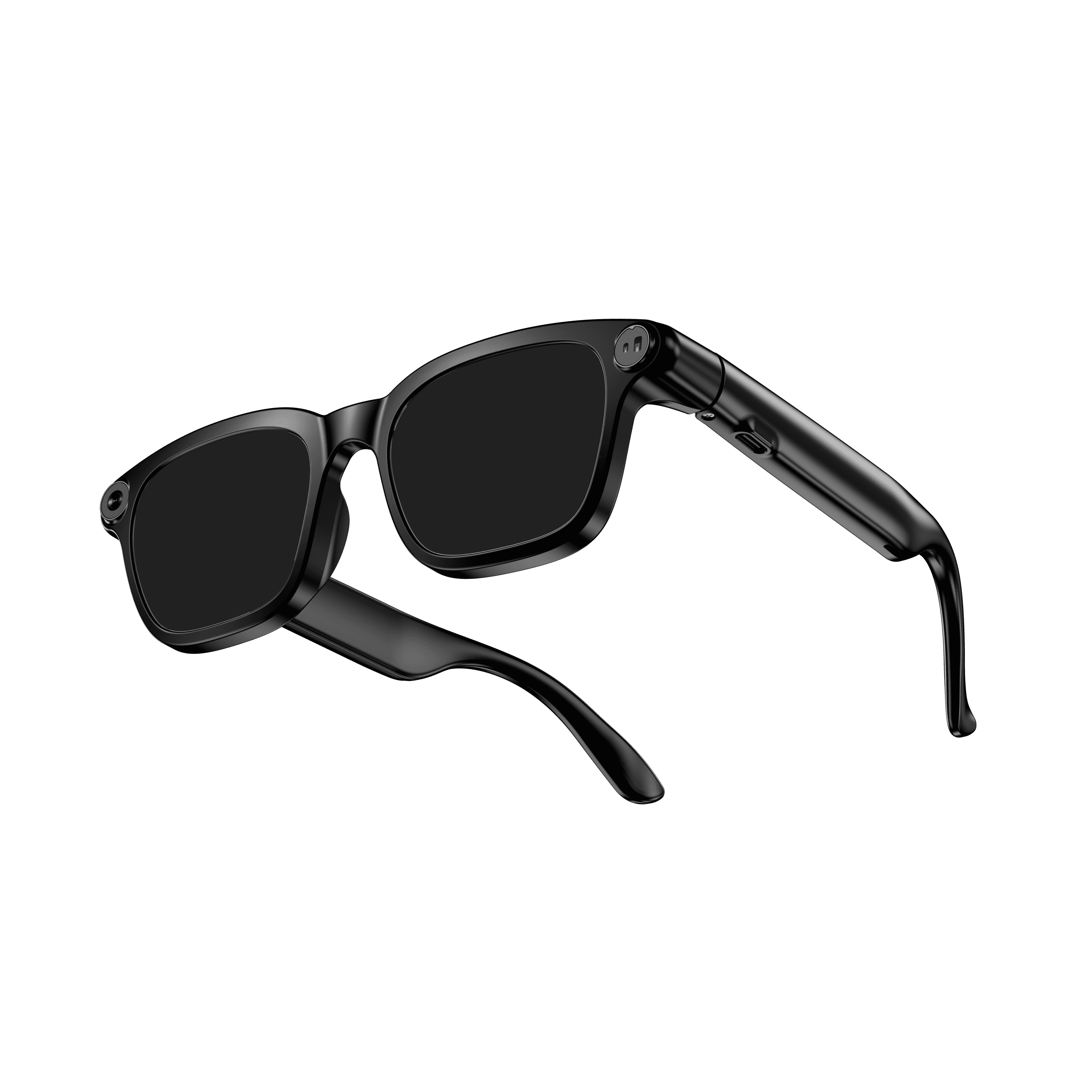 OXIVUE M08$99 at checkout | 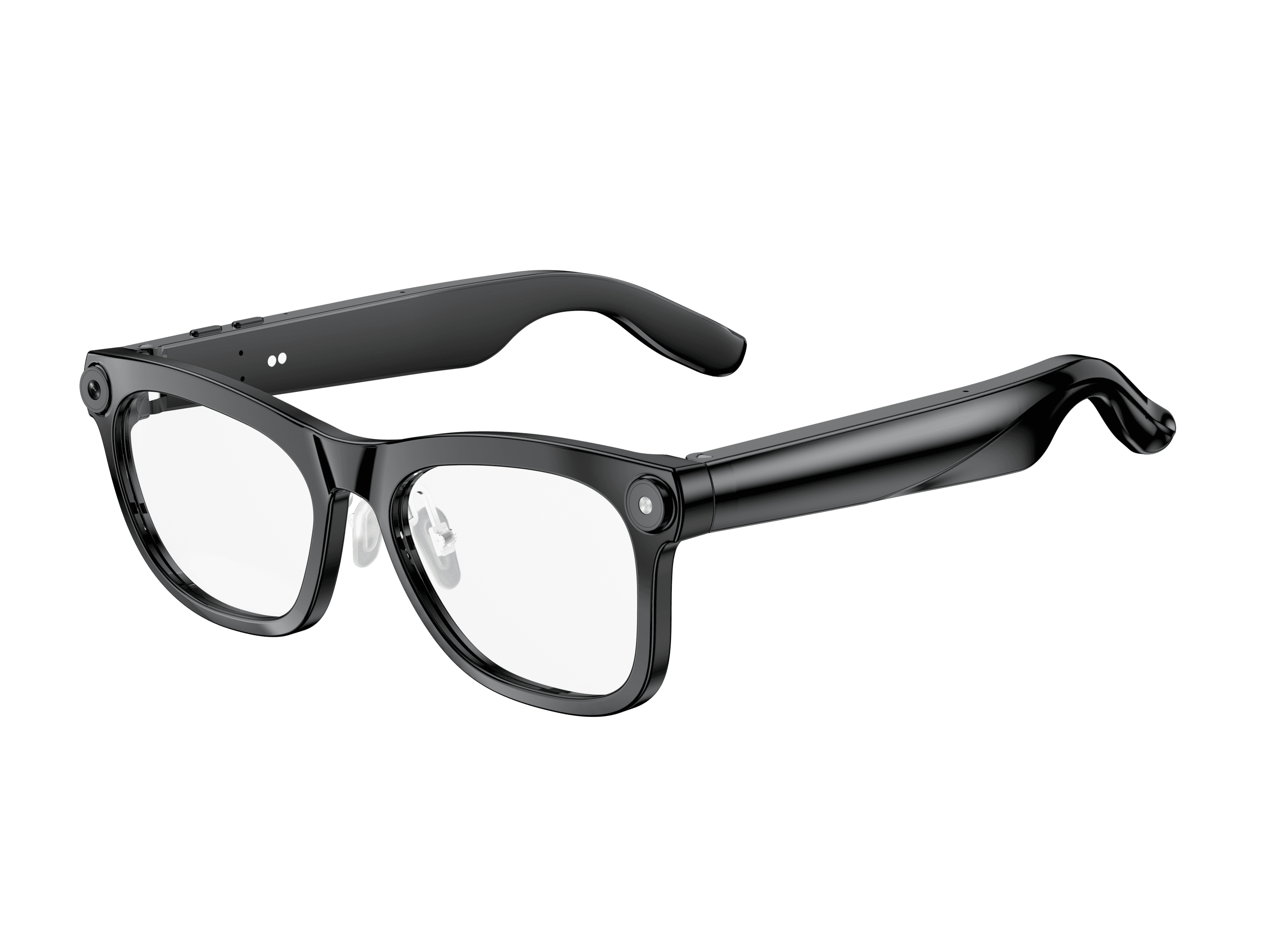 OXIVUE M02C$109 at checkout | |
|---|---|---|
| Camera | 8 MP | 8 MP |
| Weight | ~42 g | ~41 g |
| Water rating | — | IP65 |
| Lenses | Sunglasses · Photochromic · Clear | Sunglasses · Photochromic · Clear |
| Translation | 40+ languages | 40+ languages |
| Visual AI | — | Yes |
From each frame’s product page. Every model: open-ear audio, Bluetooth 5.4, no subscription. Full spec table
What these frames won’t do
- No prescription lenses yet, on any model. If you need vision correction all day, these can't replace your glasses.
- No display. Nothing appears in your view; you hear answers and capture photos and video.
- Open-ear speakers leak some sound at high volume and won't block out a loud train or a windy road the way sealed earbuds do.
- Translation, music, calls and the assistant need your phone nearby and connected. Translation pauses after each sentence, and only you hear the translated audio; the other person reads the reply on your phone.
- M08: no published water rating, so keep it out of heavy rain and spray.
- M02C: IP65 resists dust and water jets, not immersion. No swimming, no saltwater.
Check these before you order: see the warranty and refund policy.