Meta sizing · Fit
Ray-Ban Meta size guide: Standard or Large, and which fit
Ray-Ban Meta glasses are sized like ordinary Ray-Bans: lens width, bridge and temple in millimetres, with Standard and Large on the Wayfarer and a single listed size on the Headliner, Aviator and Zena on Ray-Ban’s India store. This Ray-Ban Meta size guide sets out the numbers, what Meta says about low bridge fit and face shape, how to measure with glasses you already own, and the weights. Figures are dated October 31, 2026 unless the text says otherwise.
Still deciding? Get the M02C, M08 and M08C comparison in your inbox, with your new-customer price already applied.
One email with the comparison, one follow-up a few days later. Unsubscribe any time.
1. How Ray-Ban Meta sizing works: three numbers and a fit label
Ray-Ban’s size guide on its India store (checked October 31, 2026) says most of its frames have the size printed on the inside of the left temple as three numbers, such as 50-20-150: lens width, bridge width and temple length, in millimetres. The same guide says the numbers “indicate the lens and bridge width which determine the frame size”. The Ray-Ban Meta listings we opened carry that same guide, so a pair that already fits you is a useful reference to measure against.
Meta’s own store labels the choice differently. The Wayfarer listings for Gen 1, Gen 2 and Gen 3 that we opened on October 31, 2026 each offer a frame size of Standard or Large and a fit option labelled High bridge, shown together as “Standard & High bridge”. Each also links a Size guide and a Fit guide, but their text did not come back when we fetched the pages, so confirm the labels there before you order. Meta’s face shape page calls the two sizes “regular and large”; this guide uses Standard, as the listings do.
For a longer look at the three generations, their prices and lens options, see our Ray-Ban Meta Wayfarer guide. This page stays on the question of which size and fit to choose.
2. Ray-Ban Meta Wayfarer: Standard vs Large in millimetres
The Wayfarer comes in Standard with 50 mm lenses and Large with 53 mm lenses, and Meta’s spec sheets, as we recorded them on September 30, 2026, list a 22 mm bridge for both. The table gives the rest. Ray-Ban’s India listing for the Gen 3 Wayfarer (checked October 31, 2026) is consistent with that for the smaller size: it names the sizes 53-L and 50-S and gives the 50 listing an eye size of 50, a 22 mm bridge and a 41.2 mm lens height.
| Measurement (mm) | Standard | Large |
|---|---|---|
| Lens width | 50 | 53 |
| Bridge | 22 | 22 |
| Lens height | 41 | 44 |
| Temple length (Gen 1 and 2 / Gen 3) | 150 / 149 | 155 / 154 |
| Hinge to hinge (Gen 1 and 2 / Gen 3) | 131 / 129 | 137 / 135 |
All figures in this table are Meta’s spec-sheet figures as we recorded them on September 30, 2026. The Wayfarer listings we re-read (checked October 31, 2026) do not include a measurements section in the text we could read, so check Meta’s Size guide for any change.
The step from Standard to Large is 3 mm of lens width, 3 mm of lens height, 5 mm of temple and 6 mm across the hinges, and the bridge does not change. In practice, Large is a wider and slightly taller frame with the same 22 mm bridge. Gen 3 is 2 mm narrower hinge to hinge than Gen 1 and Gen 2 at both sizes, so a Gen 2 Standard and a Gen 3 Standard are not the same width.
3. Headliner, Aviator and Zena: one listed size each
The Headliner, Aviator and Zena are each listed in a single size on Ray-Ban’s India store, which says “This model is available in one size only” on each page (checked October 31, 2026). Ray-Ban’s US site did not load for us (it returned an access error), so the figures below come from the India storefront; check the page for your own region.
| Style | Lens width (mm) | Bridge (mm) | Lens height (mm) |
|---|---|---|---|
| Headliner (Gen 2) | 50 | 23 | 42.6 |
| Aviator (Gen 3) | 54 | 18 | 46.6 |
| Zena (Gen 3) | 49 | 22 | 34.3 |
Ray-Ban’s listings call the first number “Eye Size” and show no unit; its size guide treats the first number as lens width (checked October 31, 2026). Of the three styles in the table, the Aviator has the widest lenses at 54, one more than the Large Wayfarer’s 53, and the narrowest bridge at 18 mm; the Zena has the narrowest lenses and the shallowest lens height. The Skyler is not in the table because we could not read its listing today; our Skyler guiderecords Meta’s spec sheet (read September 30, 2026) as one size with a 52 mm lens width and a 20 mm bridge. Meta’s face shape page (checked October 31, 2026) calls the Skyler’s cat-eye design, “with its wider front”, flattering on heart-shaped faces. Our Headliner guide covers that style in more depth.
4. Low bridge fit: what Meta says and what we could not confirm
Meta’s face shape page names a low bridge fit for the Headliner. That page (checked October 31, 2026) says that if your glasses usually slide down your nose or press against your cheeks, the Headliner offers a low bridge fit that keeps them in place without feeling tight. The Wayfarer listings use a different label: each of the three we opened showed “High bridge” as the fit option and no Low bridge option in the text we read.
Each listing links a Fit guide, and its text did not load for us, so we will not guess what High bridge means for your nose. Our Headliner guiderecords Meta’s spec sheet (read October 19, 2026) as 51 mm lens width and 134 mm hinge to hinge for the Headliner’s Low bridge fit, against 50 mm and 132 mm for its High bridge fit, so the 50 mm Headliner in the table above lines up with the High bridge figure. Two practical points follow. First, treat the bridge number as one measurement, not a fit verdict: the Aviator’s 18 mm and the Wayfarer’s 22 mm show that the frames differ, not which one will stay put on your nose. Second, if your current glasses slip, try a frame on or use Meta’s try-on tool before relying on a size label alone.
5. Small faces, wide faces and face shape
Meta’s face shape page (checked October 31, 2026) does not describe small or wide faces. On sizing it says the Wayfarer “comes in regular and large” and that you can pick what works better for your face. What it does is pair styles with face shapes.
- Oval and round faces:the Wayfarer, which Meta calls a “universally flattering square shape” for oval faces and says complements round features.
- Heart-shaped faces: the Skyler, whose cat-eye design Meta calls flattering on heart-shaped faces.
- Square faces: the Headliner, which Meta says blends circular and square elements for a softer edge.
- Oblong faces: larger square styles such as the Wayfarer, which Meta says pair well with oblong faces.
That is styling advice, not a measurement. For a narrower or wider head, a practical route is the numbers: a face that sits comfortably in 50 mm lenses and 131 mm across the hinges suggests the Standard Wayfarer, and a face that needs 53 mm lenses or about 137 mm across the hinges suggests Large. Meta’s page also suggests trying styles like the Wayfarer, Skyler and Headliner with its virtual try-on, and the Wayfarer listings show a “Try on virtually” button. We did not test it, so if it does not work for you, fall back on a ruler.
6. How to measure: your current glasses, a ruler and the card test
- Read the temple.Find a pair that fits well and read the numbers on the inside of the left temple, such as 50-22-150. The first is lens width, the second is bridge, the third is temple length; Ray-Ban’s size guide notes that sometimes only the first two are printed.
- Measure hinge to hinge. Lay the glasses face down on a flat surface and measure across the front from one hinge to the other in millimetres. Compare with the table: 131 or 137 mm for a Gen 1 or Gen 2 Wayfarer, 129 or 135 mm for Gen 3.
- Try the card test as a first pass.Ray-Ban’s size guide describes holding a credit card steady in front of a mirror with one edge aligned to the centre of your nose, then seeing where the opposite edge falls against your eye; it sorts faces into Average, Wide or Narrow (checked October 31, 2026). It is a rough screen, not a replacement for the measurements above.
- Check the head, not only the face. If your current frames press at the temples, look at the hinge figure first. If they slide, look at the fit label and the try-on tool.
If you need prescription lenses, frame size is only part of the picture; our Meta glasses prescription guide covers the options.
7. Are Ray-Ban Meta glasses heavy?
The Wayfarer weighs from 48 g to 53.8 g depending on generation and size, according to Meta’s spec sheets as we recorded them on September 30, 2026. Gen 1 is 48 g in Standard and 50 g in Large, Gen 2 is 51 g and 53 g, and Gen 3 is 51.5 g and 53.8 g. Ray-Ban’s India listings for the Headliner, Aviator and Zena give no weight (checked October 31, 2026); our Skyler and Headlinerguides record the weights from Meta’s spec sheets.
A weight figure says little on its own, because comfort depends on where the frame rests on your nose and ears. It is more useful as a way to compare two pairs you are considering. Our Gen 3 guide and Ray-Ban smart glasses overviewcover the rest of each model’s specification.
8. OXIVUE M08: no Standard or Large choice
OXIVUE does not sell Ray-Ban Meta and does not offer a Standard or Large choice. The M08weighs about 42 g and is $99 at checkout for one pair; the Wayfarer weighs 48 g to 53.8 g on Meta’s spec sheets (September 30, 2026). They are different products with different features, so treat weight as one input, not a verdict. We make no claim that the M08 suits a low or high nose bridge, and we publish no Low bridge or High bridge variant.
The M08 comes with a sun, photochromic or clear lens, and it has no display, takes no prescription lenses and does not run Meta AI. Captures start only with a visible touch on the temple; ask before you record anyone.
Under our terms a size that does not suit you is a change of mind, so check the fit before you order; if you want the M08’s frame measurements, ask on the support page. The M14 is a one-piece wrap shield listed at 150 × 56 × 169 mm overall and 52 g, so it is not described in the lens, bridge and temple format used above.
Shipping, refunds and warranty. Free shipping from $99. US orders typically arrive in 5–9 business days. International orders take 9–14 business days after shipment. Import VAT or duties outside the US are paid by the recipient. No refunds except transit damage (replaced or refunded); faults are repaired or replaced under the 2-year warranty; change of mind and unmet expectations are not refundable. None of our frames take prescription lenses. Read the refund policy, the shipping policy and the warranty, or compare every model on the comparison page.
Frequently asked questions
Should I get the Standard or Large Ray-Ban Meta?
As a starting point, Standard if the glasses that already fit you have lenses near 50 mm, Large if they are 53 mm or wider. On the Wayfarer, Standard has 50 mm lenses and a hinge-to-hinge width of 131 mm on Gen 1 and Gen 2; Large has 53 mm lenses and 137 mm (hinge figures as recorded from Meta's spec sheets on September 30, 2026). Meta's face shape page (checked October 31, 2026) says the Wayfarer "comes in regular and large" and does not describe small or wide faces.
How do I know the size of Ray-Ban glasses?
Read the numbers printed on the inside of the left temple, for example 50-20-150 (Ray-Ban's own example): lens width, bridge width and temple length in millimetres. Ray-Ban's size guide on its India store notes that sometimes only the first two are printed, and says the numbers "indicate the lens and bridge width which determine the frame size" (checked October 31, 2026). For the Ray-Ban Meta Wayfarer, Meta's spec sheets (September 30, 2026) give 50 and 22 for Standard and 53 and 22 for Large.
Is 54 mm sunglasses big?
Among the Ray-Ban Meta styles we read, 54 mm is the widest lens. Ray-Ban's India listing gives the Gen 3 Aviator an eye size of 54 (the first number in the size, which Ray-Ban's size guide defines as lens width), against 50 for the Gen 3 Wayfarer in Standard, 50 for the Headliner and 49 for the Zena (checked October 31, 2026); the Large Wayfarer is 53 on Ray-Ban's "53-L" label. Lens width is one number of three: that Aviator lists an 18 mm bridge, narrower than the Wayfarer's 22 mm, so compare all three with glasses you own.
How do I measure for glasses?
Use a pair that fits you. Read the numbers on the inside of the left temple, then lay a ruler across the front and measure from one hinge to the other. Compare that with the Wayfarer figures above (Meta's spec sheets, September 30, 2026): 131 mm (Standard) or 137 mm (Large) on Gen 1 and Gen 2, 129 mm or 135 mm on Gen 3. Ray-Ban's guide also describes a credit-card test in front of a mirror that sorts faces into Average, Wide or Narrow. Treat that test as a rough first pass.
Are Ray-Ban Meta smart glasses heavy?
They weigh between about 48 g and 54 g in the Wayfarer. Meta's spec sheets, as recorded on September 30, 2026, list 48 g (Standard) and 50 g (Large) for Gen 1, 51 g and 53 g for Gen 2, and 51.5 g and 53.8 g for Gen 3. This page lists Wayfarer weights only; Ray-Ban's India listings (checked October 31, 2026) give no weight for the Headliner, Aviator or Zena. Whether that feels heavy depends on how the frame sits on your nose and ears. OXIVUE lists about 42 g for the M08.
Is there a Ray-Ban Meta virtual try-on?
Yes, according to Meta. Its face shape page (checked October 31, 2026) says you can see how glasses look on your face before you buy and suggests trying styles like the Wayfarer, Skyler and Headliner this way, and the Wayfarer listings show a "Try on virtually" button. We did not test it, so we cannot say how well it works on your device. If it does not load, use the measurements in this guide instead.
Does Ray-Ban Meta come in a low bridge fit?
Yes, on the Headliner. Meta's face shape page (checked October 31, 2026) says that if your glasses usually slide down your nose or press against your cheeks, the Headliner offers a low bridge fit that keeps them in place without feeling tight. The three Wayfarer listings we opened offered a High bridge fit option and showed no Low bridge option in the text we read. Each listing links a Fit guide; its text did not load for us, so read it before ordering.
OXIVUE frames side by side
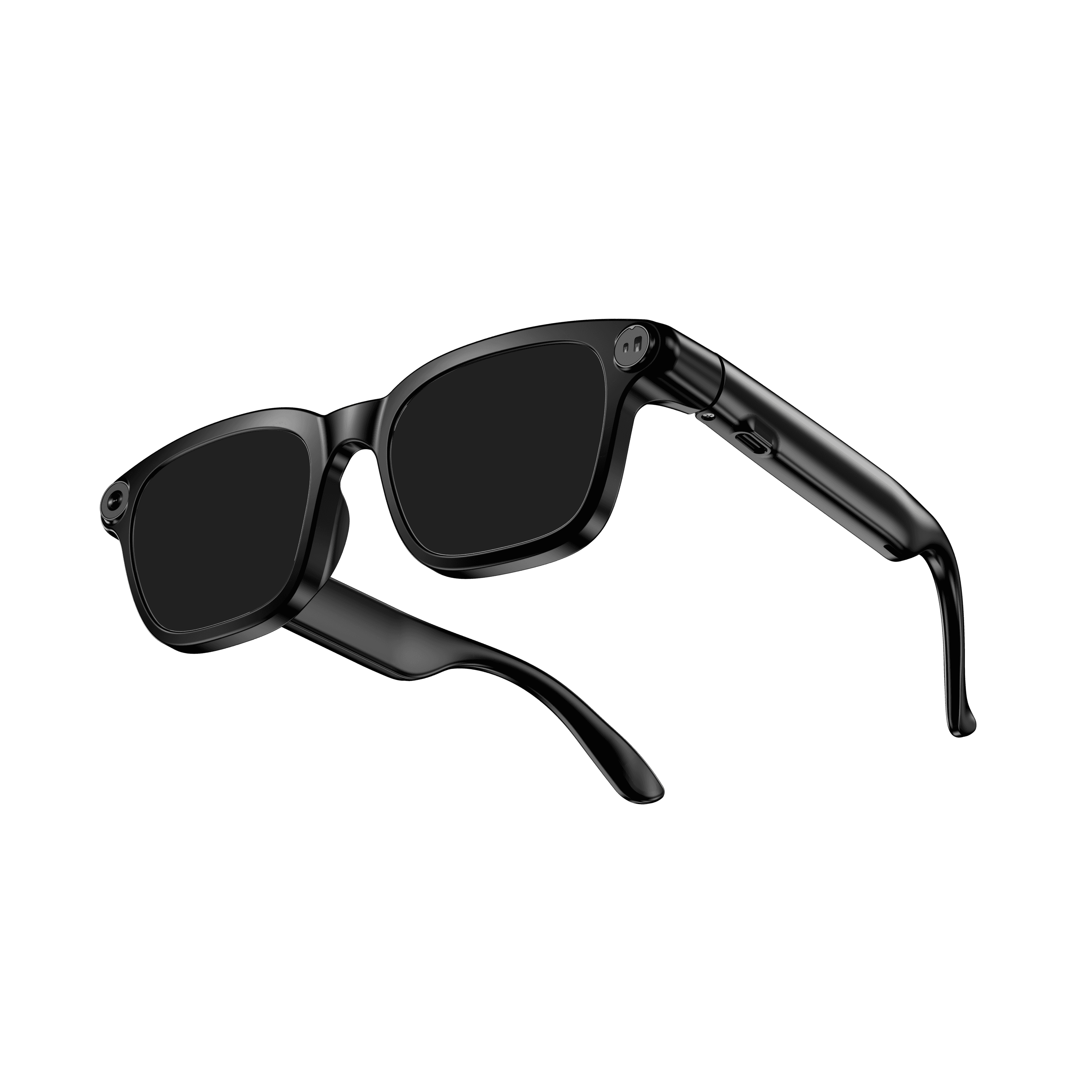 OXIVUE M08$99 at checkout | 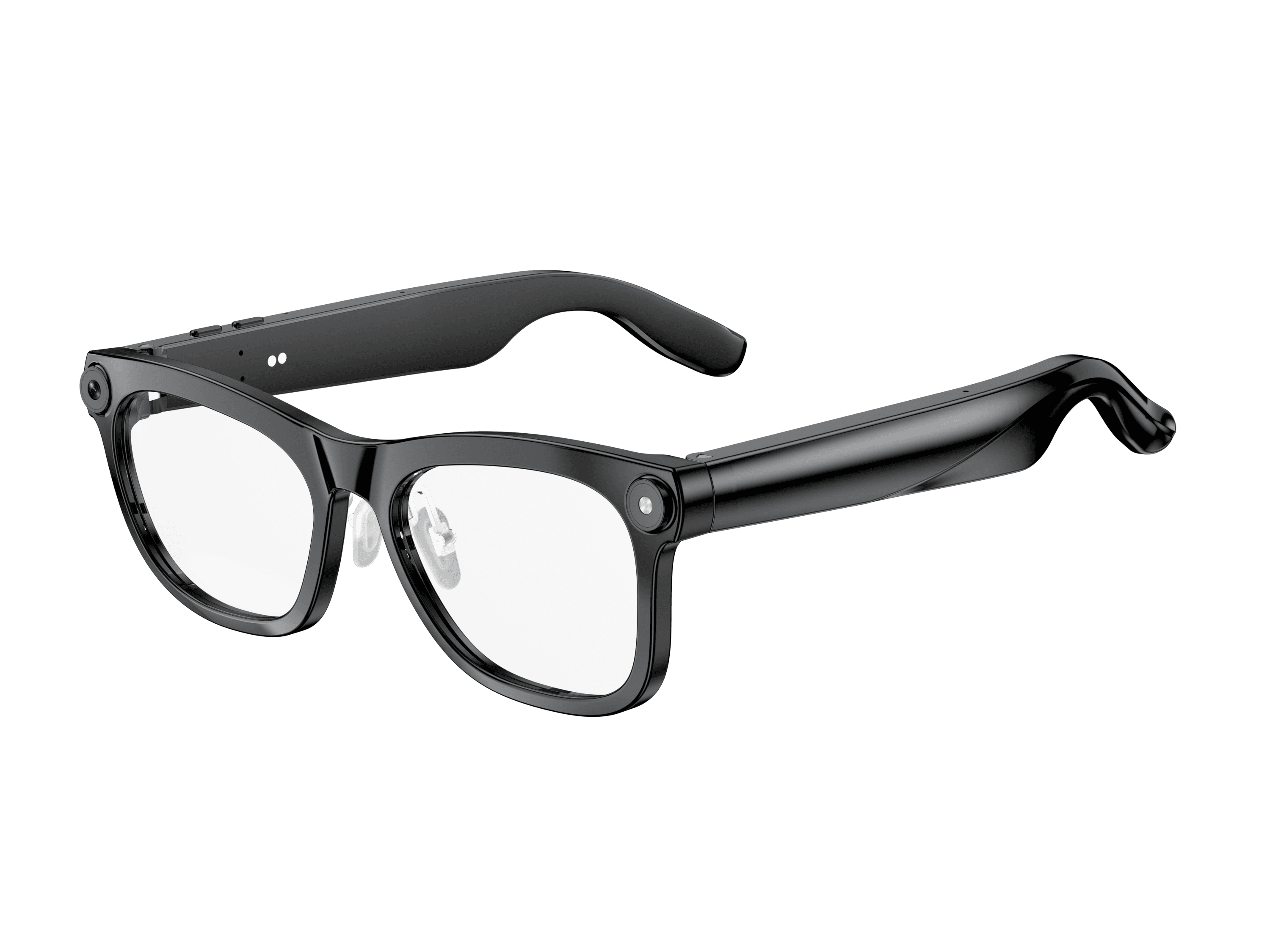 OXIVUE M02C$109 at checkout | 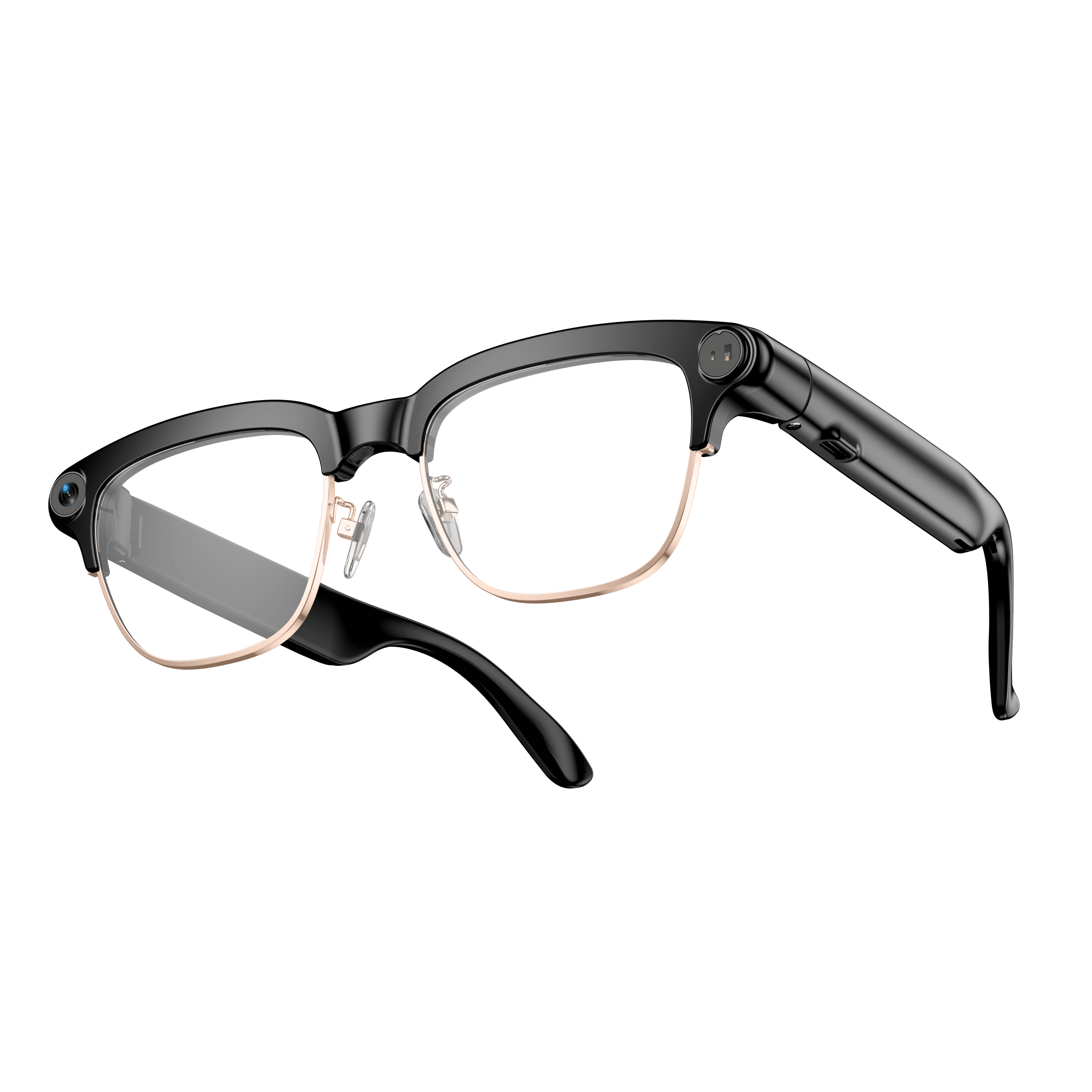 OXIVUE M08C$119 at checkout | |
|---|---|---|---|
| Camera | 8 MP | 8 MP | 8 MP |
| Weight | ~42 g | ~41 g | ~42 g |
| Water rating | — | IP65 | — |
| Lenses | Sunglasses · Photochromic · Clear | Sunglasses · Photochromic · Clear | Sunglasses · Photochromic · Clear |
| Translation | 40+ languages | 40+ languages | 40+ languages |
| Visual AI | — | Yes | — |
| Metal trim | — | — | Gold · Silver |
From each frame’s product page. Every model: open-ear audio, Bluetooth 5.4, no subscription. Full spec table
What these frames won’t do
- No prescription lenses yet, on any model. If you need vision correction all day, these can't replace your glasses.
- No display. Nothing appears in your view; you hear answers and capture photos and video.
- Open-ear speakers leak some sound at high volume and won't block out a loud train or a windy road the way sealed earbuds do.
- Translation, music, calls and the assistant need your phone nearby and connected. Translation pauses after each sentence, and only you hear the translated audio; the other person reads the reply on your phone.
- M08: no published water rating, so keep it out of heavy rain and spray.
Check these before you order: see the warranty and refund policy.