Ray-Ban Meta · Audio
Ray-Ban Meta Audio glasses: what you get without the camera
Ray-Ban Meta Audio glasses are the camera-free pair in Meta's Ray-Ban line: Clubmaster and Burbank frames with open-ear audio and a voice assistant, from $349 on meta.com. This guide covers the two styles, the price, the battery and water rating, what the Audio model leaves out compared with the Gen 3 camera glasses, and the work and recording questions people search for, using Meta's own pages as they read on October 31, 2026.
Still deciding? Get the M02C, M08 and M08C comparison in your inbox, with your new-customer price already applied.
One email with the comparison, one follow-up a few days later. Unsubscribe any time.
1. What Ray-Ban Meta Audio is: Ray-Ban frames, open-ear audio, an assistant and no camera
Ray-Ban Meta Audio is the camera-free line in Meta’s Ray-Ban range, starting at $349 on meta.com. Meta introduced it on September 23, 2026 alongside Ray-Ban Meta (Gen 3), which has a camera and starts at $449. Meta describes the Audio frames as built for music, podcasts, calls and talking to the voice assistant hands-free, and says calls “capture your voice more clearly than earbuds” (checked October 31, 2026).
The defining fact is what is missing. Meta’s styles comparison page asks whether Audio has a camera and answers that Clubmaster and Burbank are “audio-only AI glasses” with “no camera or capture features”. If you are asking whether these glasses can take photos or video, the answer from Meta is no, and the same page points camera buyers to Gen 3. For how Audio sits among every Ray-Ban Meta line, see our Ray-Ban smart glasses lineup guide; this page goes deeper on Audio alone. OXIVUE publishes this page and sells its own camera glasses, so we limit it to what Meta’s pages state.
2. Clubmaster and Burbank: the two Audio styles
There are two frames: the Clubmaster, which Meta describes as an iconic Ray-Ban style with a retro-inspired silhouette, and the Burbank, which it calls a classic, timeless rectangle style. Meta’s announcement counts 23 colour and lens combinations across the two, and its comparison page calls them the “slimmest, lightest Ray-Ban Meta styles yet”. Meta lists professional-adjustable temple tips, adjustable or swappable nose pads and overextension hinges.
The Burbank page on meta.com lists seven frame and lens combinations on October 31, 2026: Matte Black on Warm Silver with clear lenses, Matte Black with Polarized Grey, Matte Black on Warm Silver with Transitions Graphite Green, Shiny Black with Transitions Grey, Transparent Sky Blue with Transitions Sapphire, and Havana on Gold with either clear or Transitions Brown lenses. It offers Standard and Large sizes, a size guide and a virtual try-on button. We could not read a Clubmaster product page today, so check Meta’s store for its colours and sizes.
Meta says both styles are “compatible with a wide range of optical prescriptions”, and its comparison page says all Ray-Ban Meta glasses support prescription lenses. The pages we could read do not state a prescription range for Audio, so confirm yours before you order.
3. Price, availability and what is in the box
Meta lists Ray-Ban Meta Audio at a starting price of $349 (checked October 31, 2026). The Burbank in Matte Black with clear lenses is $349 on its product page, next to a financing line of “from $29.08/month at 0% APR with Affirm”, which is a payment plan for the glasses, not a subscription. We did not check the price of every frame and lens combination, so read the price in the cart for your exact choice.
Meta’s announcement of September 23 said readers could “pre-order a pair today starting at $349 USD” and that “they ship October 13”. On October 31 the Burbank page showed an “Add to bag” button. We did not check stock, ship dates or delivery times for any style. Meta lists the box as the charging case, the glasses and a getting-started guide, and the announcement says the case adds up to 48 more hours of battery. Meta’s $99 Gen 3 charging-case page says it is “Not compatible with Ray-Ban Meta Audio”, and Meta’s accessories page (checked October 31, 2026) does not name an Audio-specific case, so ask Meta before you buy a spare; our Meta glasses charger guide covers the parts that are listed.
4. Battery, weight and water rating
The Audio glasses weigh 43 grams and run up to 12 hours on a charge, by Meta’s figures. Meta’s announcement adds up to 48 more hours from the included case, and the comparison page gives up to 6 hours of continuous audio playback, 50% in about 20 minutes in the case, and an IPX4 rating. Gen 3 is listed at up to nine hours. These are “up to” numbers, and the hours depend on what you do with the glasses.
IPX4 means resistance to splashes, which fits Meta’s own caution that the glasses are “not designed for submersion or heavy, sustained rain”. For the same question across the whole Meta range, see are Meta glasses waterproof, and for battery hours on every model see the Meta glasses battery life guide.
5. What Audio lacks versus the Gen 3 camera glasses
Compared with Gen 3, Audio has no camera, a lower starting price, a longer battery claim and, in Meta’s words, the “slimmest, lightest Ray-Ban Meta styles yet”. The table puts the two side by side using only what Meta’s pages state on October 31, 2026; “not listed” means the page we read does not describe it, not that the feature is absent.
| Feature | Ray-Ban Meta Audio | Ray-Ban Meta (Gen 3) |
|---|---|---|
| Starting price | $349 | $449 |
| Styles | Clubmaster, Burbank | Wayfarer, Aviator, Zena |
| Camera | None: “no camera or capture features” | 12 MP |
| Video | No capture features (Meta) | 3K Ultra HD |
| Battery, per charge | Up to 12 h (up to 6 h continuous audio) | Up to 9 h |
| Weight | 43 g | Not listed on the pages we read |
| Water rating | IPX4 | Not listed on the pages we read |
| Live translation | Not listed for Audio | “live translation in several languages” |
| Prescription lenses | Supported (Meta: all Ray-Ban Meta glasses) | Supported |
In practice the choice comes down to the camera. Pick Audio if you want calls, music and the assistant on your face and a camera is the thing you do not want. Pick a camera model, such as Ray-Ban Meta Gen 3, if you want to capture what you see. Meta’s Gen 3 text lists live translation, and the Audio text we read does not describe it. Meta points camera buyers to Gen 3, so Audio is not a lower-priced way to get a camera.
6. Recording, privacy and wearing them at work
The Meta pages we read (checked October 31, 2026) do not describe a recording function for Audio, and Meta’s FAQ lists “no camera or capture features”. Meta does describe the glasses as built for calls, music and voice assistance, and the pages we read do not describe their microphones. Its FAQ points to the Help Center and the regional Privacy page for how data is stored and protected and for an explanation of cloud-based AI features. Our Meta glasses privacy guide and recording guide cover the camera models.
Whether you can wear them at work is a question for your employer and your local law, not for the product page. A pair with no camera removes photo and video from the discussion, but a workplace may still restrict wearable devices or microphones, so ask for the rule in writing. This is not legal advice, and wherever you record people, get the consent your local law requires.
On cost, the Audio pages we read show a $349 price and do not mention a subscription. Meta’s help page for its conversation focus feature says it is free to use in early access in the US and Canada, “may require a paid subscription in the future”, and lists Ray-Ban Meta Audio as coming soon (checked October 31, 2026). If a monthly fee matters to you, read Meta’s terms on the day you buy. For audio-only glasses in general, see our smart audio glasses guide.
7. OXIVUE: camera frames you can buy today
Every OXIVUE frame you can buy today has a camera that starts capturing only when you touch the temple, so none of them is a camera-free pair like Audio, and you should ask before recording anyone. What overlaps is open-ear audio. The M08 is $99 at checkout for one pair, weighs about 42 g, has an 8 MP camera and open-ear directional speakers, is rated for 7 hours of listening or 4 hours of calls, translates 40+ languages through its free companion app, and is offered with sun, photochromic or clear lenses.
It has no display, takes no prescription lenses, does not run Meta AI and has no published water rating, where the Audio glasses are listed at IPX4. The battery hours are each maker’s own figures, so do not read them as a head-to-head. For every OXIVUE model, see the full comparison.
Shipping, refunds and warranty. Free shipping from $99. US orders typically arrive in 5–9 business days; international orders take 9–14 business days after shipment, and import VAT or duties outside the US are paid by the recipient. No refunds except transit damage (replaced or refunded); faults are repaired or replaced under the 2-year warranty; change of mind and unmet expectations are not refundable. None of our frames take prescription lenses. Details on the shipping policy page. Read the refund policy.
Frequently asked questions
Do the Ray-Ban Meta glasses record audio?
For the Audio model, the Meta pages we read do not describe a recording function (checked October 31, 2026). Meta's FAQ says Clubmaster and Burbank are built for calls, music and voice assistance, with "no camera or capture features". The camera models are different: Meta lists a 12 MP camera and 3K Ultra HD video for Ray-Ban Meta (Gen 3). Confirm any recording question in Meta's Help Center before you rely on it.
Do you have to pay a monthly fee to use Meta glasses?
The Audio pages we read show a $349 price and do not mention a subscription (checked October 31, 2026). The Burbank page also carries a financing line, "from $29.08/month at 0% APR with Affirm", which is a payment plan for the glasses. One caveat: Meta's help page for conversation focus says the feature is free to use in early access in the US and Canada, "may require a paid subscription in the future", and lists Ray-Ban Meta Audio as coming soon. Check Meta's current terms before you buy.
Is it illegal to have recording audio glasses at your work?
It depends on your employer's rules and your local law, and this page is not legal advice. Meta's FAQ says Ray-Ban Meta Audio has no camera or capture features (checked October 31, 2026), which removes photo and video from the question, but Meta also describes the glasses as built for calls and voice assistance, so a workplace may still treat them as a wearable device. If your workplace restricts wearable or recording devices, ask for the policy in writing before you wear any smart glasses, and never record people without the consent your local law requires.
Do Meta glasses have good audio?
We have not tested the Audio model, so we cannot rate its sound. Meta lists open-ear audio, up to 6 hours of continuous audio playback and calls that "capture your voice more clearly than earbuds" (checked October 31, 2026). Open-ear audio leaves the ear uncovered, which is a different design from sealed earbuds. We could not read an independent review of the Audio model today, so try a pair if you can before you rely on the sound.
How much do Ray-Ban Meta Audio glasses cost?
From $349 on meta.com (checked October 31, 2026). Meta's Audio page shows a starting price of $349 and lists the Burbank in Matte Black with clear lenses at $349. We did not check the price of every frame and lens combination, so read the cart price for yours. For comparison, Meta lists Ray-Ban Meta (Gen 3), which has a camera, from $449. Meta's Burbank page lists a charging case in the box.
Do Ray-Ban Meta Audio glasses have a camera?
No. Meta's FAQ answers "No" and calls Clubmaster and Burbank "audio-only AI glasses" with no camera or capture features (checked October 31, 2026). If you want a built-in camera, Meta points to Ray-Ban Meta (Gen 3), which it lists with a 12 MP camera and 3K Ultra HD video from $449. Meta points camera buyers to Gen 3, so Audio is not a lower-priced way to get a camera.
Can Ray-Ban Meta Audio glasses take prescription lenses?
Yes, according to Meta. Its announcement says both styles are "compatible with a wide range of optical prescriptions", and its comparison page says all Ray-Ban Meta glasses support prescription lenses (checked October 31, 2026). Meta's pages we could read do not state a prescription range for the Audio model, so check the range for your prescription on Meta's store or with an optician before ordering. OXIVUE frames do not take prescription lenses.
OXIVUE frames side by side
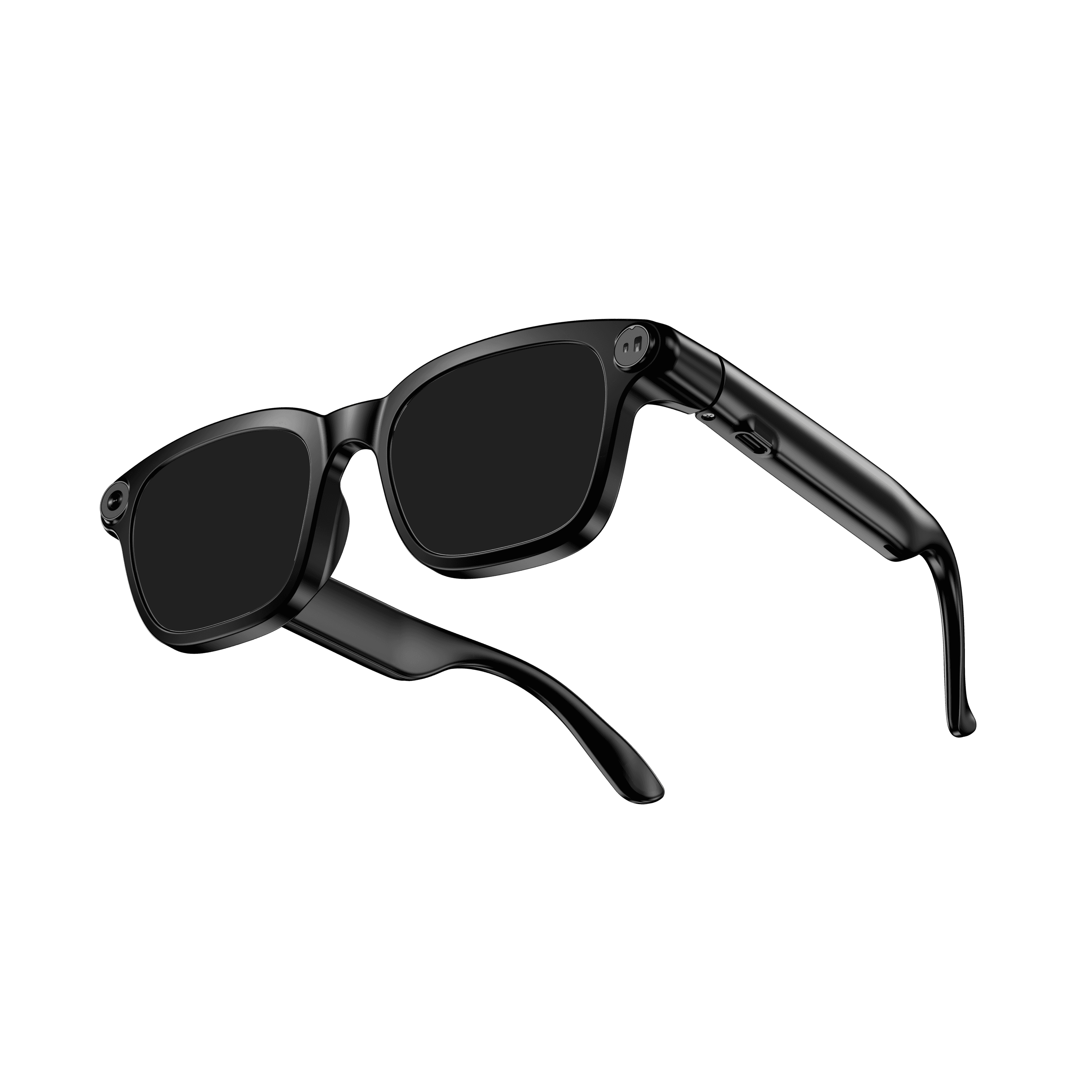 OXIVUE M08$99 at checkout | 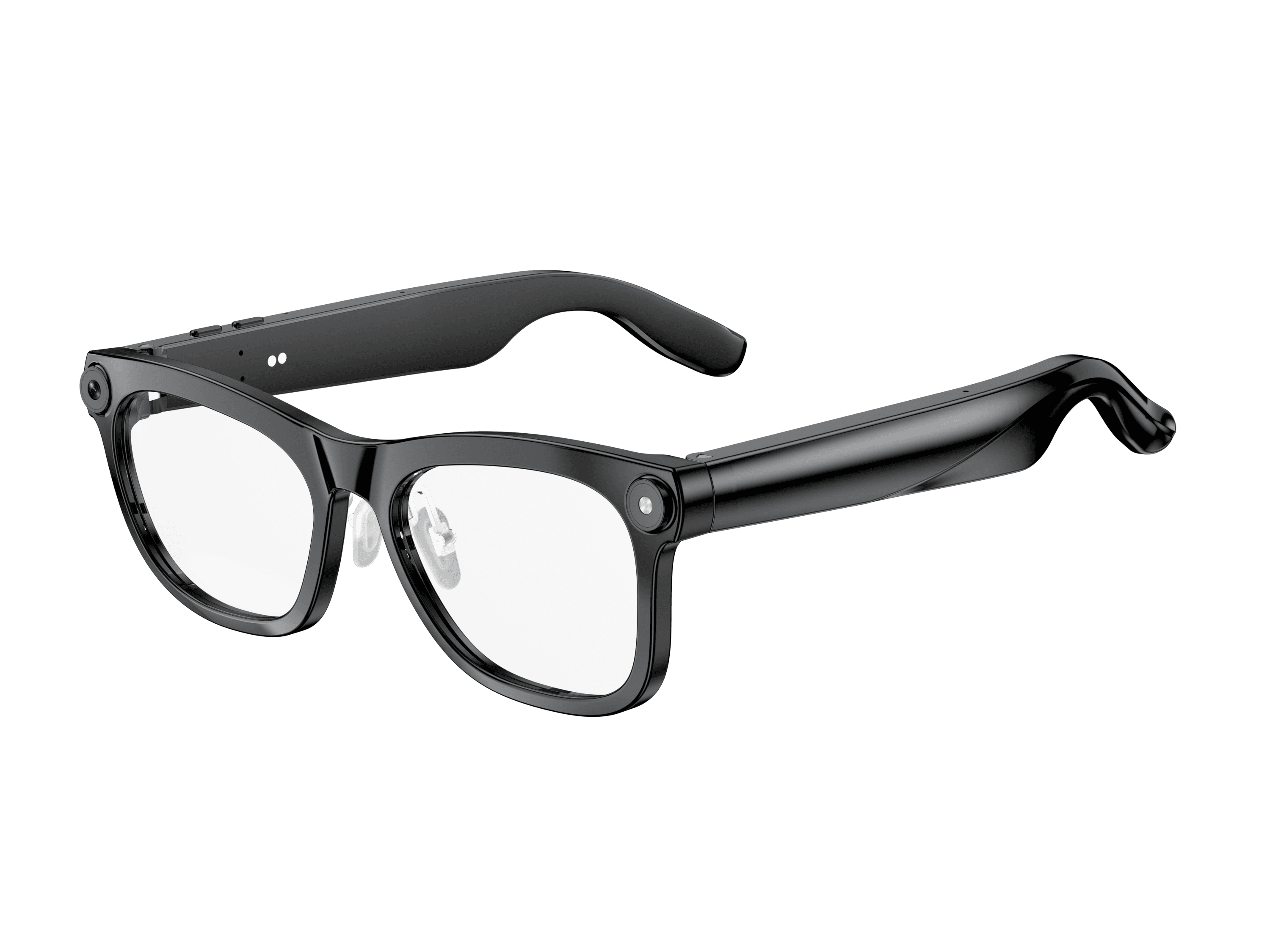 OXIVUE M02C$109 at checkout | 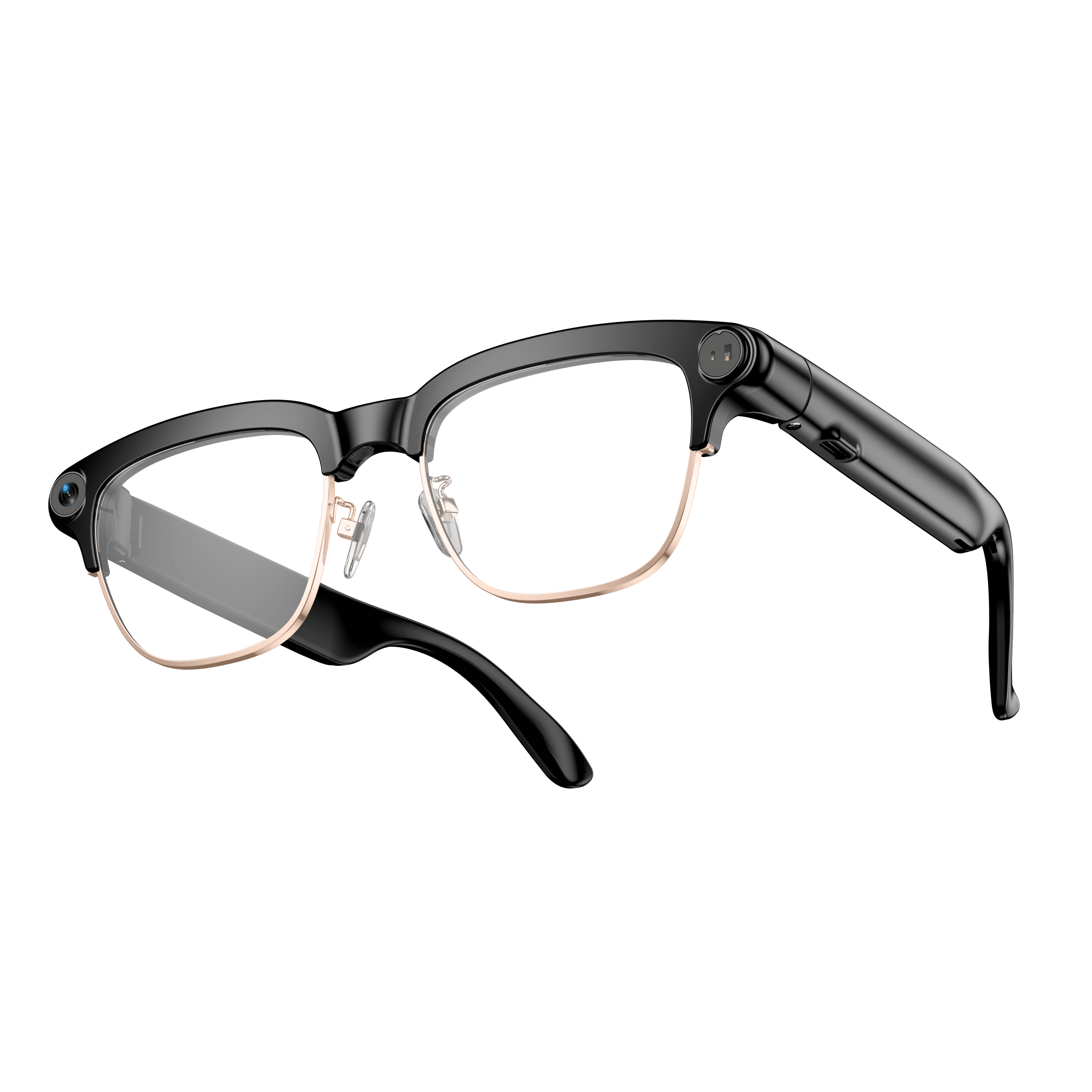 OXIVUE M08C$119 at checkout | |
|---|---|---|---|
| Camera | 8 MP | 8 MP | 8 MP |
| Weight | ~42 g | ~41 g | ~42 g |
| Water rating | — | IP65 | — |
| Lenses | Sunglasses · Photochromic · Clear | Sunglasses · Photochromic · Clear | Sunglasses · Photochromic · Clear |
| Translation | 40+ languages | 40+ languages | 40+ languages |
| Visual AI | — | Yes | — |
| Metal trim | — | — | Gold · Silver |
From each frame’s product page. Every model: open-ear audio, Bluetooth 5.4, no subscription. Full spec table
What these frames won’t do
- No prescription lenses yet, on any model. If you need vision correction all day, these can't replace your glasses.
- No display. Nothing appears in your view; you hear answers and capture photos and video.
- Open-ear speakers leak some sound at high volume and won't block out a loud train or a windy road the way sealed earbuds do.
- Translation, music, calls and the assistant need your phone nearby and connected. Translation pauses after each sentence, and only you hear the translated audio; the other person reads the reply on your phone.
- M08: no published water rating, so keep it out of heavy rain and spray.
Check these before you order: see the warranty and refund policy.