Open source · 2026
Open source smart glasses: what you can actually read, change and rebuild
Search for open source smart glasses and the first Google results (US, October 31, 2026) mix a GitHub repository, forum threads, an IEEE Spectrum article and an Instructables project. This guide sorts the products and projects behind them: what each publishes, under which licence, what it costs and whether you can buy it ready-made, all read from their own pages on October 31, 2026.
Still deciding? Get the M02C, M08 and M08C comparison in your inbox, with your new-customer price already applied.
One email with the comparison, one follow-up a few days later. Unsubscribe any time.
1. What “open source” means on a pair of glasses
Open source smart glasses publish some part of their software or design under a licence that lets you read it, change it and build on it. Which part is open differs from project to project, and the differences matter more than the label. Four different things get called “open” in this category:
- The operating system or app platform. The code apps run on, so developers can write for it. MentraOS is the example below.
- The firmware and SDKs. The software inside the glasses and the libraries that talk to it. Brilliant Labs publishes both.
- The hardware design files.What someone would need to rebuild the glasses. Brilliant Labs says Halo’s are on GitHub.
- A build guide. A parts list plus code you assemble yourself, which is what OpenGlass is.
An SDK on its own is not the same as open source: a maker can publish libraries for writing apps and keep the firmware closed. A licence also covers only the repository it sits in, so a maker’s page saying a product is open source tells you less than the LICENSE file of the repository you plan to use. Where we found both, this guide quotes both.
Open code also leaves two questions unanswered: which cloud services the assistant calls, and whether anyone still maintains the project. OpenGlass’s README asks for Groq and OpenAI API keys, Halo’s Noa assistant has free and paid tiers, and OpenGlass’s repository says it is no longer supported. Each is covered below.
2. The projects side by side, as their own pages state them
Everything in this table was read from the maker’s page or the project’s GitHub page on October 31, 2026. It is a sorted list, not a ranking, and we have not tested any of these products. Prices are as the makers list them; taxes, shipping and subscriptions vary, so check the maker’s checkout.
| Project | What is published | Licence shown | Ready-made? |
|---|---|---|---|
| MentraOS + Mentra Live | The operating system (MentraOS repository); an SDK; a Miniapp Store linked from the repository | Apache License 2.0 | Yes: Mentra Live, $449 on the maker’s page; its shipping policy says website orders ship only to US addresses |
| Brilliant Labs Halo | Firmware and SDKs on GitHub; the maker’s page says design files are there too | Varies by repository: Apache-2.0 for Brilliant Labs code in the firmware, BSD-3-Clause for the SDK monorepo | Yes: $399.00 USD, “Shipping now!” |
| Brilliant Labs Frame | “The complete codebase for Frame” (nRF52 application, nRF52 bootloader, FPGA RTL); Python SDK | Python SDK: MIT. The codebase repository lists a LICENSE.md; its page does not say which licence | Not confirmed: brilliant.xyz/products/frame returned HTTP 404 on October 31, 2026 (see section 4) |
| OpenGlass | Arduino firmware, an Expo app and a 3D-printable mount | MIT | No: you assemble it, “less than $25” of parts per the README |
| Project Aria Tools (Meta) | A C++/Python toolkit for Project Aria data | Apache-2.0 | A software toolkit, not a product page |
3. MentraOS and Mentra Live: an open platform with a buy button
MentraOS is open source under the Apache License 2.0, according to its GitHub repository (checked October 31, 2026), and Mentra Live is the pair its maker sells to run it, at $449 on the maker’s page. Mentra’s own site says “MentraOS is open source” and that it has an open source SDK. The repository describes MentraOS as how developers and businesses build smart glasses apps, links developer documentation and a Mentra Miniapp Store, and says apps run inside the Mentra Runtime.
The repository lists more than Mentra’s own frames as supported: Mentra Live, Even Realities G2, Vuzix Z100, Even Realities G1, and NIMO marked “Coming Soon.” An open operating system does not make those makers’ glasses open hardware, and we checked only the MentraOS repository, not theirs.
On the Mentra Live page (checked October 31, 2026) the maker lists a 43 g frame with 3264 × 2448 photos, 1080p video, a 119° field of view, a 260 mAh battery in the glasses plus a 2,200 mAh case, and “8+ hours mixed use.” The page does not mention a display and says “Ships in 2 to 5 business days.” On shipping, Mentra’s shipping policy page (checked October 31, 2026) says “Website orders for Mentra Live ship only to addresses within the United States.” For how it compares with a lower-priced camera pair, see our Mentra Live alternatives guide.
4. Brilliant Labs: Halo and Frame
Brilliant Labs says Halo is open source: its page states “Halo is totally open source, design files and code are on Github” and lists it at $399.00 USD with “Shipping now!” (checked October 31, 2026). The page describes a colour display and a weight of just over 40 g. Our Halo guide goes through the rest of what the maker lists.
The code is easier to judge than the claim. The halo-firmware repository is described as “Zephyr RTOS on the Alif Balletto, with a Lua runtime for on-device apps,” and its README says owners can flash their own builds wirelessly. Its licensing is mixed: Brilliant Labs code is Apache-2.0 per file headers, the Alif Semiconductor SDK code sits under the Alif Semiconductor Software License Agreement, and vendored third-party code keeps its own licences. The brilliant_sdk monorepo is BSD-3-Clause. So “open” here means several licences, and the one that applies depends on the file.
The assistant is a separate matter from the firmware. Halo’s page lists a Noa free tier with a daily cap, Noa Plus at $9.99 a month and Noa Pro at $39.99 a month. Open code does not make the service free.
Frame is the other Brilliant Labs glasses with published code, and it is harder to pin down. Its frame-codebase repository is described as “The complete codebase for Frame,” and its README lists the nRF52 application, the nRF52 bootloader and the FPGA RTL. A LICENSE.md file is listed, but the page does not say which licence it holds, and the Python SDK is MIT. Brilliant Labs’ documentation still covers Frame beside Halo, without marking it legacy. Its home page promotes only Halo, and brilliant.xyz/products/frame returned an HTTP 404 error when we fetched it on October 31, 2026, so confirm with the maker that Frame is still sold before you plan around it. Our Frame guide covers the developer-kit-versus-consumer-frame choice.
5. OpenGlass: the “less than $25” build, and where it went
OpenGlass is an MIT-licensed project from BasedHardware whose README says you can turn any glasses into “hackable smart glasses with less than $25 of off-the-shelf components” (checked October 31, 2026). The README lists a Seeed Studio XIAO ESP32 S3 Sense board, a 3.7 V 250 mAh battery and a 3D-printed mount. It is a build you mount on glasses you already own, not a finished pair, and the README does not describe a display.
The firmware is an Arduino sketch you flash with the Arduino IDE or arduino-cli, and the app is an Expo project. The AI part runs through API keys for Groq and OpenAI set in a keys file, or a self-hosted Ollama endpoint. The README we read does not describe any audio hardware.
Read the top of the page before you start. The repository carries a banner: “We moved this project to Omi repository. Current repo isn’t supported anymore,” with a link to github.com/BasedHardware/omi. We did not read the Omi repository, so we cannot tell you what is in it. Anyone searching “openglass” for a maintained project should follow that link and check its status first.
6. Which one fits the job
There is no overall winner, because these projects are built for different jobs:
- You want a camera pair with an app platform to write for: Mentra Live and MentraOS, with the developer documentation and Miniapp Store the repository links.
- You want a colour display and on-device scripting: Halo, whose page lists a colour display, whose firmware repository includes a Lua runtime, and which the maker lists at $399.00 USD.
- You want a weekend build: OpenGlass, knowing its repository is marked as no longer supported and that the AI step needs API keys or a self-hosted model.
- You work with Project Aria data:Meta’s Project Aria Tools, an Apache-2.0 toolkit for Aria data. Its page (checked October 31, 2026) does not say the Aria glasses are open source or describe how to get them, so treat it as a software toolkit.
7. Before you rely on one
- Read the LICENSE of the exact repository.Halo’s firmware README says the repository “deliberately carries more than one license.”
- Look at recent activity.On Brilliant Labs’ GitHub listing, halo-firmware was updated October 29, 2026, the SDK monorepo October 25, 2026, the Frame codebase October 5, 2025 and the Python SDK May 3, 2025.
- Count the running costs. API keys, assistant subscriptions and import taxes are not in the headline price.
- Remember the people in front of the camera. If you build or buy glasses that record, consent and local law apply however open the code is. See smart glasses recording laws by state. This is general information, not legal advice.
8. Where OXIVUE fits: finished glasses, not an open platform
OXIVUE publishes this guide and sells the frames, so weigh that. Our frames are not open source. We do not publish source code or an SDK for them, and none has a display, takes prescription lenses or uses Meta AI. They suit someone who wants to wear a camera-and-audio pair, not build on one.
The M08 is $99 at checkout for one pair, with an 8 MP camera (sensor maker not published), open-ear speakers and microphones, about 42 g, 7 hours of listening or 4 hours of calls, and 40+ languages through the free companion app, in a sun, photochromic or clear lens. Capture starts only with a visible touch on the temple, and you should ask before recording people. The M02Cis $109 at checkout and adds a voice-activated visual assistant that describes what you look at. OXIVUE does not publish which AI model powers the M02C’s voice-activated visual assistant. Two or more pairs in one order are 50% off all eyewear, and every model is on the comparison page.
Shipping, refunds and warranty. Free shipping from $99. US orders typically arrive in 5–9 business days. International orders take 9–14 business days after shipment. Import VAT or duties outside the US are paid by the recipient. No refunds except transit damage (replaced or refunded); faults are repaired or replaced under the 2-year warranty; change of mind and unmet expectations are not refundable. None of our frames take prescription lenses. Read the refund policy, the warranty and the shipping policy.
Frequently asked questions
What are the best open source smart glasses?
There is no single best pair, and we have not tested any of them. Mentra Live ($449 on the maker’s page) is built around an app platform, with MentraOS under the Apache License 2.0. Brilliant Labs Halo ($399.00 USD on its page) lists a colour display and says its design files and code are on GitHub. OpenGlass (MIT) is a build-it-yourself project, and its repository says it is no longer supported. Prices and licences checked October 31, 2026.
Is MentraOS open source?
Yes. The MentraOS repository on GitHub shows the Apache License 2.0 and a 2026 copyright line for Mentra Labs, Inc. (checked October 31, 2026), and Mentra’s own site says “MentraOS is open source.” The licence covers that repository. It does not make every pair of glasses MentraOS supports open hardware; the repository lists Mentra Live, Even Realities G2, Vuzix Z100, Even Realities G1 and NIMO (marked “Coming Soon”) as supported.
How much do open source smart glasses cost?
Among the projects checked here, from under $25 in parts to $449, depending on whether you build or buy. OpenGlass’s README says “less than $25 of off-the-shelf components.” Halo is $399.00 USD on Brilliant Labs’ page and Mentra Live is $449 on Mentra’s page (both checked October 31, 2026). Halo’s Noa assistant also lists a free tier with a daily cap and paid tiers at $9.99 and $39.99 a month, and taxes, shipping and API keys can add to any of these. Check each maker’s checkout.
Is OpenGlass still maintained?
Its own notice says it is no longer supported at that address. The BasedHardware/OpenGlass repository carries a banner reading “We moved this project to Omi repository. Current repo isn’t supported anymore” and links to github.com/BasedHardware/omi (checked October 31, 2026). We did not review the Omi repository, so we cannot say what it now contains. The OpenGlass README is still readable, with an MIT licence and a parts list.
Is there an open source smart glasses app?
Yes, as open source platforms and SDKs to build one on. MentraOS describes itself as how developers and businesses build smart glasses apps, with developer documentation and a Mentra Miniapp Store linked from its repository. Brilliant Labs’ documentation lists Python, Flutter, Web Bluetooth and Lua tools for Halo, and its brilliant_sdk repository is BSD-3-Clause. Whether the app you want exists is a separate question, so check the store or documentation first. Checked October 31, 2026.
Can I buy open source smart glasses ready-made?
Yes, two of the projects here are sold ready-made. Mentra sells Mentra Live ($449, “Ships in 2 to 5 business days” on its page) and Brilliant Labs sells Halo ($399.00 USD, “Shipping now!”). Mentra’s shipping policy page (checked October 31, 2026) says “Website orders for Mentra Live ship only to addresses within the United States.” For Halo, check your country at the maker’s checkout. OpenGlass is a parts-and-code project: you buy a board, a battery and a printed mount, flash the firmware and run the app yourself. Checked October 31, 2026.
Are OXIVUE glasses open source?
No. OXIVUE frames are finished products: we do not publish source code or an SDK for them, and none has a display or takes prescription lenses. The M08 is $99 at checkout (8 MP camera, open-ear speakers, about 42 g) and the M02C is $109. Choose them if you want glasses to wear, not a platform to build on.
OXIVUE frames side by side
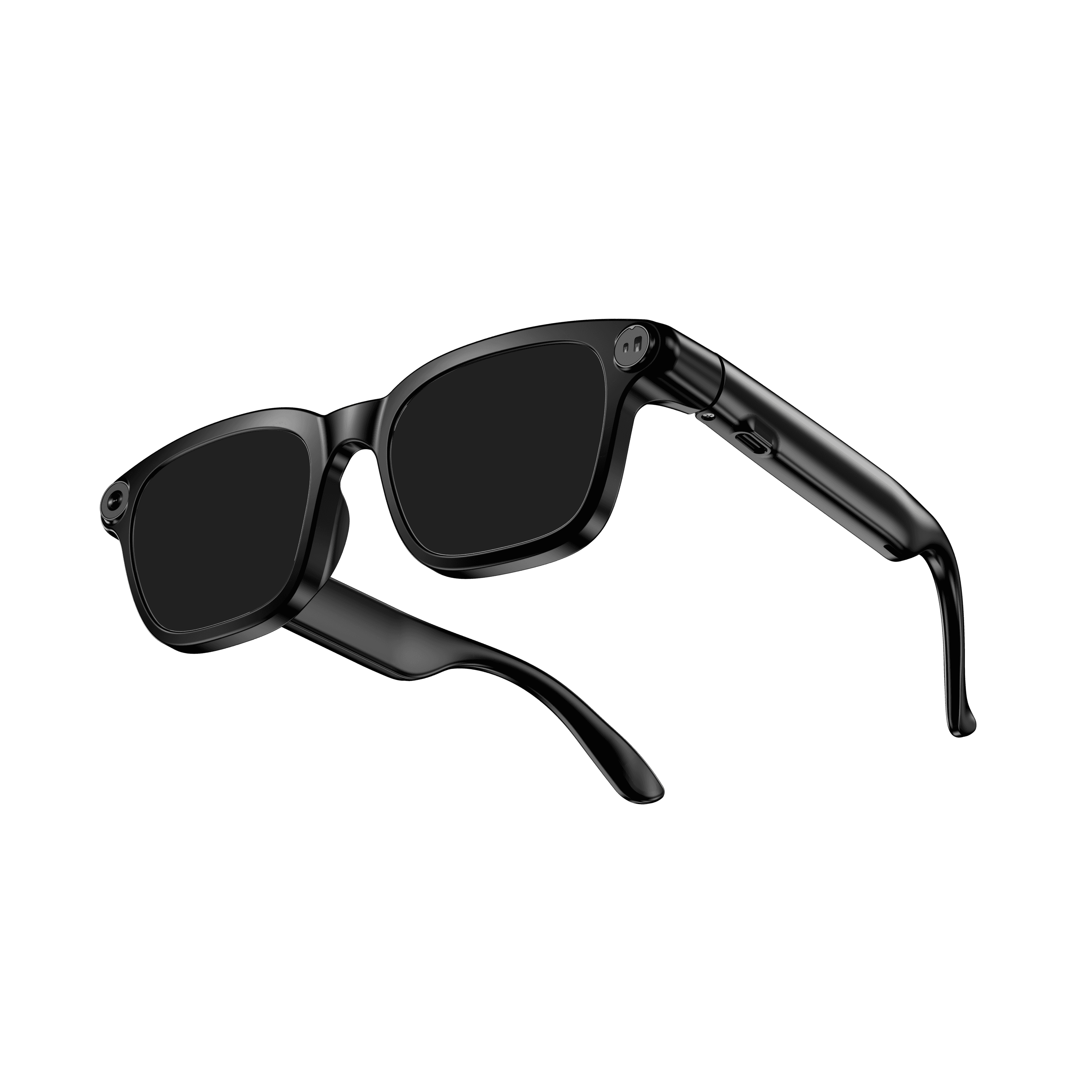 OXIVUE M08$99 at checkout | 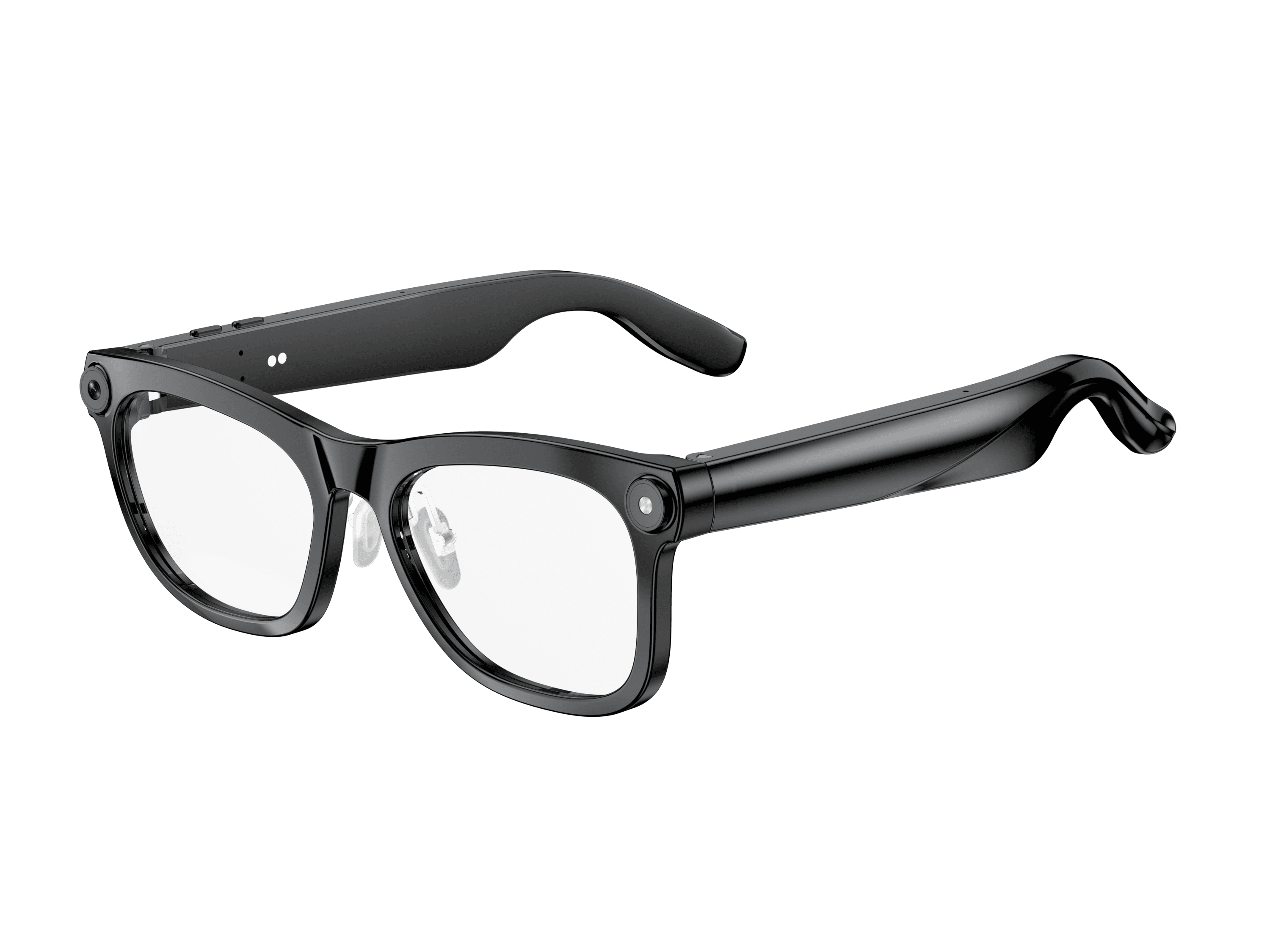 OXIVUE M02C$109 at checkout | 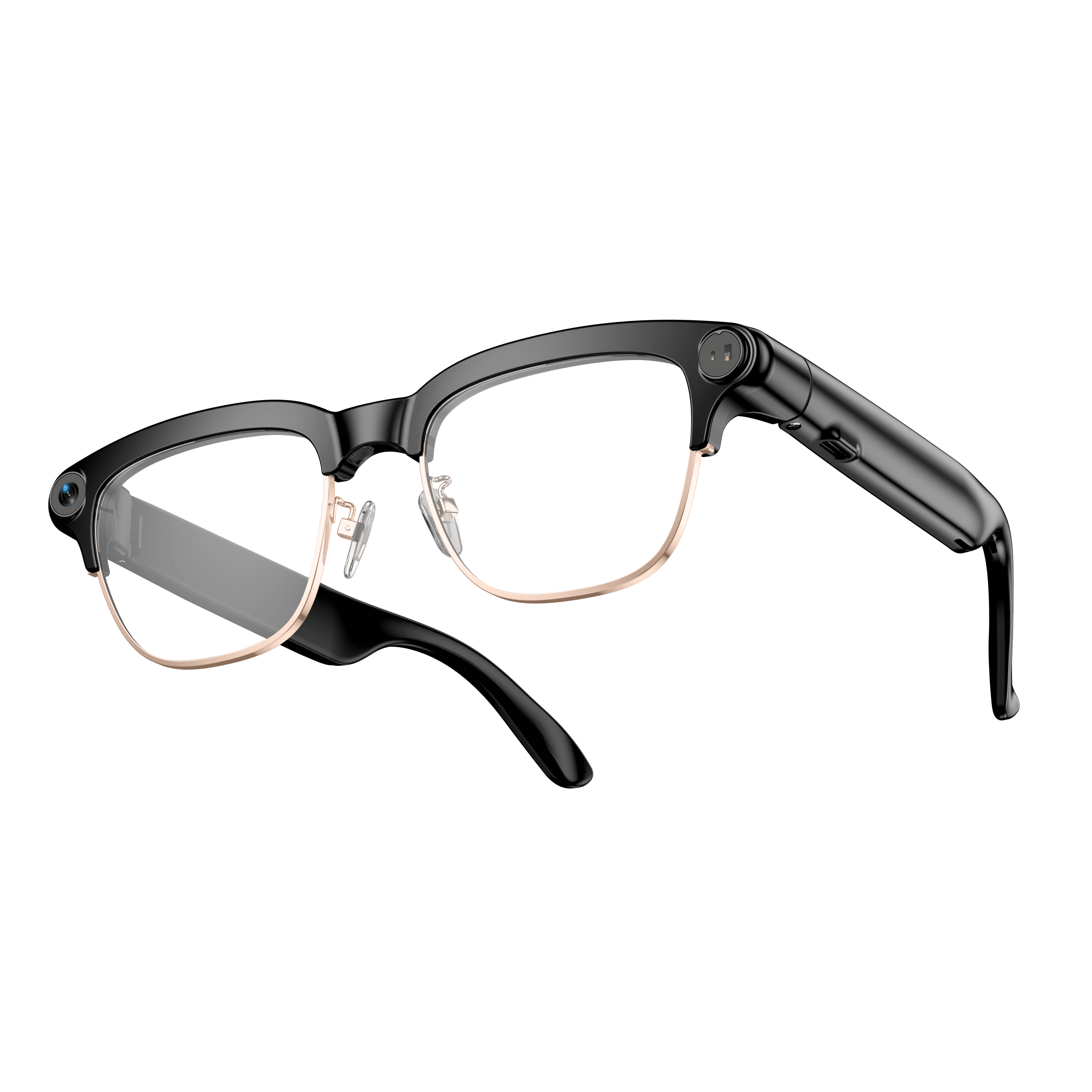 OXIVUE M08C$119 at checkout | |
|---|---|---|---|
| Camera | 8 MP | 8 MP | 8 MP |
| Weight | ~42 g | ~41 g | ~42 g |
| Water rating | — | IP65 | — |
| Lenses | Sunglasses · Photochromic · Clear | Sunglasses · Photochromic · Clear | Sunglasses · Photochromic · Clear |
| Translation | 40+ languages | 40+ languages | 40+ languages |
| Visual AI | — | Yes | — |
| Metal trim | — | — | Gold · Silver |
From each frame’s product page. Every model: open-ear audio, Bluetooth 5.4, no subscription. Full spec table
What these frames won’t do
- No prescription lenses yet, on any model. If you need vision correction all day, these can't replace your glasses.
- No display. Nothing appears in your view; you hear answers and capture photos and video.
- Open-ear speakers leak some sound at high volume and won't block out a loud train or a windy road the way sealed earbuds do.
- Translation, music, calls and the assistant need your phone nearby and connected. Translation pauses after each sentence, and only you hear the translated audio; the other person reads the reply on your phone.
- M08: no published water rating, so keep it out of heavy rain and spray.
Check these before you order: see the warranty and refund policy.