Brilliant Labs · 2026
Halo smart glasses from Brilliant Labs, as the maker lists them
Halo smart glasses combine a small colour display, bone-conduction audio and an AI assistant, and Brilliant Labs says they are open source. This guide sets out what the maker’s own pages list for price, specs and availability as of October 31, 2026, where press coverage disagrees with them, and who Halo suits. We have not tested it.
Still deciding? Get the M02C, M08 and M08C comparison in your inbox, with your new-customer price already applied.
One email with the comparison, one follow-up a few days later. Unsubscribe any time.
1. What Halo is, in Brilliant Labs’ own words
Halo is a pair of smart glasses from Brilliant Labs. The maker’s product page (checked October 31, 2026) describes open-source AI glasses with a colour display, dual microphones, dual bone-conduction speakers, a low-power AI processor and an assistant called Noa that keeps long-term memory. It gives the weight as just over 40 g and the battery as all-day at estimated normal use.
It is not Brilliant Labs’ first pair. Engadget (July 31, 2025) called Halo the company’s second-generation smart glasses and described the earlier Frame as its open-source model for hackers and creators. Our Frame alternatives guide covers that older product; this page is about Halo.
The display is what sets Halo apart from camera-and-audio glasses. The hardware documentation (docs.brilliant.xyz, checked October 31, 2026) lists a 0.2-inch colour micro-display with a 256×256 pixel drawable area, and Engadget described the image (July 31, 2025) as “projecting into your peripheral vision”. If you are weighing display glasses in general, our smart glasses with a display guide sets out what a screen adds and what it costs.
2. Halo specs: what the maker’s pages list
Brilliant Labs publishes two sets of facts. The product page lists what a buyer sees; the hardware documentation lists the parts. The table keeps them apart, and where a page does not mention something it says so rather than filling the gap.
| Spec | What the page says (checked October 31, 2026) | Page |
|---|---|---|
| Price | $399.00 USD, black | Product |
| Weight | Just over 40 g | Product |
| Display | Colour display; 0.2-inch colour OLEDoS micro-display, 256×256 px drawable area | Product, hardware |
| Camera | Product page lists a low-power optical sensor for AI inference; hardware page lists a 640×480 global-shutter colour camera module | Product, hardware |
| Audio | Dual microphones; dual bone-conduction speakers | Product, hardware |
| Battery | All-day battery life at estimated normal use; 300 mAh built-in lithium-ion | Product, hardware |
| Processor and wireless | Low-power AI processor (Alif Balletto B1 with Arm Cortex-M55 and Ethos-U55); Bluetooth LE 5.3 | Product, hardware |
| Vision adjustment | Display optic adjusts from +2 to −6 diopters; designed for an interpupillary distance of 58–72 mm; prescription and sunglass lenses sold through a partner after purchase | Product |
| Water or dust rating | Not listed on either page | — |
| Open source | Design files and code on GitHub; a public firmware repository | Product, GitHub |
| Software | Noa assistant, Miniapps, Brilliant SDK, Flutter SDK for iOS and Android | Product, docs |
Two rows are easy to misread. The product page describes an optical sensor for AI inference and does not describe photo or video capture (checked October 31, 2026), while the hardware documentation lists a camera module and Engadget’s launch report said Halo includes a camera. And the battery figures differ: Engadget (July 31, 2025) quoted 14 hours on a single charge, while the product page says all-day at estimated normal use (checked October 31, 2026).
Dates matter on this page. Each figure above is stamped with the day we read the maker’s page, and anything from an article carries that article’s date, because Halo went from pre-order to shipping and the numbers in 2025 coverage do not all match what the pages say now. Where two sources disagree we say so instead of picking one.
3. Halo price, subscriptions and availability
The product page lists Halo at $399.00 USD, in black (checked October 31, 2026). That is not the figure in every article. Engadget’s launch report (July 31, 2025) gave $299, and GamesBeat (October 27, 2026) describes a $299 base price. The pages disagree and we cannot tell which number applies to an order placed today, so treat the price at Brilliant Labs’ own checkout as the figure to rely on.
The hardware is not the only cost. Noa has a free tier with a daily usage cap, and the page lists two paid tiers: Noa Plus at $9.99 a month ($8.25 a month billed annually) and Noa Pro at $39.99 a month ($33.25 a month billed annually). The tier descriptions differ on memory: the free tier is described as “now including memory”, while Plus and Pro are described with long term memory. The page also says taxes are not collected at purchase, so import tax or VAT may apply on delivery depending on the country. It does not list the countries Brilliant Labs ships to.
Availability has changed over time. Engadget reported that pre-orders opened on July 31, 2025 and that shipping was not due to begin until late November 2025. GamesBeat reports that after missing several shipping targets over 2026 the company was officially shipping out batches that month (October 2026), and says the company attributes the delays to supply-chain disruptions. The product page now reads “Shipping now!” with a Buy now button. If you are reading a 2025 article, its dates and pre-order terms are out of date.
Because the figure has differed between sources, open the product page on the day you order and compare it with the total at checkout, including any tax or duty line, before you pay.
On returns, the product page says defective units are exchanged and other returns are refunded minus a $49 restocking fee, with the buyer paying return shipping. Read the maker’s current terms before ordering.
4. Who Halo is for
Reading the maker’s pages, three kinds of buyer stand out.
- Developers and tinkerers. The product page says Halo is open source, with design files and code on GitHub, and lists the Brilliant SDK and a Flutter SDK for iOS and Android. The documentation index lists SDK sections for Python, Flutter, Web Bluetooth and a Lua API reference, and the Brilliant Labs GitHub organisation shows a public firmware repository, halo-firmware, updated October 29, 2026 (all checked October 31, 2026).
- People who want an assistant with a display. Noa is described as a conversational agent with long-term memory, and the page says Miniapps can be built with natural language and shared in an app store. GamesBeat (October 27, 2026) describes the Noa app as having a pixel-art style and an open-world environment layered over a real-world map.
- People who need to adjust the optic.The display optic adjusts from +2 to −6 diopters, the glasses are designed for an interpupillary distance of 58–72 mm, and the page says prescription and sunglass lenses are sold through a partner, SmartBuyGlasses, after purchase. Our prescription smart glasses guide covers the wider question.
The product and usage pages (checked October 31, 2026) do not describe photo or video capture, and the pages we read do not list supported phones or name shipping destinations. Those are questions for Brilliant Labs support before you pay. If directions are your main goal, our navigation guide compares the approaches.
5. What to check before you order
- The price.The maker’s page lists $399.00 and the articles we read quote $299, so confirm the amount at checkout.
- Import tax. The page says taxes are not collected at purchase and may apply on delivery.
- Fit.Halo is designed for an interpupillary distance of 58–72 mm (the page says this covers most, but not all, people) and points to a measuring app so you can check yours.
- Running cost. The free Noa tier has a daily cap; the paid tiers are monthly.
- Returns. Other returns carry a $49 restocking fee and the buyer pays return shipping, per the product page.
- Evidence.We have not tested Halo and publish no review. GamesBeat’s October 27, 2026 hands-on piece (the company supplied the review unit) is one source to read alongside the maker’s pages; compare with our are smart glasses worth it guide.
6. Where OXIVUE fits, and what it does not do
OXIVUE does not make anything like Halo, and we are not a substitute for it. None of our frames has a display, takes prescription lenses or runs Meta AI. What we make is camera-and-audio glasses for people who want to capture a moment, take calls and hear translations without looking at a screen.
If you want an assistant without a screen, look at the M02C: $109 at checkout for one pair, about 41 g, a Sony IMX219 8 MP camera with dual stabilisation, open-ear directional speakers, Bluetooth 5.4, magnetic charging and an IP65 rating (dust and water jets, not immersion). Voice-activated visual AI describes what you are looking at, and the free companion app translates 40+ languages, heard only by the wearer. There is no subscription. A capture starts only with a touch on the temple, and you should ask before recording people.
Side by side, on the facts each maker publishes (Halo figures checked October 31, 2026):
| Brilliant Labs Halo | OXIVUE M02C | |
|---|---|---|
| Price | $399.00 USD on the maker’s page | $109 at checkout, one pair |
| Weight | Just over 40 g | About 41 g |
| Display | Colour micro-display | None |
| Camera | Optical sensor on the product page; camera module on the hardware page | 8 MP Sony IMX219, dual stabilisation |
| Audio | Dual bone-conduction speakers, dual microphones | Open-ear directional speakers, microphones |
| Prescription | Optic adjusts +2 to −6 diopters; partner lenses | No prescription lenses |
| Ongoing cost | Free Noa tier with a daily cap; paid tiers | No subscription |
| Water rating | Not listed on the pages we read | IP65 (not immersion) |
Choose Halo if the display, the open tools or the adjustable optic is the reason you are shopping. Choose a camera-and-audio pair if you want something that works without a screen. They are different products, and neither replaces the other.
Shipping, refunds and warranty. Free shipping from $99. US orders typically arrive in 5–9 business days. International orders take 9–14 business days after shipment. Import VAT or duties outside the US are paid by the recipient. No refunds except transit damage (replaced or refunded); faults are repaired or replaced under the 2-year warranty; change of mind and unmet expectations are not refundable. None of our frames take prescription lenses. Read the refund policy, see the warranty, and compare every model on the comparison page.
Frequently asked questions
What do Halo smart glasses do?
Halo pairs a colour display with dual microphones, bone-conduction speakers and an assistant called Noa that keeps long-term memory, according to Brilliant Labs' product page (checked October 31, 2026). The page says Miniapps can be built with natural language, and developers get the Brilliant SDK and a Flutter SDK for iOS and Android. We have not tested Halo, so this describes what the maker lists, not how well it works.
How much do Halo smart glasses cost?
The maker's page lists $399.00 USD, in black (checked October 31, 2026). Engadget (July 31, 2025) and GamesBeat (October 27, 2026) both give $299, so the pages disagree and the price at Brilliant Labs' own checkout is the one that counts. Noa has a free tier with a daily cap, and paid tiers are listed at $9.99 and $39.99 a month. Taxes are not collected at purchase, so import tax or VAT may apply on delivery.
Are Halo smart glasses shipping yet?
Yes, according to the maker: the product page says "Shipping now!" and has a Buy now button (checked October 31, 2026). Engadget reported in July 2025 that shipping was not due to begin until late November 2025, and GamesBeat reported on October 27, 2026 that, after missing several shipping targets over 2026, the company was shipping batches that month. The page lists no shipping destinations, so confirm yours at checkout before paying.
Is there a Halo smart glasses app?
Yes. The app Brilliant Labs' documentation names is Noa (docs.brilliant.xyz, checked October 31, 2026), and the product page describes Noa as a conversational assistant with long-term memory. GamesBeat describes setup as charging the device, turning it on with a button press and connecting it to the Noa app. The pages we read do not list supported phones, so check that with Brilliant Labs first. Developers can also use the Brilliant SDK and a Flutter SDK for iOS and Android.
Can smart glasses like Halo help a blind person?
Brilliant Labs' product page (checked October 31, 2026) does not describe Halo as an assistive device, and GamesBeat (October 27, 2026) reports that the company is not marketing it as an established medical intervention or validated cognitive aid. The article does not mention blind or visually impaired users. Of the OXIVUE frames, the M02C is the one with voice-activated visual AI that describes what you are looking at. That is a convenience feature, not a medical device, and it has no display. Our guide for blind and low-vision readers goes through what to expect.
What are the downsides of buying smart glasses in 2026?
The trade-offs to weigh are price, battery life, fit and reliance on a phone app. For Halo, the maker's page (checked October 31, 2026) lists Noa subscription tiers and an interpupillary-distance range of 58 to 72 mm, does not list shipping destinations, and says import tax may apply on delivery. For any pair, read the return terms before paying. Our guide on whether smart glasses are worth it walks through the trade-offs for everyday wear.
Is there a Halo smart glasses review or Reddit thread worth reading?
Yes: GamesBeat published a hands-on piece on October 27, 2026 that covers setup, the Noa app and the shipping timeline, and says the company supplied the review unit. We have not tested Halo and publish no review of our own. Engadget (July 31, 2025) and Hackaday (August 4, 2025) predate shipping and quote pre-order terms. Discussion threads, including on Reddit, are opinion; check the date and compare against the maker's pages.
OXIVUE frames side by side
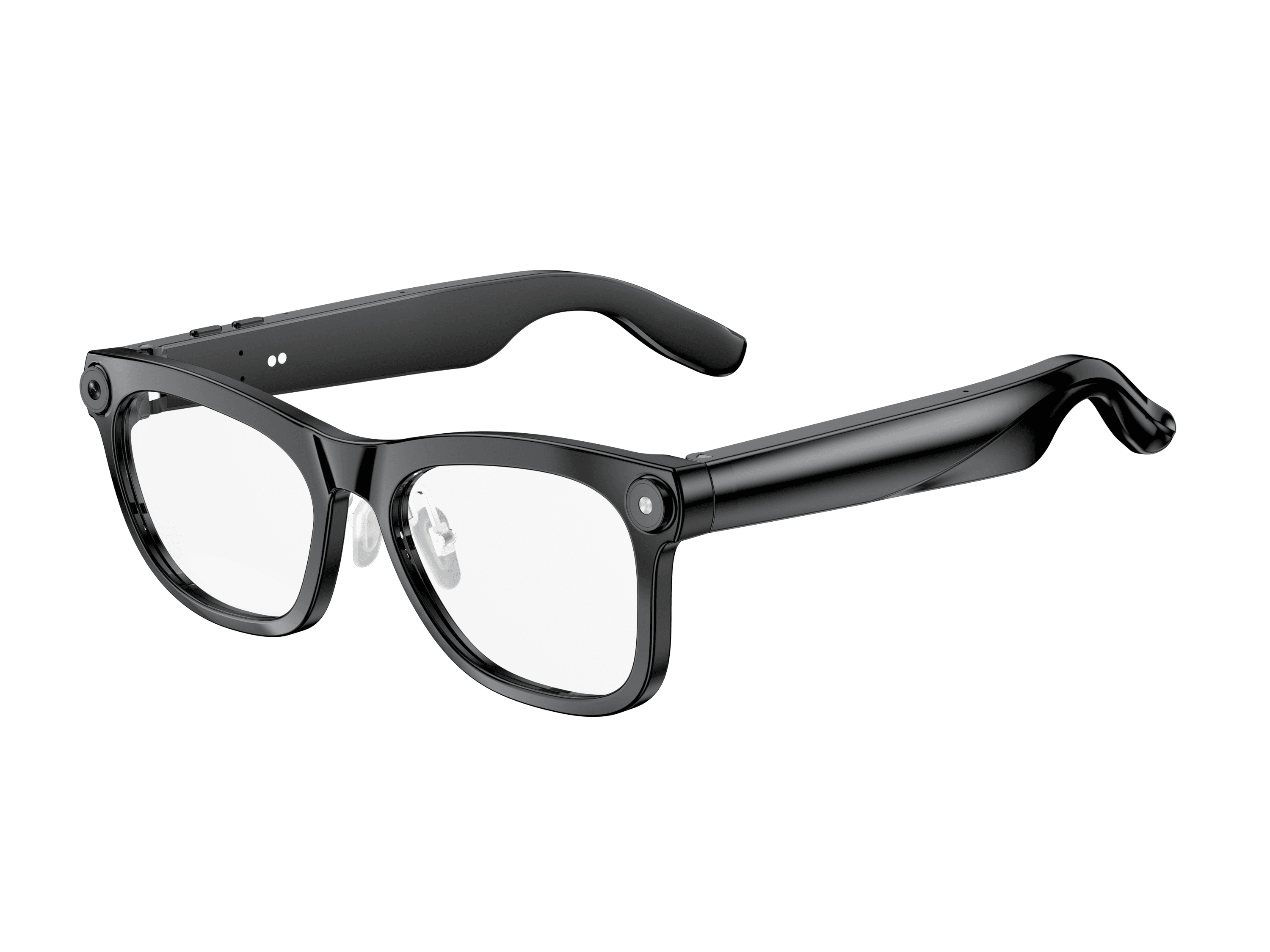 OXIVUE M02C$109 at checkout | 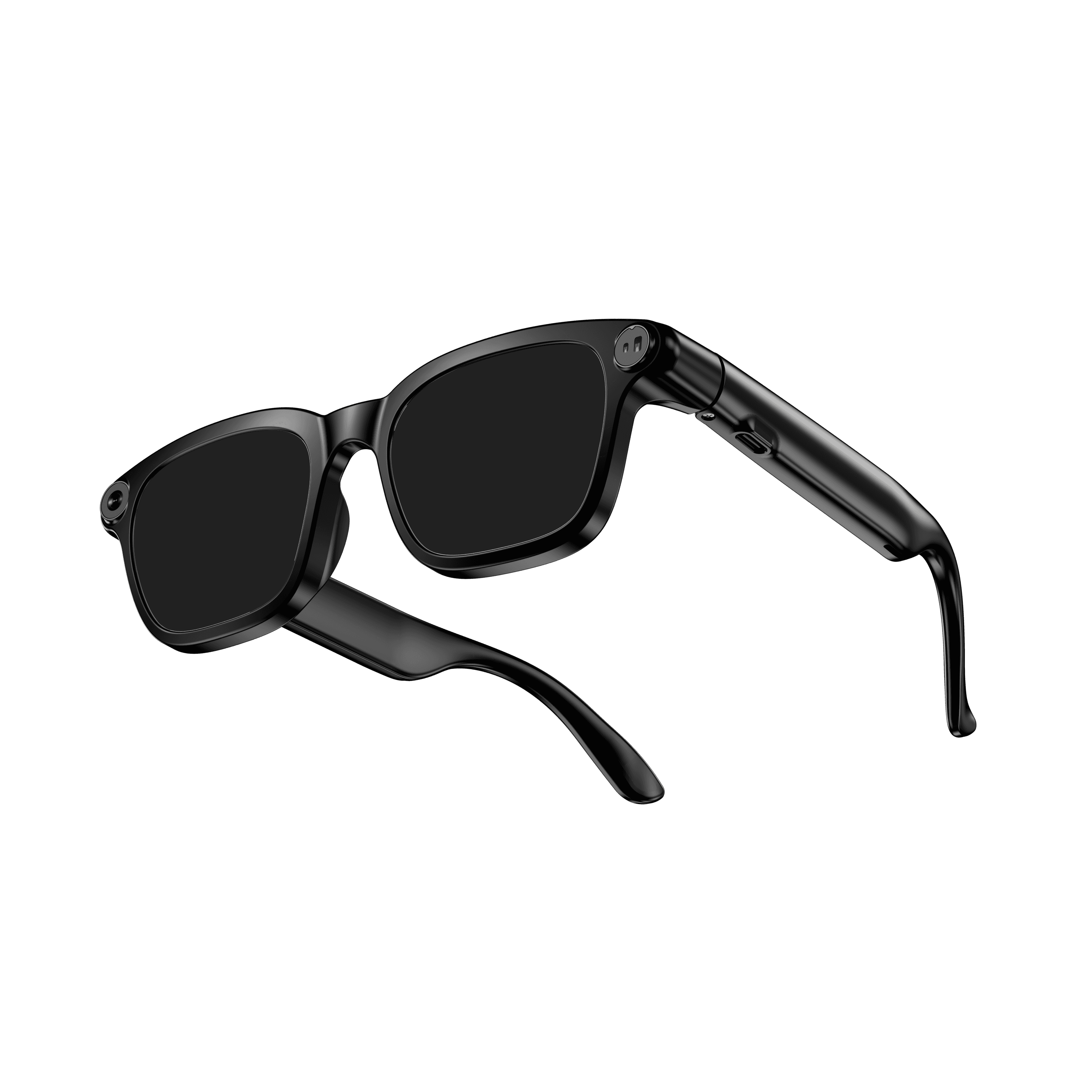 OXIVUE M08$99 at checkout | 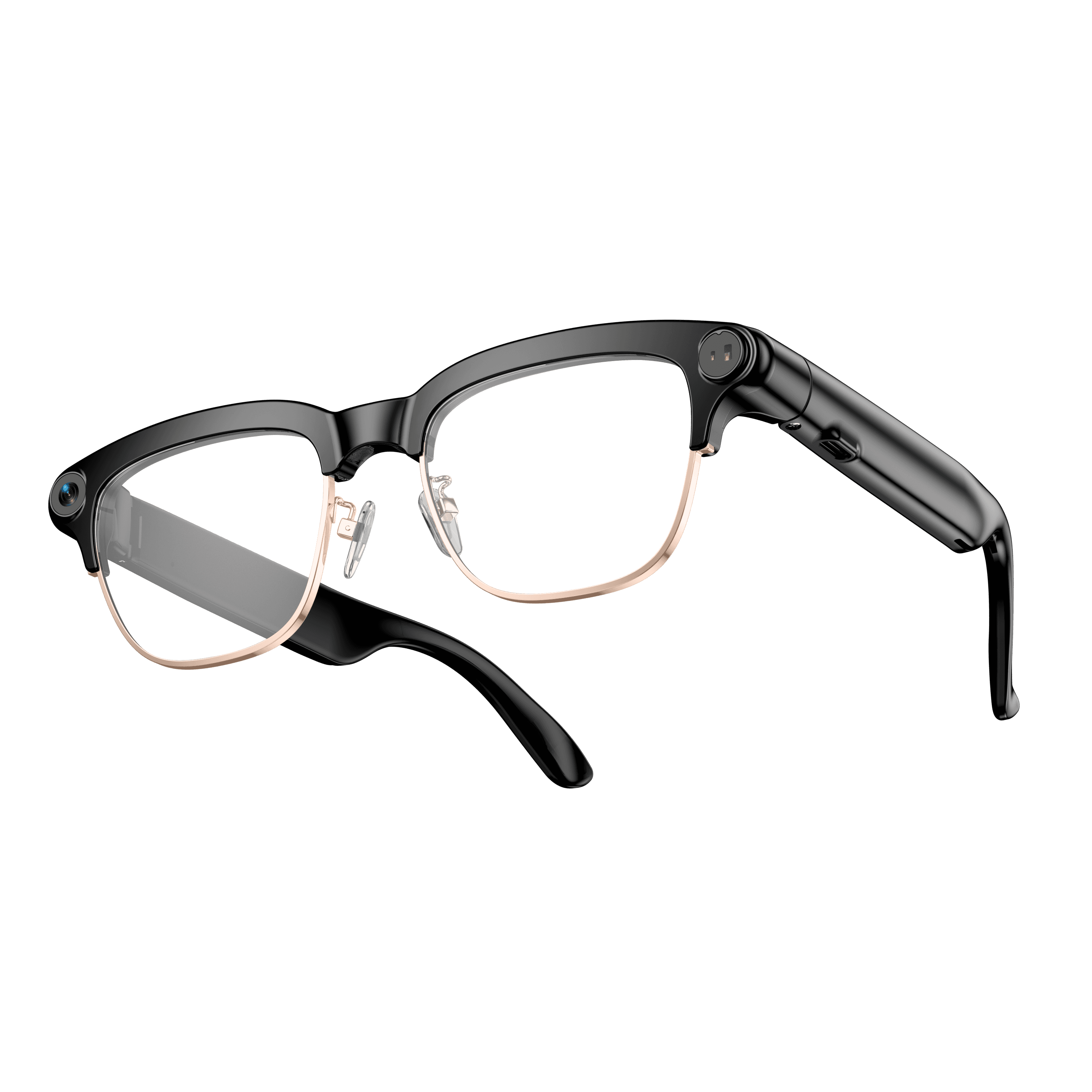 OXIVUE M08C$119 at checkout | |
|---|---|---|---|
| Camera | 8 MP | 8 MP | 8 MP |
| Weight | ~41 g | ~42 g | ~42 g |
| Water rating | IP65 | — | — |
| Lenses | Sunglasses · Photochromic · Clear | Sunglasses · Photochromic · Clear | Sunglasses · Photochromic · Clear |
| Translation | 40+ languages | 40+ languages | 40+ languages |
| Visual AI | Yes | — | — |
| Metal trim | — | — | Gold · Silver |
From each frame’s product page. Every model: open-ear audio, Bluetooth 5.4, no subscription. Full spec table
What these frames won’t do
- No prescription lenses yet, on any model. If you need vision correction all day, these can't replace your glasses.
- No display. Nothing appears in your view; you hear answers and capture photos and video.
- Open-ear speakers leak some sound at high volume and won't block out a loud train or a windy road the way sealed earbuds do.
- Translation, music, calls and the assistant need your phone nearby and connected. Translation pauses after each sentence, and only you hear the translated audio; the other person reads the reply on your phone.
- M02C: IP65 resists dust and water jets, not immersion. No swimming, no saltwater.
Check these before you order: see the warranty and refund policy.