Meta reviews · Display
Meta Ray-Ban Display review: what three reviewers found
A Meta Ray-Ban Display review roundup. What Engadget, Gizmodo and UploadVR concluded after using the glasses: the display, the Neural Band wristband, battery, apps and the frames, with Meta's own price and a date on every source. We have not tested the product.
Still deciding? Get the M02C, M08 and M08C comparison in your inbox, with your new-customer price already applied.
One email with the comparison, one follow-up a few days later. Unsubscribe any time.
1. The verdicts, side by side
Three outlets published full reviews of the Meta Ray-Ban Display within six weeks of its September 30, 2025 launch, and a fourth wrote hands-on impressions less than two weeks before it. We read all four on October 31, 2026. This page summarises each in our own words, with one short quote per outlet. OXIVUE sells camera glasses with no display and publishes this page, and we have not tested the Display ourselves.
| Outlet and reviewer | Published | Score | Verdict in brief |
|---|---|---|---|
| Engadget, Karissa Bell | October 17, 2025 | 76 out of 100 | “An exciting first-gen product, if you can get past the thick frames.” Probably not for most people right now; it makes more sense for someone already all-in on smart glasses. |
| Gizmodo, James Pero | October 31, 2025 | 3.5 (scale not stated in the text we read) | “impressive hardware that’s limited by its lack of apps” |
| UploadVR, David Heaney | November 10, 2025 | No score in the text we read | A first-generation product for early adopters who accept the look and the wristband; everyone else should wait for later display glasses. |
| The Ghost Howls (Skarredghost), hands-on | September 18, 2025 | Not a review | Not mind-blowing: a step from audio glasses toward AR. The demo was short, around five to seven minutes by the author’s own account, and the author thinks the average user can go with standard Ray-Ban Meta. |
Sources: the four pages above, all read on October 31, 2026.None is recent. They describe the software as it was in autumn 2025, and Meta’s release notes, summarised in our Meta Neural Band guide, list features added during 2026. Read complaints about missing features as dated.
2. What the reviewers agree on
All three full reviews found the display readable and the Neural Band wristband responsive. Beyond that, they converge on bulk and on the app gap.
- Reviewers found the display readable. Engadget called it bright and clear without overwhelming the view. Gizmodo put its maximum brightness at 5,000 nits and found it very visible even in direct sun. UploadVR found it visible in daytime sunlight, though with a translucent look, and said the automatic brightness picks a good level.
- Reviewers found the Neural Band responsive. Engadget used it for more than a week and said it almost never missed a gesture and never registered a false one, with a small vibration to confirm each. UploadVR found it highly accurate, including with the hand in a pocket or in the dark. Gizmodo called it quick, though some inputs may need sending twice and a badly fitted band caused accidental inputs.
- The reviewers describe big frames.The glasses weigh 69 g (70 g in the large size), and both Gizmodo and UploadVR set that against 52 g for Ray-Ban Meta. Engadget called the frames extremely chunky and too wide for her face and said the sand colour is a bit more flattering than black. UploadVR said the design is “chunky, and everyone notices.” Gizmodo lists two colours, Black and Sand, both shiny.
- Apps are a shared complaint.Engadget said there are only a handful of Meta-made apps and wished the display worked with more of her phone’s apps and notifications. Gizmodo said there is no app store, and named Gmail, Slack and the full Instagram and Facebook apps as missing. UploadVR said there is no app store and named screening email and Slack messages as the feature he wanted most.
- Captions and translation: useful, with caveats. Engadget preferred live translation as a text feed over audio-only translation, though it sometimes missed words. Gizmodo said live captions work fairly well and live translation worked with some variability. UploadVR was impressed by translation, which supported four languages when he wrote.
3. Battery: Meta’s claim and what the reviewers saw
Meta claims up to six hours of mixed use on the glasses. The reviewers’ results depended on how heavily they used the display, and Engadget reported that video calls and live translation drain it fastest.
| Source | What it reported |
|---|---|
| Meta launch post (September 17, 2025; updated September 30, 2025) | Up to six hours of mixed use; up to 30 hours in total with the charging case; Neural Band up to 18 hours. |
| Engadget | About seven hours with very light use. Video calls and live translation drain it much faster. The reviewer said she was charging it at least every other day. |
| Gizmodo | From a full charge at about 10:30 a.m. to about 18% at 8 p.m., with intermittent use including about an hour of audio. The reviewer found that sufficient. |
| UploadVR | Called Meta’s six-hour mixed-use rating fairly accurate. Said the case gives four full charges, about 30 hours in total. |
The wristband is a second battery to manage: Engadget said it needs daily charging if you wear the glasses all day. Meta’s product page, read on September 30, 2026, listed the same six hours plus 24 hours from the case. For battery tests on Meta’s glasses without a display, see our Meta glasses reviews roundup.
4. What they criticised
The complaints cluster around a single-eye display, thin software and the size of the frames. Each outlet raised its own extras. Every point below is attributed and dated: Engadget October 2025, Gizmodo October 2025, UploadVR November 2025, The Ghost Howls September 2025.
- One display, one eye.UploadVR (November 2025) described a constant minor feeling of eyestrain when looking at the display for more than a few seconds, and said others he showed it to found it hurt their eyes within seconds. The Ghost Howls (September 2025) found the single display a bit uncomfortable after a short demo, reported eye strain, and called the monocular choice “a big no from me.”
- Messaging and phone integration. Engadget described several texting problems: no simple way to send a photo from the glasses, iOS group chats without thread context, and replies that do not mark messages as read on the phone.
- Navigation.Engadget’s walking directions led her to an alley behind the office rather than the entrance. UploadVR said full navigation works in the 28 cities Meta supports and that elsewhere the glasses only send directions to the phone.
- Video calls. All three full reviews were unimpressed: cramped on the small display (Engadget), low resolution next to an iPhone (Gizmodo), pixelated and stuttering (UploadVR).
- Camera. Gizmodo said the camera uses the same 12 MP sensor as Ray-Ban Meta Gen 1 and Gen 2, with video topping out at 1440p at 30 fps and no 3K at 60 fps option.
- Meta AI. Gizmodo (October 2025) said simple voice commands work well but complex queries were hit or miss. UploadVR (November 2025) found Meta AI less advanced than rival assistants on complex requests.
- Privacy and repair. Gizmodo (October 2025) raised privacy as a concern, questioning the implications for the wearer and for people nearby, and advised not to plan on repairs being cheap or easy, if available at all.
5. Where the reviews split
The reviewers disagree most about comfort, and they land on slightly different recommendations.
- Glasses comfort. Engadget said they slide down the nose, would not suit biking or jogging, and noticed pressure after six or seven hours of wear. UploadVR wore them for eight hours or more with no real discomfort and found them slightly more comfortable than regular Ray-Ban Meta. Gizmodo found them mostly comfortable for long wear.
- Wristband comfort. Gizmodo said the band sometimes has to be strapped on fairly tight, leaves a mark on the arm and can be uncomfortable over long periods. UploadVR compared its comfort to a Pixel Watch or Whoop band. Engadget said it needs a snug fit and that she does not love how it looks as an everyday accessory.
- Who should buy.Engadget and UploadVR both narrow their advice to enthusiasts or early adopters. Gizmodo’s verdict turns on the lack of apps rather than on a buyer type. Our do you actually need a screen guide offers a three-question test.
6. Meta’s own price and range
Meta launched the Display in the US from $799, including the Meta Neural Band, on September 30, 2025, through select US retailers (Meta launch post, announced September 17, 2025). The reviews above round that to $800. Meta’s Sand listing on meta.com showed $799 when we checked on October 31, 2026. UploadVR (November 2025) said prescription lenses add $200 and weeks of waiting.
Meta’s Display page, read on September 30, 2026, listed prescription lenses at $200 extra ($999 in total), covering -4.00 to +4.00 total power in single vision, and sale in the US, UK, Canada, France, Germany and Italy. On October 31, 2026 that page would not load its details for us, so check meta.com for the current price and stock. Our Meta Ray-Ban Display guidehas the full spec sheet from Meta’s pages, and our smart glasses with display guide covers the wider category.
7. If you want smart glasses without a screen
OXIVUE sells camera glasses with no display. The M08 is $99 at checkout for one pair (listed $149). It weighs about 42 g, against the 69 g the reviews report for the Display. It has an 8 MP camera (the sensor maker is not published), open-ear speakers and microphones, Bluetooth 5.4, and translation in 40+ languages through the free companion app. The translated audio is heard only by the wearer, and the other person reads the reply on your phone.
It is not a version of the Display with the screen removed. It has no display, no Meta AI and no prescription lenses, so it does not offer what these reviewers describe: captions or translation text in your lens, or a wristband controller. Capture starts only with a touch on the temple. Ask before you record people, and check your local recording law. Compare every model on the comparison page.
Shipping, refunds and warranty. Free shipping from $99. US orders typically arrive in 5–9 business days. International orders take 9–14 business days after shipment. Import VAT or duties outside the US are paid by the recipient. No refunds except transit damage (replaced or refunded); faults are repaired or replaced under the 2-year warranty; change of mind and unmet expectations are not refundable. None of our frames take prescription lenses. Read the refund policy.
Frequently asked questions
Is the Meta Ray-Ban Display worth it?
Not for most buyers yet, according to two of the three reviews we read. Engadget scored it 76 out of 100 in October 2025 and advised that most people should probably skip it for now, while UploadVR limited its recommendation to early adopters who accept the look and the wristband (November 2025). Gizmodo (October 2025) called it impressive hardware limited by a lack of apps. All three reviews predate Meta's 2026 software updates, so check Meta's current feature list before you decide.
How much does the Meta Ray-Ban Display cost?
From $799 in the US, including the Meta Neural Band, according to Meta's launch post from September 2025. Meta's Sand listing showed $799 when we checked on October 31, 2026, and the reviews round the launch price to $800. Meta's Display page, read on September 30, 2026, listed prescription lenses at $200 extra, for $999 in total. On October 31, 2026 that page would not load its details for us, so check meta.com for today's price. For comparison, OXIVUE's M08 is $99 at checkout for one pair and has no display.
How long does the Meta Ray-Ban Display battery last?
Meta claims up to 6 hours of mixed use. Engadget saw about 7 hours with very light use and said video calls and live translation drain it much faster. Gizmodo's pair went from a full charge at about 10:30 a.m. to about 18% by 8 p.m. with intermittent use, and UploadVR called the 6-hour claim fairly accurate. Meta says the charging case brings the total to up to 30 hours.
Can you get prescription lenses in the Meta Ray-Ban Display?
Yes, according to Meta. Its product page, read on September 30, 2026, listed prescription lenses for $200 extra, covering -4.00 to +4.00 total power in single vision. UploadVR (November 2025) said they add weeks of waiting. OXIVUE frames do not take prescription lenses at all, so the M08 is not an answer if you need corrective lenses in your glasses.
Does the Meta Ray-Ban Display have apps?
Only a few, in the reviews we read. Engadget (October 2025) said there are only a handful of Meta-made apps and wished the display worked with more of her phone's apps and notifications. Gizmodo (October 2025) said there is no app store and named Gmail, Slack and the full Instagram and Facebook apps as missing. UploadVR (November 2025) also said there is no app store. These reviews predate Meta's 2026 updates, so check Meta's release notes for what has been added.
Is the Meta Neural Band any good?
Mostly yes, according to these reviews. Engadget used it for more than a week and said it almost never missed a gesture and never registered a false one. UploadVR found it highly accurate, even with the hand in a pocket or in the dark, with rare misses on sideways swipes while walking. Gizmodo found it quick but said some inputs needed repeating and that it can be uncomfortable over long periods. Meta rates its battery at up to 18 hours.
Do OXIVUE glasses have a display like the Meta Ray-Ban Display?
No. OXIVUE frames have no display, no Meta AI and no prescription lenses. The M08 is $99 at checkout (listed $149) and weighs about 42 g, against the 69 g the reviews report for the Display. It has an 8 MP camera, open-ear audio and translation in 40+ languages through the free companion app. If you want text in your lens, captions or a wristband controller, it is the wrong product.
OXIVUE frames side by side
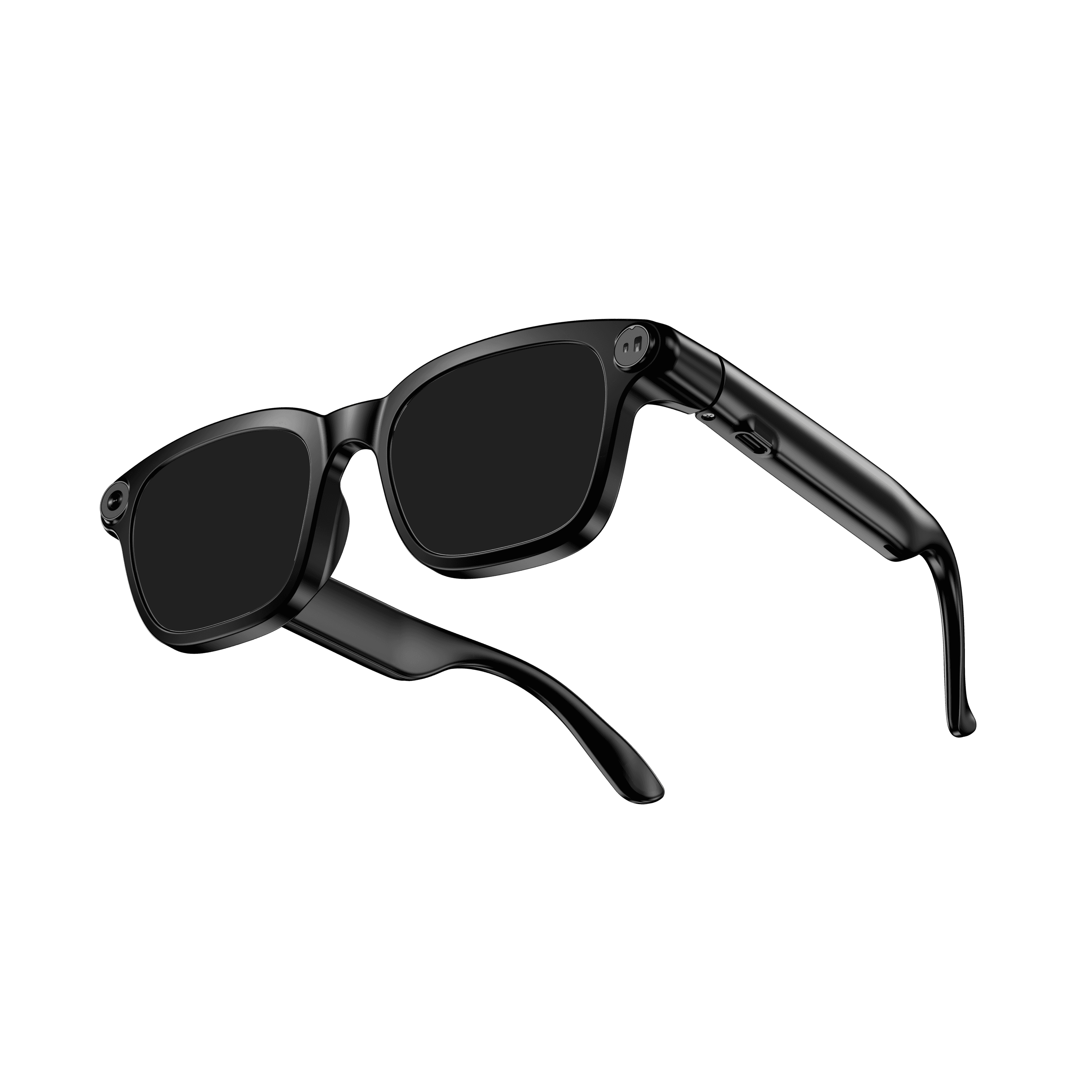 OXIVUE M08$99 at checkout | 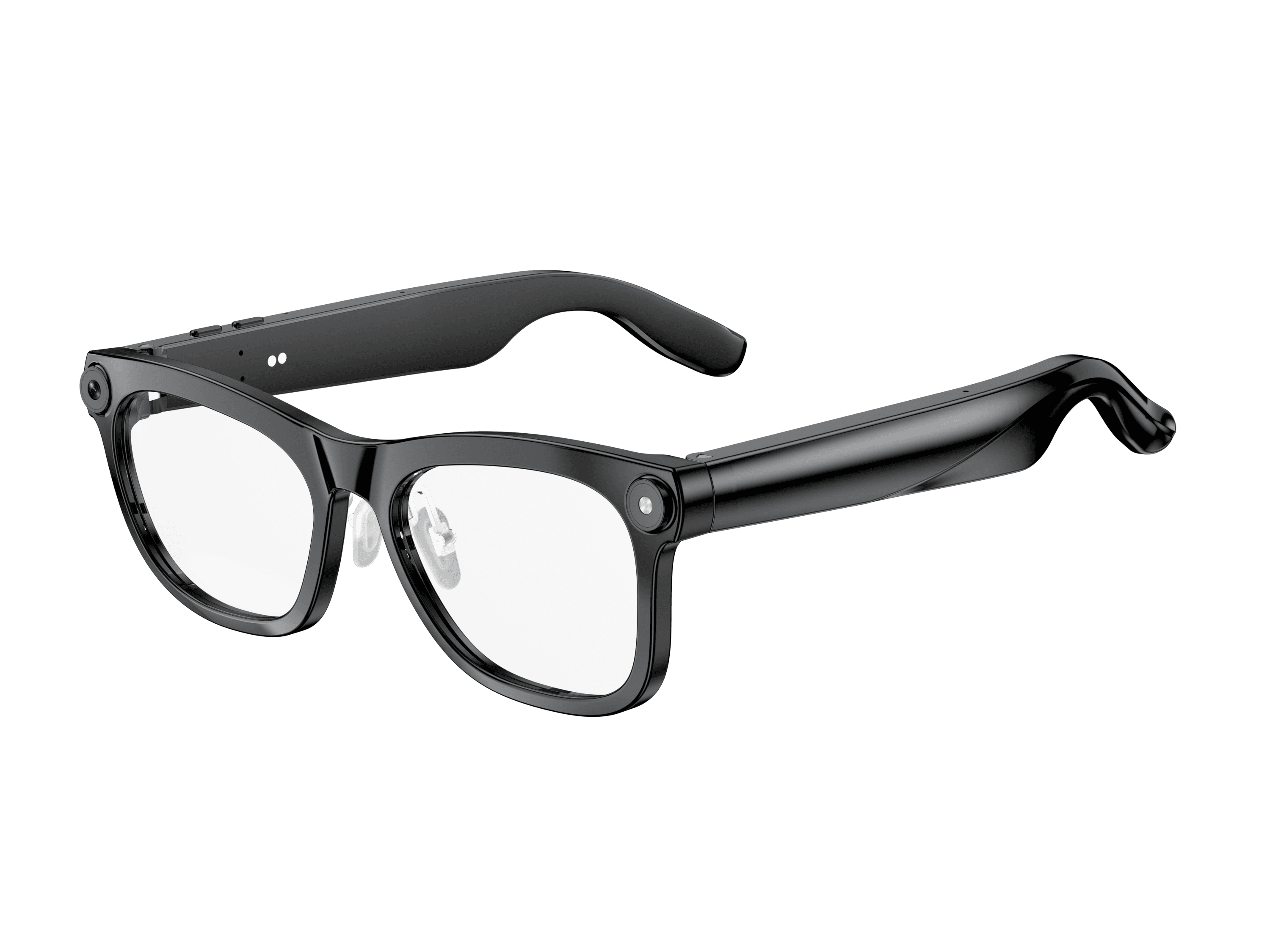 OXIVUE M02C$109 at checkout | 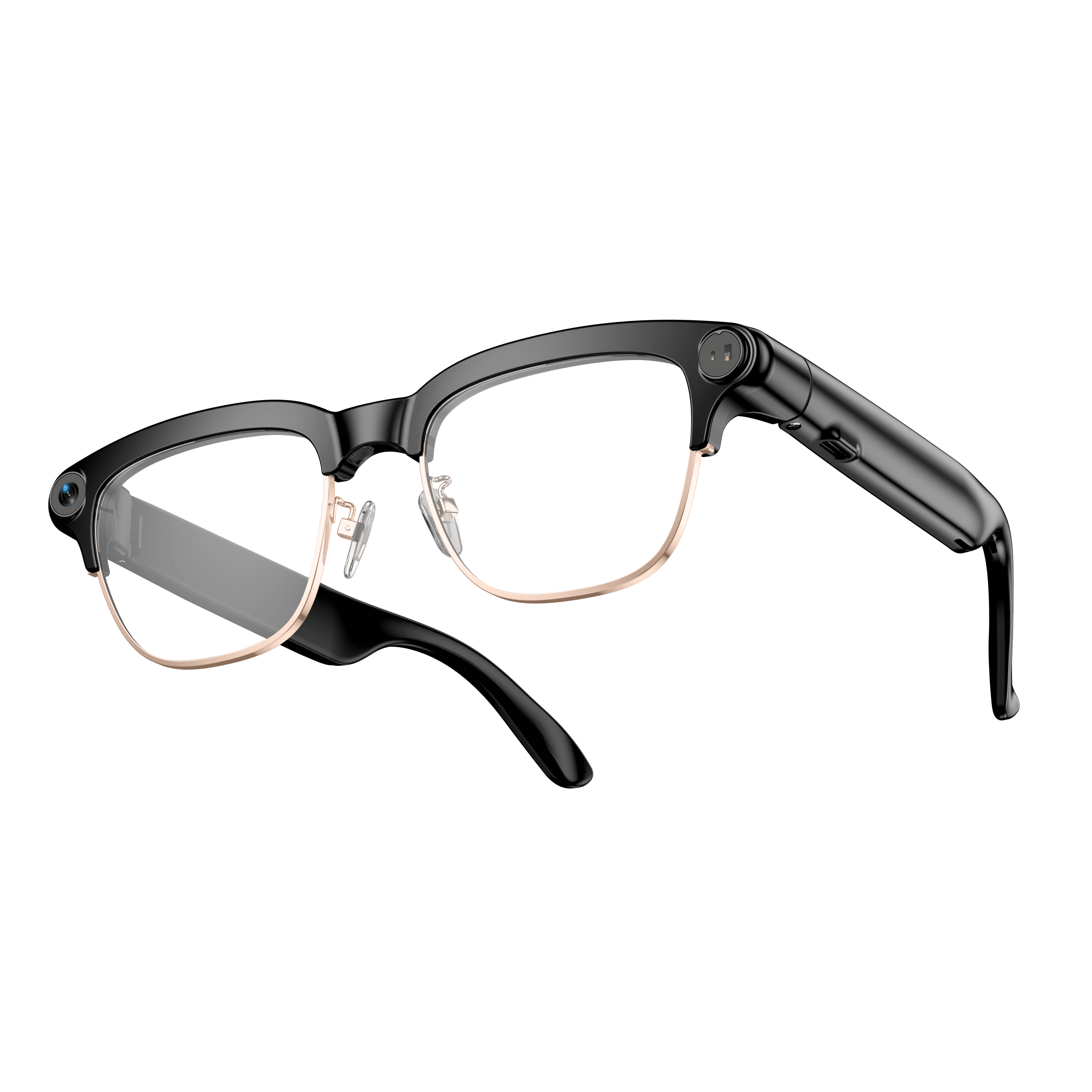 OXIVUE M08C$119 at checkout | |
|---|---|---|---|
| Camera | 8 MP | 8 MP | 8 MP |
| Weight | ~42 g | ~41 g | ~42 g |
| Water rating | — | IP65 | — |
| Lenses | Sunglasses · Photochromic · Clear | Sunglasses · Photochromic · Clear | Sunglasses · Photochromic · Clear |
| Translation | 40+ languages | 40+ languages | 40+ languages |
| Visual AI | — | Yes | — |
| Metal trim | — | — | Gold · Silver |
From each frame’s product page. Every model: open-ear audio, Bluetooth 5.4, no subscription. Full spec table
What these frames won’t do
- No prescription lenses yet, on any model. If you need vision correction all day, these can't replace your glasses.
- No display. Nothing appears in your view; you hear answers and capture photos and video.
- Open-ear speakers leak some sound at high volume and won't block out a loud train or a windy road the way sealed earbuds do.
- Translation, music, calls and the assistant need your phone nearby and connected. Translation pauses after each sentence, and only you hear the translated audio; the other person reads the reply on your phone.
- M08: no published water rating, so keep it out of heavy rain and spray.
Check these before you order: see the warranty and refund policy.