Meta reviews · Sourced
Meta glasses reviews: what eight named reviews praised and criticised
Meta glasses reviews run from 2023 to October 2026 and cover three generations of Ray-Ban Meta plus Meta's own-brand frames. This page reads eight named, dated reviews and sets out what they praise, what they criticise, where their battery tests landed against Meta's claims, and where the reviewers disagree. OXIVUE sells smart glasses and publishes this page; we have not tested Ray-Ban Meta ourselves.
Still deciding? Get the M02C and M08 comparison in your inbox, with your new-customer price already applied.
One email with the comparison, one follow-up a few days later. Unsubscribe any time.
1. The eight reviews, in date order
OXIVUE sells smart glasses and publishes this page, so here is how it was built. We have not tested Ray-Ban Meta glasses. The review claims below come from eight reviews we opened on October 31, 2026, each linked in the table and each named and dated. Meta’s own prices come from meta.com, and Engadget’s Gen 3 hands-on (not a review) is cited separately. Two pages that rank for this search, Wirecutter’s review and an AppleVis forum post, would not load for us, so they are not used. We did not open the Reddit thread that ranks third; the FAQ says what Google’s snippet shows.
| Review | Model and price stated | Praised | Criticised |
|---|---|---|---|
| Moor Insights & Strategy, Dec 4, 2023 | Ray-Ban Meta Gen 1 (Wayfarer, Headliner), $299 base | Video stabilisation, 48 g, accurate five-microphone array, louder speakers | About three hours from the glasses alone, slight shutter lag, limited US-only assistant, privacy |
| Digital Trends, updated May 6, 2025 | Ray-Ban Meta Gen 1, $299 to $379 per the review | Light and comfortable, 12 MP photos, microphone quality, stabilisation; Editors’ Choice badge | Basic notifications, a few exposure mistakes in hard light, slips in hot weather, messy Meta AI app design and settings |
| Gizmodo, Sep 28, 2025 | Ray-Ban Meta Gen 2, from $379 | 3K video, longer battery, simple voice commands handled most of the time | Meta AI “finicky at best”, stills and speakers unchanged, battery under 8 h in a loud-audio test, privacy |
| Engadget, Oct 1, 2025 | Ray-Ban Meta Gen 2 (Wayfarer tested), from $379; score 87 of 100 | Better battery, 3K video, translation for travel | Hard to frame POV shots, pricey lens upgrades, translation imperfect and a battery drain, Live AI a novelty |
| TechEdt, Apr 23, 2026 | Ray-Ban Meta Gen 2 Skyler; 3.0 out of 5 | Clear audio, strong calls, sharp 3K in good light, solid build | No video stabilisation, no HDR or night mode, unreliable AI, European-only translation, runs small |
| The Irish Times, Apr 30, 2026 | Ray-Ban Meta Gen 2, €449 at one retailer | Excellent video, better audio and battery, comfortable, looks like normal eyewear | “Creep factor”, volume in busy places, translation limited to six languages, settings tweaking |
| Engadget, Jul 20, 2026 | Meta Glasses (Fury style), from $299; score 8/10 | Same features as Gen 2 Ray-Ban and Oakley models for less money | Chunkier and less polished, 60 g, about 4.5 h in use, paid plan for some AI features |
| Gizmodo, Oct 7, 2026 | Ray-Ban Meta Gen 3 (Zena), from $449 | Longer battery, adjustable temple tips, slightly thinner arms | Calling quality not improved, expensive, same privacy worries (no camera shutter), quirks with Muse, mostly the same as the last generation |
Prices are as each reviewer printed them. On October 31, 2026, meta.com listed Ray-Ban Meta (Gen 2) from $379 and Ray-Ban Meta (Gen 3) from $449. The reviews cover first-generation Ray-Ban Meta (Moor Insights, Digital Trends), second-generation (Gizmodo, Engadget, TechEdt, the Irish Times), third-generation (Gizmodo) and Meta’s own-brand Meta Glasses (Engadget, July 2026), so we name the generation each time.
2. What the reviews agree on
Five themes recur. Audio and microphones are praised. Video is praised, with caveats about light. Where reviewers timed continuous music or loud audio, the glasses lasted fewer hours than Meta’s claims. Meta AI draws repeated criticism. Privacy comes up even in reviews that like the glasses.
Audio and calls
Four reviews single out sound. Moor Insights said the five-microphone array on the first generation “catches your every word with great accuracy”, and Digital Trends called the microphone quality “exceptionally good”. TechEdt praised “clear, directional audio” and strong call quality on a Gen 2 Skyler, and the Irish Times found call audio “surprisingly good”. The caveats are loud places and newer hardware. The Irish Times had to raise the volume in busy places, Gizmodo noted that Gen 2 brought no speaker upgrade, and Gizmodo’s Gen 3 review found that the six-microphone glasses seemed to pick up more of the reviewer’s surroundings on calls than previous generations, with results the reviewer called “not great”.
Photos and video
Video is where reviewers are happiest, with conditions. Gizmodo called the improved detail of the Gen 2’s 3K video over Gen 1’s 1080p “fairly noticeable”, the Irish Times wrote “video quality is excellent”, and TechEdt found 3K sharp in good lighting. Engadget called it “YouTuber-friendly” but found framing point-of-view shots a challenge, and Gizmodo noted that still photos got no upgrade over Gen 1’s 12 MP. The weak spots are light and processing: Digital Trends reported a few exposure mistakes in challenging light, and TechEdt reported visible noise indoors with no HDR or night mode.
Battery: what reviewers reported against what Meta claims
Meta rates its hours for typical use, and several reviewers ran heavier loads such as continuous music, so a gap is expected. The size of it is still worth knowing.
| Review | Model | Claim, as the review states it | What the reviewer reports |
|---|---|---|---|
| Moor Insights, Dec 2023 | Gen 1 | 36 hours with the charging case; the review says Meta quotes no figure for the glasses alone | About three hours from the glasses alone |
| Gizmodo, Sep 2025 | Gen 2 | 8 hours promised by Meta, per the review | About 15% left after roughly 5 hours of audio in a loud café; a 32-minute call used about 4% of the battery |
| Engadget, Oct 2025 | Gen 2 | Up to 8 hours on a charge | A little over 5.5 hours of continuous music; live translation called a major battery drain |
| TechEdt, Apr 2026 | Gen 2 Skyler | Doubled from 4 to 8 hours (the review’s wording) | 58% left after about 4 hours of mixed use |
| Engadget, Jul 2026 | Meta Glasses (Fury) | More than 8 hours | Closer to 4.5 hours with consistent music listening |
| Gizmodo, Oct 2026 | Gen 3 | Up to 9 hours of mixed use | The reviewer estimates more than 6 hours of music in total, from 85% left after an hour at about 60% volume |
Engadget’s Gen 3 hands-on (September 23, 2026) adds two cautions: results depend on how closely your habits match Meta’s idea of typical use, and it had not had the glasses long enough to test the claim. Our Meta glasses battery life guidelists Meta’s rated hours for every model.
Meta AI
The assistant takes repeated criticism. Gizmodo called Meta AI “finicky at best” on Gen 2. Engadget found live translation useful on a trip but not perfect, and wrote that Live AI “still feels like more of a novelty”. TechEdt gave the Gen 2 Skyler 3.0 out of 5, citing the assistant and the missing video stabilisation, and wrote that Meta AI lacks contextual depth compared with ChatGPT or Gemini and that location questions kept prompting for permission. In 2023 Moor Insights noted that Meta AI was “limited to the U.S. for now”. In October 2026 Gizmodo’s reviewer could not get Meta’s Muse AI model to play ambient music on Spotify.
Translation gets mixed treatment. Engadget called Meta AI translation “a game-changer for travel”, the Irish Times said it is limited to six languages that must be downloaded to the glasses in advance, and TechEdt listed translation “limited to European languages” as a con. Engadget also reports (July 2026) that some rate-limited features need a paid plan, naming a $20-a-month Meta One plan for Conversation Focus beyond three hours a month. For Meta’s own list, see our Meta glasses translation guide.
Privacy and public use
Most of the eight reviews raise privacy, including ones that recommend the glasses. Moor Insights wrote in 2023 that “there are still concerns about privacy” and predicted “bans to follow”. Gizmodo’s Gen 2 review (September 2025) cautioned privacy-focused buyers, writing that Meta “has a pretty bad track record” on privacy and pointing to Meta’s use of photos and videos taken with the voice command to train its AI; its Gen 3 review (October 2026) notes there is no camera shutter and says Meta did not make much of an effort to address external privacy concerns in the hardware. The Irish Times (April 2026) said the “creep factor” remains, though the indicator LED tackles some of the concerns. Engadget reported in October 2025 that US users can no longer opt out of cloud storage of voice recordings, and wrote in July 2026 of “a very real and growing backlash” against smart glasses, with bans starting to appear in places such as courtrooms. Our Meta glasses privacy guide covers what Meta says it stores. With any camera glasses, ask before you record someone and check your local law.
Price and value
The first generation drew praise for value. Digital Trends called it “a great value purchase”, and Moor Insights, which cited the base $299 price, called it “a clear winner”. At $449 the Gen 3 gets less generous treatment: Gizmodo lists “Expensive” among its cons. Engadget’s July review gives Meta’s own frames, from $299, 8/10 and writes that they are “a great value”. Engadget listed “pricey lens upgrades” as a con for Gen 2. Meta’s current prices are in our Meta glasses price guide.
Fit and weight
Weight depends on the frame. Moor Insights and Digital Trends both quote 48 g for first-generation pairs (Digital Trends with prescription Transitions lenses). TechEdt quotes 53 g for the Skyler, which it found runs small, and Engadget quotes 60 g for the Meta Fury, which dug into the reviewer’s nose. Digital Trends called its pair lightweight and “almost never uncomfortable”, but said you may find they slip down your nose in hot weather.
3. Where the reviewers disagree
Video stabilisation.Moor Insights wrote that stabilisation on the first generation is “incredibly good”, and Digital Trends also reported good stabilisation. TechEdt, testing a Gen 2 Skyler, listed missing video stabilisation as a con and said walking movement shows in the footage. None of the reviews we read (checked October 31, 2026) explains the difference, and we cannot tell from here.
Whether the assistant is ready.TechEdt wrote that the AI assistant “remains too unreliable to be a core feature” while adding that “the hardware works”. The Irish Times headlined its Gen 2 review “More than a fun toy” and praised the video, audio and battery.
Whether to upgrade.Gizmodo’s Gen 2 review named video and battery as the two main areas of improvement and said that if you are fine with those, it could not see a reason to rush out for a new pair. Its Gen 3 review, headlined “Technically an Upgrade”, said it is difficult to urge owners of the last generation to rush out and buy, and called the Gen 3 fine for first-time buyers.
How much polish is worth paying for.Engadget scored Meta’s own frames 8/10 while calling them “a little chunkier and less polished” than the equivalent Ray-Ban frames.
The verdicts differ in form and scale: a phrase (“a clear winner”, Moor Insights), a badge (Editors’ Choice, Digital Trends) and scores of 87 out of 100 (Engadget), 3.0 out of 5 (TechEdt) and 8/10 (Engadget, Meta Glasses). On the Gizmodo pages we read (checked October 31, 2026), the printed score of 3.5 shows no scale. We do not average them.
4. Gen 1, Gen 2 and Gen 3: what changed, according to the reviews
Gen 1 to Gen 2. Gizmodo and Engadget credit the second generation with 3K video and better battery. Gizmodo says stills (12 MP), speakers and Meta AI did not change and that Gen 2 weighs 2 g more. Our Gen 2 vs Gen 1 guide sets the specs side by side.
Gen 2 to Gen 3.Gizmodo’s October 7, 2026 review lists a sixth microphone, adjustable temple tips, a camera it says is 36% smaller and the Aviator and Zena styles. meta.com listed Gen 3 from $449 and Gen 2 from $379 on October 31, 2026. Engadget’s September 23 hands-on said some of the updates it was most looking forward to, such as landscape capture, were not out yet. Our Gen 3 guide tracks what Meta has published.
Meta Glasses.Meta’s own-brand line is separate from Ray-Ban Meta. Engadget’s July 2026 review found the same features as Gen 2 Ray-Ban and Oakley models for less money, in frames it called chunkier and less polished.
5. How to read a Meta glasses review
- Match the generation and the frame. Weight, fit and battery differ by style and generation, and a 2023 complaint may or may not still apply.
- Separate the claim from the test. Rated hours and timed hours measure different loads; check whether the reviewer was streaming music or translating.
- Check what works where you live.Moor Insights noted in 2023 that Meta AI was limited to the U.S. for now, and the Irish Times and TechEdt both list a limited set of translation languages. Check Meta’s own pages for your country.
- Notice the date. Four of the eight reviews date from 2025 or earlier.
- Remember each review is one person’s experience. Eight reviews are not a failure rate.
6. Who the reviews suggest Ray-Ban Meta suits
This is our reading, not a finding of any one review. The eight point to Ray-Ban Meta suiting people who want hands-free photos, video, calls and open-ear audio in a frame that looks ordinary, who treat the assistant as a bonus, and who are comfortable with Meta’s data practices. They suit less well anyone who needs a battery that lasts under heavy use, wants an assistant they can rely on, or is uneasy about bystander privacy. If the main question is whether the price is justified, our price-per-feature testworks through it using Meta’s own prices.
7. Where OXIVUE fits, and what it does not do
OXIVUE is not a Ray-Ban Meta substitute, and this page does not rank it against them. If the reviews leave you wanting a camera-and-audio pair without Meta AI, two of our frames are worth knowing. The M08 is $99 at checkout: an 8 MP camera, about 42 g, rated for 7 hours of listening and 4 hours of calls, with sun, photochromic or clear lenses and no published water rating. The M02C is $109 at checkout: a Sony IMX219 8 MP sensor with dual stabilisation, IP65 (dust and water jets, not immersion), about 41 g, magnetic charging, and voice-activated visual AI that can describe what you look at. Both have open-ear audio and translation in 40+ languages through the free companion app, which needs your phone.
What they do not do: there is no display, no prescription lens option and no Meta AI. Capture starts only with a touch on the temple, so ask before you record anyone. Our hours are ratings, not test results from us; after reviews in which timed battery fell short of Meta’s claimed hours, treat any rated hours as a starting point for your own use. Every model is on the comparison page.
Shipping, refunds and warranty. Free shipping from $99. US orders typically arrive in 5–9 business days; international orders take 9–14 business days after shipment, and import VAT or duties outside the US are paid by the recipient. No refunds except transit damage (replaced or refunded); faults are repaired or replaced under the 2-year warranty; change of mind and unmet expectations are not refundable. None of our frames take prescription lenses. Read the refund policy and the shipping policy.
Frequently asked questions
Are Meta glasses worth it?
Mostly yes for a first-time buyer who wants a camera and open-ear audio in an ordinary-looking frame, according to the eight reviews we read (checked October 31, 2026). Digital Trends called the first generation a great value, Engadget scored the Gen 2 87 out of 100, and Gizmodo said the Gen 3 suits first-time buyers rather than owners of the last generation. The caveats are battery below the claimed hours in some tests, an assistant reviewers call unreliable, and privacy concerns. TechEdt's 3.0 out of 5 is the lowest of the scores quoted here.
What are the complaints against Meta glasses?
Five complaints come up across the eight reviews. Battery: in continuous-music or loud-audio tests, Gizmodo and Engadget reported or estimated roughly 4.5 to just over 6 hours, against the 8 to 9 hours the reviews cite as Meta's claims. Meta AI: Gizmodo called it finicky, Engadget called Live AI a novelty and TechEdt called the assistant unreliable. Privacy: worries about recording around other people, with Engadget describing a growing backlash. Cost: Gizmodo lists the $449 Gen 3 as expensive. Fit: the 60 g Meta Fury dented Engadget's reviewer's nose, and Digital Trends said its pair may slip in hot weather.
Can I watch Netflix on AI glasses?
No review we read describes watching video on Meta's standard glasses (checked October 31, 2026). Gizmodo's Gen 2 verdict is about Ray-Ban Meta AI glasses you can buy "without a screen", and the reviews cover a camera, open-ear audio and an assistant. Meta's store also lists separate Meta Ray-Ban Display glasses (checked October 31, 2026), which none of the eight reviews covers, so check Meta's page for what they support. OXIVUE frames have no display either.
What is the review of the Ray-Ban Meta Wayfarer smart glasses?
Positive with caveats. Moor Insights (Gen 1, Wayfarer and Headliner styles) called them "a clear winner" in December 2023, praising the stabilisation and microphones, and Engadget scored the Gen 2 Wayfarer 87 out of 100 in October 2025, praising the battery and 3K video. The common caveats are battery below the claimed hours in some tests, a limited assistant and privacy. Engadget's reviewer found framing point-of-view shots a challenge and lens upgrades pricey. Meta lists Gen 2 from $379 and Gen 3 from $449 (checked October 31, 2026).
Is the Ray-Ban Meta Gen 3 worth upgrading to from Gen 2?
Probably not, going by Gizmodo's October 7, 2026 review, which is headlined "Technically an Upgrade" and says it is difficult to urge owners of the last generation to rush out and buy a pair. Its list of what is new includes a sixth microphone, adjustable temple tips, a camera it says is 36% smaller, and Aviator and Zena styles. Meta lists Gen 3 from $449 and Gen 2 from $379 (checked October 31, 2026). Engadget's September 23 hands-on had not yet tested the battery claim.
Where can I read Meta glasses reviews on Reddit?
On r/RayBanStories. One thread there, shown in Google as "My extensive review after a month with the Rayban Meta ..." (70+ comments), ranks third for this search (checked October 31, 2026). We did not open it; Google's snippet, dated about two years ago, shows the poster listing camera quality as a pro and a heavy feel, nose pain after two hours and short battery life as cons. Owner threads can show longer-term wear than a launch review, but a thread dated about two years ago predates Gen 2 and Gen 3, so check which generation the poster owns first.
Are there 2026 reviews of Meta glasses?
Yes. Four of the eight reviews here were published in 2026: TechEdt on April 23, the Irish Times on April 30, Engadget's review of Meta's own glasses on July 20 and Gizmodo's Gen 3 review on October 7. The 2025 and earlier reviews cover Gen 1 and Gen 2, and meta.com still lists Gen 2 from $379 (checked October 31, 2026).
OXIVUE frames side by side
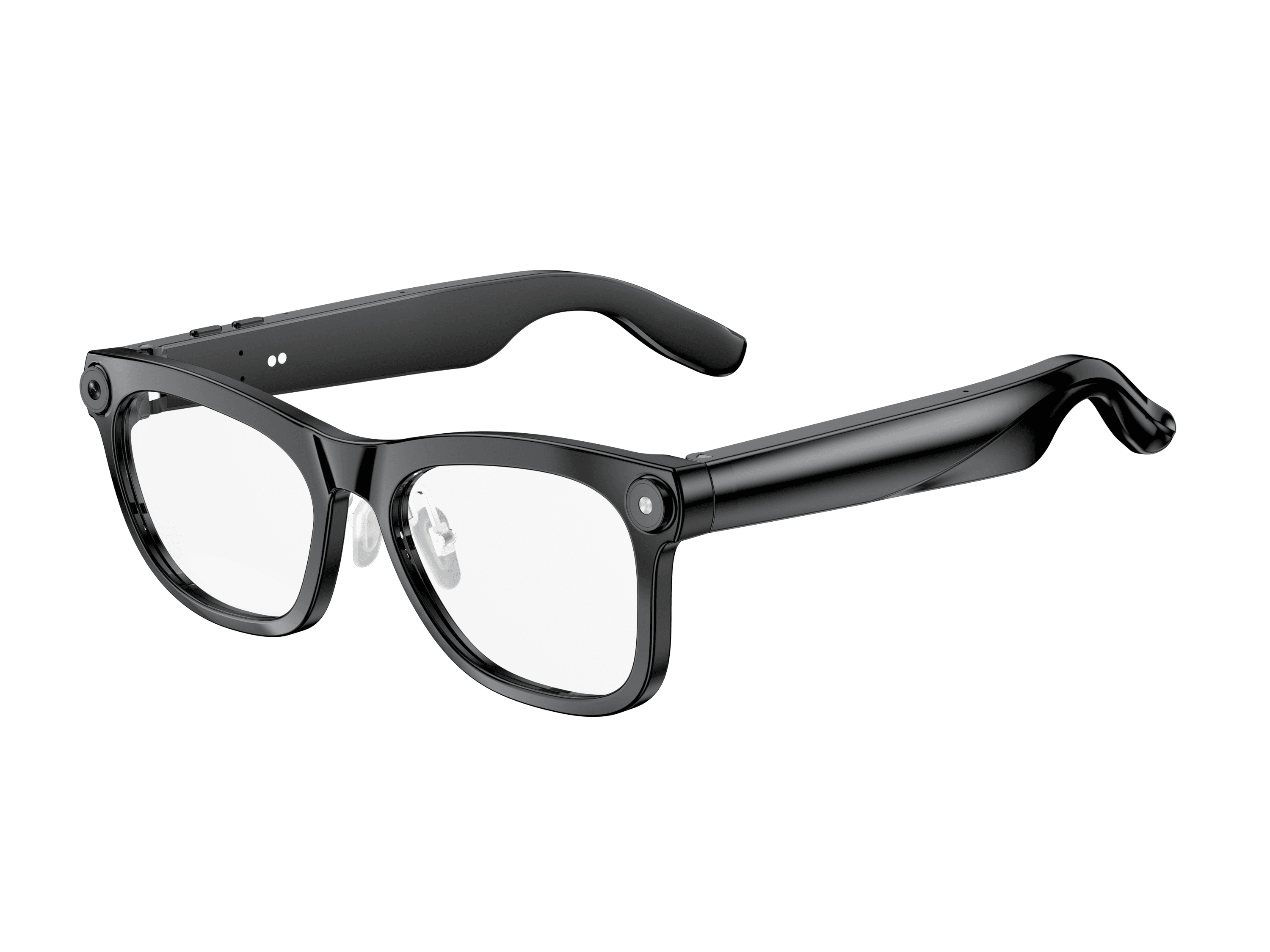 OXIVUE M02C$109 at checkout | 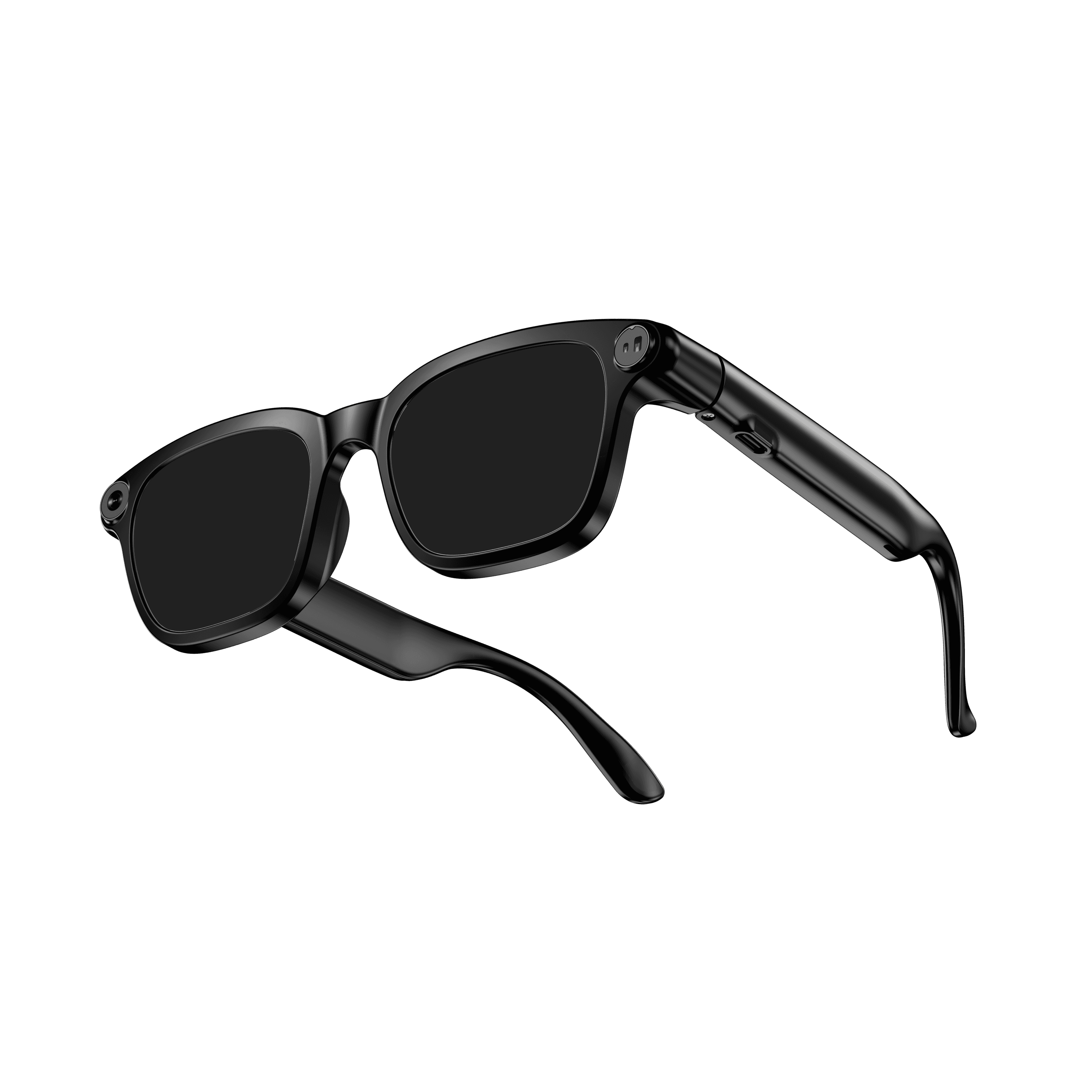 OXIVUE M08$99 at checkout | |
|---|---|---|
| Camera | 8 MP | 8 MP |
| Weight | ~41 g | ~42 g |
| Water rating | IP65 | — |
| Lenses | Sunglasses · Photochromic · Clear | Sunglasses · Photochromic · Clear |
| Translation | 40+ languages | 40+ languages |
| Visual AI | Yes | — |
From each frame’s product page. Every model: open-ear audio, Bluetooth 5.4, no subscription. Full spec table
What these frames won’t do
- No prescription lenses yet, on any model. If you need vision correction all day, these can't replace your glasses.
- No display. Nothing appears in your view; you hear answers and capture photos and video.
- Open-ear speakers leak some sound at high volume and won't block out a loud train or a windy road the way sealed earbuds do.
- Translation, music, calls and the assistant need your phone nearby and connected. Translation pauses after each sentence, and only you hear the translated audio; the other person reads the reply on your phone.
- M02C: IP65 resists dust and water jets, not immersion. No swimming, no saltwater.
- M08: no published water rating, so keep it out of heavy rain and spray.
Check these before you order: see the warranty and refund policy.