Alibaba Qwen · 2026
Qwen Glasses explained: S1, G1, N1 and N1 Pro, model by model
Qwen Glasses are Alibaba's AI glasses, launched in China. The S1 and G1 first appeared as Quark AI glasses, and the releases we checked name four models that are easy to mix up. This guide sorts them out from Alibaba's own releases and named outlets, each dated, and says plainly what those sources do not tell you.
Still deciding? Get the M02C, M08 and M08C comparison in your inbox, with your new-customer price already applied.
One email with the comparison, one follow-up a few days later. Unsubscribe any time.
1. What Qwen Glasses are, and why you also see the Quark name
Qwen Glasses are smart glasses made by Alibaba and integrated with its Qwen AI and the Qwen App. Alibaba’s launch release of December 5, 2025 (Alibaba Cloud Community, checked October 31, 2026) introduced them as the Quark AI Glasses series, “deeply integrated with Qwen”, in two versions: the S1 and the G1. By March 4, 2026, when Alibaba showed Qwen Glasses at MWC Barcelona, its release called the line Qwen Glasses, described an S1 series and a G1 series, and did not mention the Quark name.
TechNode (February 28, 2026, checked October 31, 2026), citing the Chinese outlet Jiemian, reported that an Alibaba staff member said the Quark and Qwen glasses share the same underlying algorithms and the same software and hardware teams, and that future models and global branding will use the Qwen name. That is a report, not an Alibaba statement. In September 2026 Alibaba unveiled two newer models, the N1 and N1 Pro, under the Qwen Glasses name.
This page is about which model is which. For whether a US buyer can get a pair, and what to buy instead, see our guide to Quark AI glasses availability and alternatives.
2. The four models side by side
The table pulls together what Alibaba and the outlets below state. Prices are China prices in yuan as reported on the dates shown; where two outlets disagree, both are shown. A cell that says “Not stated” means none of the pages we checked on October 31, 2026 states it. It does not mean the glasses lack the feature.
| S1 | G1 | N1 | N1 Pro | |
|---|---|---|---|---|
| China launch | Launch release dated December 5, 2025 (Alibaba) | Launch release dated December 5, 2025 (Alibaba) | Pre-orders September 22, sales October 13, 2026 (Alibaba) | Pre-orders September 22, sales October 13, 2026 (Alibaba) |
| Price in China | From 3,799 yuan (Alibaba, December 2025) | From 1,899 yuan (December 2025); “as low as” 1,997 yuan after subsidies (Alibaba, March 2026) | From 2,899 yuan (TechNode) or 2,999 yuan before discounts (The Next Web) | From 3,399 yuan (TechNode) or 3,499 yuan (The Next Web) |
| Display | Dual micro-OLED displays (Alibaba) | None (Alibaba: shares the S1 hardware except the display) | Not stated | Not stated |
| Camera | 3K video, AI-enhanced 4K output, 0.6-second photo capture (Alibaba) | “Camera-first”; core hardware shared with the S1 (Alibaba) | 50 MP sensor (Alibaba); 4K video (TechNode) | 50 MP sensor (Alibaba); 4K video (TechNode) |
| Weight | Not stated | 40 g (Alibaba) | Not stated | Not stated |
| Battery | Swappable dual batteries, up to 24 hours (Alibaba) | Not stated | Replaceable; 9 hours (TechNode); 25 hours standby or 9 hours of music (The Next Web, N1 section, citing Bloomberg) | Replaceable; 8 hours (TechNode) |
| Also noted | Bone-conduction voice pickup (Alibaba) | A sunglasses variant in seven lens colours (Alibaba, March 2026) | AI memos, meeting notes, travel reminders (TechNode) | Eye tracking, iris-verified payments; heart rate, blood oxygen, skin temperature (TechNode) |
| Sold in | China: Tmall, JD.com, Douyin, partner optical stores | China: Tmall, JD.com, Douyin, partner optical stores | China: Taobao, Tmall, JD.com, Douyin (The Next Web) | China: Taobao, Tmall, JD.com, Douyin (The Next Web) |
Sources, all checked October 31, 2026: Alibaba’s releases of December 5, 2025, March 4, May 9 and September 25, 2026 (via Alibaba Cloud Community), plus TechNode and The Next Web, both October 2026. Check Alibaba’s storefront for current prices, which change with subsidies and launch offers.
3. S1 and G1: the original pair
The S1 is the display model. Alibaba’s December 2025 release describes dual micro-OLED displays, dual chips, bone-conduction voice pickup and a swappable dual-battery system that it says delivers up to 24 hours of battery life. A hands-on at MWC from The Deep View (March 3, 2026, checked October 31, 2026) said the S1 has dual in-lens displays and the G1 does not, and described the heads-up displays as monochromatic and green-tinted. It also listed a 12 MP camera and a dual-battery system with swappable 272 mAh packs, without saying which model the list covers. The outlet wrote that Qwen had yet to issue a press release and that the specs were gathered from a demo and booth tour. Alibaba’s December 2025 release (checked October 31, 2026) does not describe the display colour.
The G1 is the model without a display. Alibaba’s December 2025 release gives its weight as 40 g, calls it “camera-first” and says it shares the S1’s core hardware except the display. In March 2026 Alibaba said the G1 was available at “as low as” 1,997 yuan (approximately $275, Alibaba’s figure) after national consumer incentives and platform subsidies, and said a G1 sunglasses variant comes in seven lens colours.
On May 9, 2026 Alibaba announced an upgrade, described in its release as a proactive service system that draws on signals such as time, location and environmental conditions and tracks how long the glasses have been worn, for example suggesting an umbrella when rain is forecast or prompting you to lift your head and stretch. The same release describes a spatial 3D display with dual optical engines that adds depth and layering to what appears in view. It does not name the model that gets either feature, and it gives no release date for the services it describes as coming soon. Gizmodo (May 11, 2026, checked October 31, 2026) covered the update as one for the S1 and wrote that its author had not had a chance to test the S1.
4. N1 and N1 Pro: the October 2026 models
Alibaba unveiled the N1 and N1 Pro at its Apsara Conference. Its September 25, 2026 release says pre-orders opened on September 22, official sales were scheduled for October 13, and the N1 series has a 50-megapixel sensor. It attaches eye tracking for visual interaction, including object recognition and iris-based payment, to the N1 Pro and does not mention it for the N1.
TechNode (October 14, 2026) adds 4K video, replaceable batteries in the temples, and heart rate, blood oxygen and skin temperature readings on the Pro. It says Alibaba lists battery life at nine hours for the N1 and eight for the Pro. The Next Web (October 13, 2026) gives 25 hours on standby or nine hours of music in its N1 section, citing Bloomberg, and says you talk to the assistant through bone-conduction microphones. The table shows both.
The same two outlets disagree on price. TechNode says the N1 is priced from 2,899 yuan and the Pro from 3,399 yuan. The Next Web says from 2,999 yuan, about $450, before discounts (citing Bloomberg), and 3,499 yuan for the Pro, notes that some Chinese outlets list 2,899, and adds that with state subsidies and launch offers buyers can pay as little as 2,218 yuan (citing Yahoo Finance Hong Kong). Neither article (both checked October 31, 2026) describes a display or gives a weight for the N1 or N1 Pro.
5. What the Qwen assistant does, according to Alibaba
Alibaba’s December 2025 release says you can reach the assistant by voice commands like “Hello Qwen” or through touch controls. It lists text and image questions, meeting notes, reminders, a live teleprompter and near-eye navigation, support for the MCP protocol for third-party developers, and integrations with Alipay, Amap, Taobao, Fliggy, QQ Music and NetEase Cloud Music. Those are Chinese services.
The March 2026 release adds real-time translation, HD capture, meeting transcription and visual recognition, and says agentic tasks such as ordering food, booking hotels or hailing rides by voice would roll out in phases from late March, and that users in China will soon be able to do them hands-free. The December release describes the glasses as integrated with Alibaba’s ecosystem. How much of that carries over abroad is not stated: the same March release describes the international version as featuring “deep integrations with leading services” and names none.
6. Languages: what the sources say
None of the pages we checked names a translation language list. Alibaba’s December 5, 2025 release lists “on-the-go translation”, its March 4, 2026 release lists real-time translation, and neither names a language. The May 9 and September 25, 2026 releases name none either, and TechNode and The Next Web list translation among the N1’s functions without a list (all checked October 31, 2026). Whether English is supported, how many languages there are and whether translation works away from China are not answered by those pages.
If a retailer or a video quotes a number, treat it as unverified until it appears on Alibaba’s own page. For how translation on glasses works in general, and what to check before you rely on it, see our guide to glasses that translate languages.
7. Outside China: what Alibaba has said
Alibaba’s March 4, 2026 release says “The international version is planned for global rollout within 2026”, and describes it as featuring deep integrations with leading services. It names no countries, markets, languages, price or date. We found no announcement of an international date, price or country list (checked October 31, 2026). Every sales channel named in the sources above is Chinese: Tmall, JD.com, Douyin, Taobao and partner optical stores in China.
A listing outside those channels is not one these sources describe, and we cannot vouch for it. The dated record of what Alibaba and outlets have said, plus a checklist for importing, is in our Quark AI glasses availability guide. Other China-based brands are covered in Xiaomi AI glasses alternatives and Rokid glasses alternatives.
8. If you want camera glasses you can order now
OXIVUE makes a different kind of glasses, and none of our frames has a display or takes prescription lenses, so they are not a substitute for the S1’s display or Alibaba’s agentic features. The M02C costs $109 at checkout for one pair (listed $159). It has a Sony IMX219 8 MP camera with dual stabilisation, an IP65 rating for dust and water jets (not immersion), a weight of about 41 g and magnetic charging. Open-ear speakers are rated for 7 hours of listening or 4 hours of calls.
The M02C has a voice-activated visual assistant that describes what you look at. OXIVUE does not publish which AI model powers the M02C’s voice-activated visual assistant. Its translation covers 40+ languages through the free companion app; the translated audio is heard only by you, and the other person reads the reply on your phone. A photo or clip starts only with a visible touch on the temple, so ask before you record people. If a heads-up display is what you came for, read smart glasses with a display, and compare every OXIVUE frame on the comparison page.
Shipping, refunds and warranty. Free shipping from $99. US orders typically arrive in 5–9 business days. International orders take 9–14 business days after shipment. Import VAT or duties outside the US are paid by the recipient. No refunds except transit damage (replaced or refunded); faults are repaired or replaced under the 2-year warranty; change of mind and unmet expectations are not refundable. None of our frames take prescription lenses. Read the refund policy and the shipping policy.
Frequently asked questions
Are Qwen Glasses and Quark AI glasses the same thing?
Yes for the S1 and G1, going by the model names. Alibaba's release of December 5, 2025 launched them as Quark AI Glasses; its release of March 4, 2026 presents an S1 series and a G1 series as Qwen Glasses without mentioning Quark. The newer N1 and N1 Pro carry the Qwen name. TechNode (checked October 31, 2026), citing the Chinese outlet Jiemian, reported that an Alibaba staff member said global branding will be unified under Qwen.
How much do Qwen Glasses cost?
The G1 starts at 1,899 yuan and the S1 at 3,799 yuan in Alibaba's December 5, 2025 release, both in China. For the N1 and N1 Pro, TechNode gives prices from 2,899 and 3,399 yuan, while The Next Web gives 2,999 yuan (about $450, citing Bloomberg) before discounts and 3,499 yuan (both checked October 31, 2026). We found no Alibaba price for an international version, so check the maker's own site.
What is the difference between the Qwen Glasses N1 and N1 Pro?
The sources attach eye tracking to the N1 Pro and do not mention it for the N1, and the Pro is priced higher. Alibaba's September 25, 2026 release attaches eye tracking, used for object recognition and iris-based payment, to the N1 Pro; the N1 series has a 50-megapixel sensor. TechNode (checked October 31, 2026) adds iris verification for payments plus heart rate, blood oxygen and skin temperature readings on the Pro, and says Alibaba lists battery life at nine hours for the N1 and eight for the Pro.
Where can you buy Qwen Glasses?
In China, according to the sources we checked. They name Tmall, JD.com, Douyin and Taobao online, plus partner optical stores for the S1 and G1. Alibaba said on March 4, 2026 that an international version is planned within 2026 but named no date, price or countries, and we found no later announcement (checked October 31, 2026). A listing outside those channels is not one these sources describe, and we cannot vouch for it. Our Quark availability guide records the dated sources.
Do Qwen Glasses support English or other translation languages?
Not confirmed. Alibaba has not published a language list in the pages we checked. Its releases of December 5, 2025 and March 4, 2026 mention translation without naming languages, the May 9 and September 25, 2026 releases name none, and TechNode and The Next Web list translation on the N1 without languages (all checked October 31, 2026). Whether English is included is not stated, so verify on Alibaba's own page.
Do Qwen Glasses have a display?
The S1 does and the G1 does not. Alibaba describes dual micro-OLED displays on the S1 and says the G1 shares its hardware except the display. The pages we checked for the N1 and N1 Pro (Alibaba, TechNode, The Next Web) do not describe a display either way, so we make no claim about them.
OXIVUE frames side by side
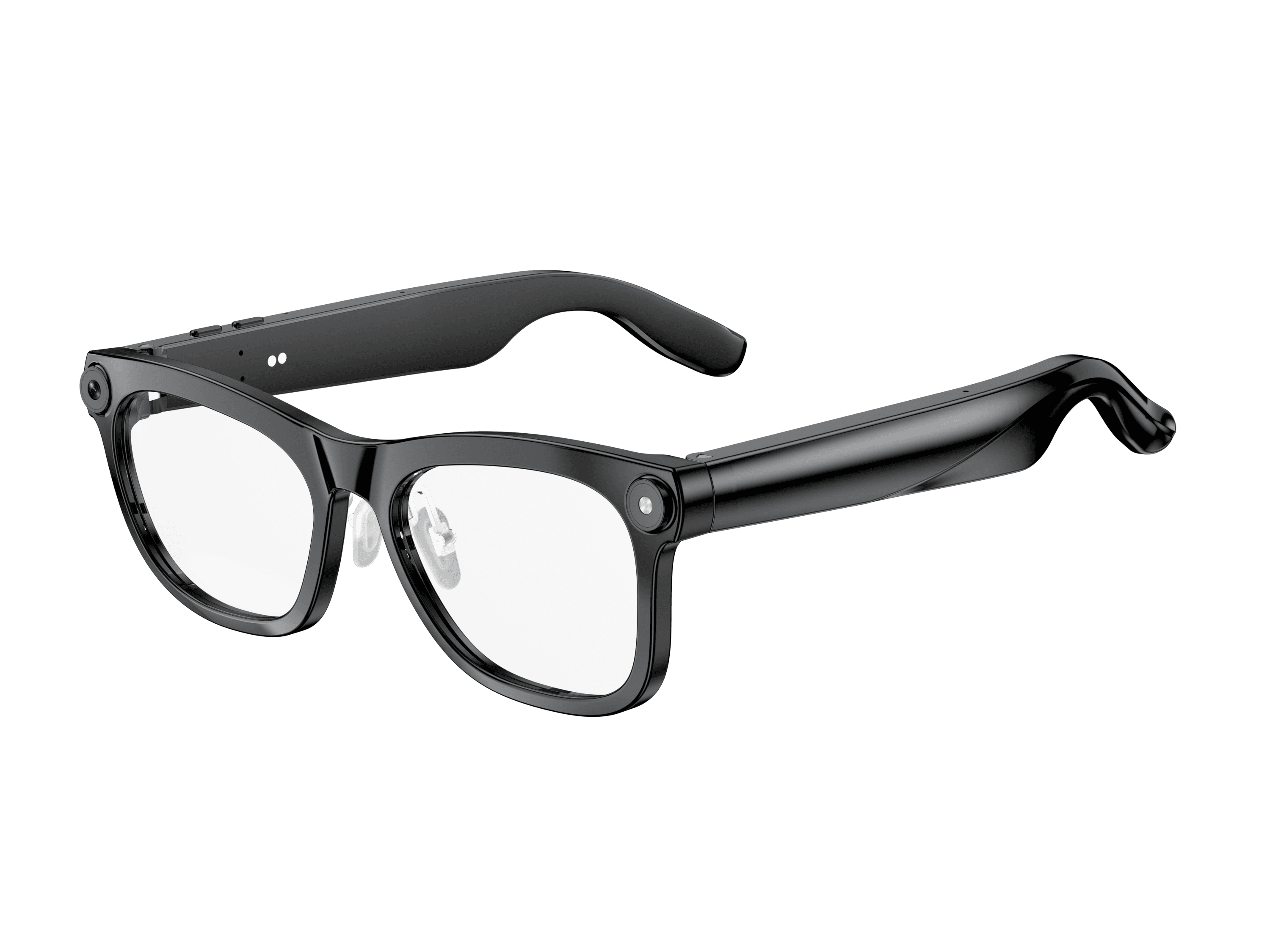 OXIVUE M02C$109 at checkout | 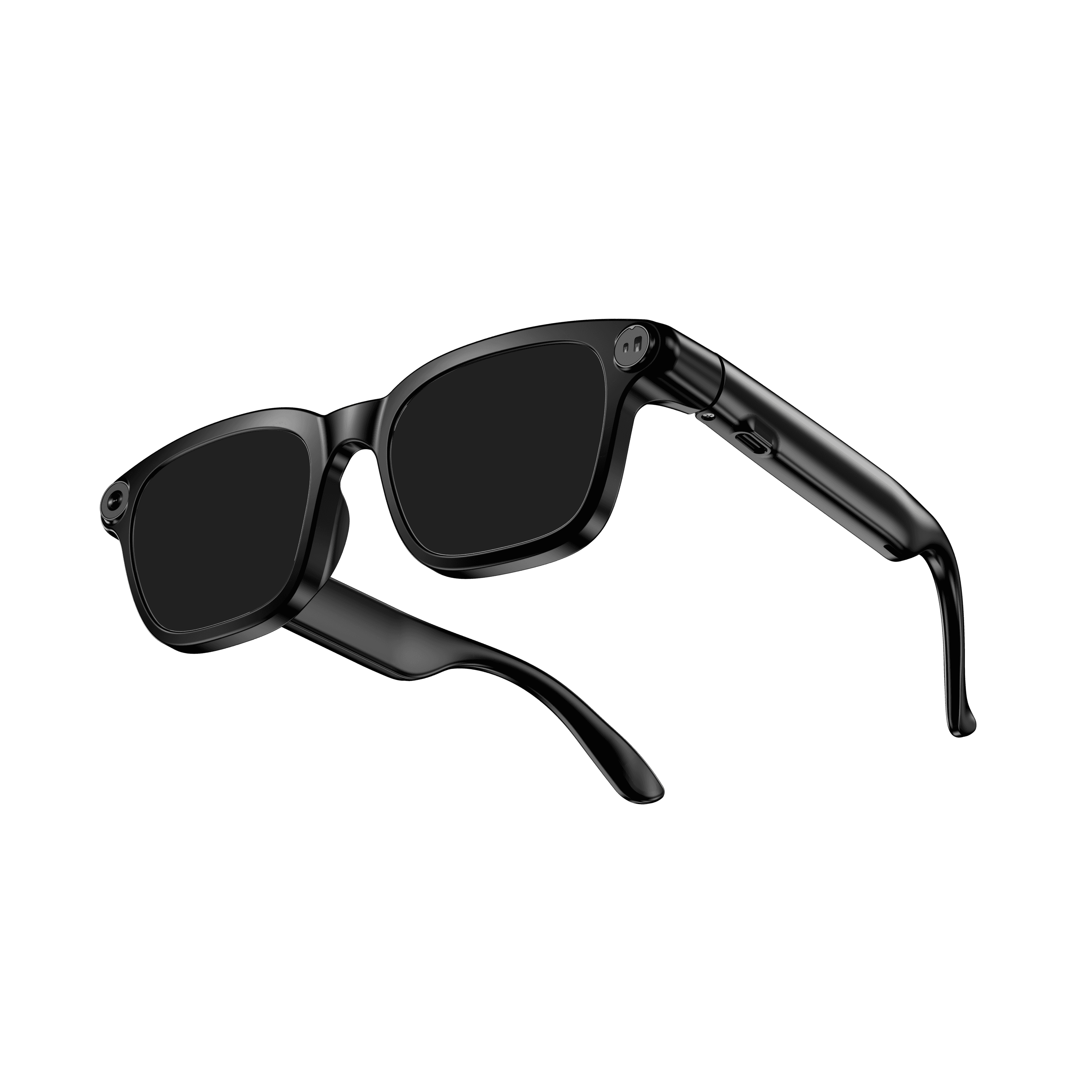 OXIVUE M08$99 at checkout | 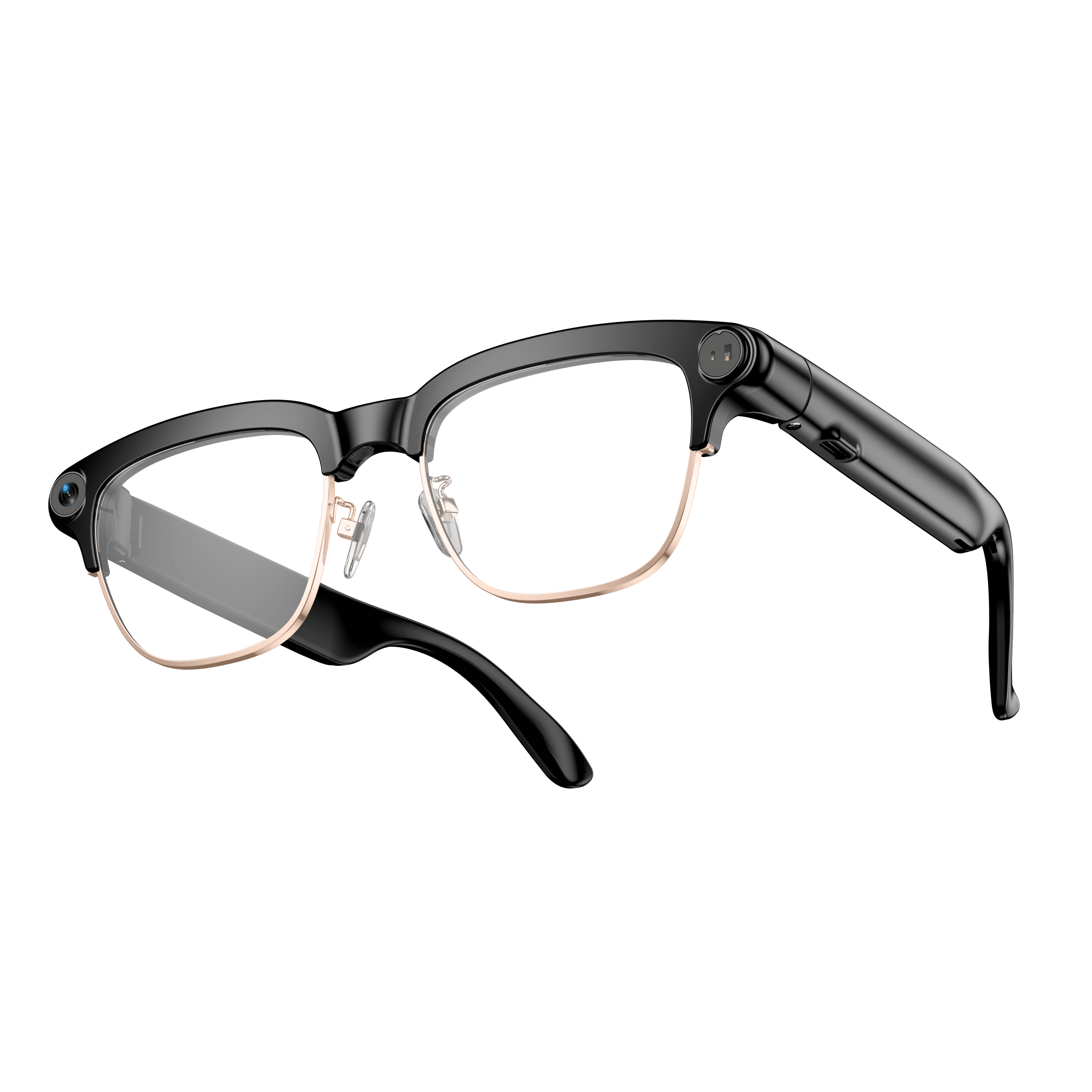 OXIVUE M08C$119 at checkout | |
|---|---|---|---|
| Camera | 8 MP | 8 MP | 8 MP |
| Weight | ~41 g | ~42 g | ~42 g |
| Water rating | IP65 | — | — |
| Lenses | Sunglasses · Photochromic · Clear | Sunglasses · Photochromic · Clear | Sunglasses · Photochromic · Clear |
| Translation | 40+ languages | 40+ languages | 40+ languages |
| Visual AI | Yes | — | — |
| Metal trim | — | — | Gold · Silver |
From each frame’s product page. Every model: open-ear audio, Bluetooth 5.4, no subscription. Full spec table
What these frames won’t do
- No prescription lenses yet, on any model. If you need vision correction all day, these can't replace your glasses.
- No display. Nothing appears in your view; you hear answers and capture photos and video.
- Open-ear speakers leak some sound at high volume and won't block out a loud train or a windy road the way sealed earbuds do.
- Translation, music, calls and the assistant need your phone nearby and connected. Translation pauses after each sentence, and only you hear the translated audio; the other person reads the reply on your phone.
- M02C: IP65 resists dust and water jets, not immersion. No swimming, no saltwater.
Check these before you order: see the warranty and refund policy.