Meta AI vs ChatGPT · 2026
Meta AI vs ChatGPT: what each does on your phone and on glasses
Meta AI and ChatGPT are two different kinds of product: one is the assistant Meta offers in its own app and on its glasses, the other is OpenAI's chatbot app. This page compares what each costs, how you talk to it, what it can do with a photo, and which glasses reach which, using Meta's and the App Store's own pages checked on October 31, 2026.
Still deciding? Get the M02C, M08 and M08C comparison in your inbox, with your new-customer price already applied.
One email with the comparison, one follow-up a few days later. Unsubscribe any time.
1. What each one is, and where you meet it
Meta AI is the assistant Meta offers in its own app and on its own glasses. ChatGPT is OpenAI’s chatbot, offered as an app. That sounds like a small distinction, but it shapes where you meet each one. Meta’s help center describes Meta AI on its AI glasses, and the Meta AI app listing on the App Store lists pairing glasses among its jobs. ChatGPT’s App Store listing (checked October 31, 2026) describes an app of its own, with voice, photo upload and image generation, and does not describe smart glasses.
Two cautions on naming. OpenAI’s own site and help pages returned an error (HTTP 403) when we tried to read them on October 31, 2026, so for ChatGPT this page relies on its App Store listing and says so wherever a figure comes from there. And Meta uses the name Muse in more than one way. The Meta AI app listing says Meta AI is built with Muse Spark, which it describes as a natively multimodal reasoning model from Meta Superintelligence Labs (checked October 31, 2026). Separately, Meta’s October 27, 2026 announcement calls Muse “a personal AI agent”, available in Singapore and “coming soon to AI glasses”, which makes Muse on glasses announced, not available. That announcement and Meta’s October 12 article on its Muse Wonder models do not mention Meta AI in their text (checked October 31, 2026). So this page compares Meta AI as Meta’s glasses and app pages describe it today, and leaves the Muse agent out of the table.
2. What each costs
Both apps are free to download, and both sell more through the App Store. ChatGPT’s listing shows “Free · In-App Purchases” and, among the purchases, ChatGPT Go at $8.00, ChatGPT Plus at $19.99and Pro tiers listed at $100, $200 and $500 (checked October 31, 2026). The listing also shows a second item named ChatGPT Plus at $200.00 without explaining it. It does not say what each plan includes, and these are App Store prices, so check OpenAI’s site for current plans before you pay.
The Meta AI app’s listing is also “Free · In-App Purchases”, and it gives no prices for those purchases. Meta’s Muse announcement says Muse is “free for most of what people need, with subscription plans”, but that sentence is about Muse, so we do not read it as Meta AI pricing.
The larger cost on the Meta side is hardware. On the Meta pages we checked, Meta AI on glasses means one of Meta’s own glasses lines, and meta.com listed Ray-Ban Meta (Gen 2) at “Starting at $379” (checked October 31, 2026). Our Meta glasses price guidelists the full range. ChatGPT’s listing is for an app and needs no glasses at all.
3. Hands-free: voice, camera and wake phrases
On Meta’s glasses, Meta’s help article “How to use Meta AI on AI glasses” (checked October 31, 2026) says to “say ‘Hey Meta,’ or tap and hold the touchpad on your glasses.” It says Meta AI can answer questions, get information, spark creativity and express yourself hands-free. Its camera examples include “Hey Meta, describe what I’m seeing”, translating text and scanning a QR code. It also lists some conditions: weather and other location-based questions need location services enabled in your phone settings, you can ask about previous workouts if you connect a fitness app to the Meta AI app, and it gives “Zoom in” and “Zoom out” commands for the Meta Ray-Ban Display. The article does not mention Live AI.
On the phone, the Meta AI app listing says voice conversations are “faster and more natural, with support for 13 languages”, lets you create and edit images, and offers real-time answers on anything you see with live AI. ChatGPT’s listing describes “Advanced Voice Mode” as real-time conversation started by tapping the soundwave icon, lets you snap or upload a photo, and covers generating and editing images.
So the two overlap on voice, photos and images. The difference the pages show is how you start: Meta’s article starts Meta AI with a wake phrase or a touch on the glasses, while ChatGPT’s listing starts voice from an icon in the app. We did not test either assistant, and neither App Store listing publishes an accuracy comparison (checked October 31, 2026).
4. Meta AI vs ChatGPT, side by side
Everything in the table comes from the pages named in the notes under it, read on October 31, 2026, apart from the cells that cite our own ChatGPT glasses guide. A blank in what a page says is shown as such, not filled in from memory.
| Meta AI | ChatGPT | |
|---|---|---|
| Maker | Meta | OpenAI |
| Where the pages put it | Meta AI app; Meta’s AI glasses (Ray-Ban Meta, Oakley Meta, Meta Ray-Ban Display) | ChatGPT app (App Store listing) |
| App price | “Free · In-App Purchases”; purchase prices not listed | “Free · In-App Purchases”; Go $8.00, Plus $19.99, Pro $100 to $500 |
| Voice | Voice conversations with support for 13 languages (app listing); “Hey Meta” or a touch on the glasses (help article) | “Advanced Voice Mode”, real-time conversation, started from the soundwave icon |
| Questions about what you see | “Describe what I’m seeing” on glasses; live AI in the app | Photo snapped or uploaded in the app |
| Images | Generate and edit | Generate from a description; edit existing images |
| Glasses | Offered on Meta’s own AI glasses; Ray-Ban Meta (Gen 2) from $379 on meta.com | Not described on the Meta pages we checked; frames from other makers reach it through a phone app (our ChatGPT glasses guide, checked October 19, 2026) |
| Glasses roadmap | Meta’s Muse agent “coming soon to AI glasses” (announced by Meta, October 27, 2026; the announcement does not mention Meta AI) | OpenAI had released no glasses and announced none, per our ChatGPT glasses guide (as of October 19, 2026) |
Sources: the Meta help articles on using Meta AI on glasses and on supported countries, the Ray-Ban Meta (Gen 2) page on meta.com, the App Store listings for the Meta AI and ChatGPT apps, and Meta’s October 12 and 27, 2026 announcements. OpenAI’s own pages could not be fetched.
5. Which glasses reach which assistant
Meta’s “AI glasses supported countries” article (checked October 31, 2026) labels Ray-Ban Meta Glasses, Oakley Meta Glasses and “Meta Ray-Ban Display and Meta Neural Band”. It says AI glasses are “currently available and supported” in Australia, Austria, Belgium, Canada, Denmark, Finland, France, Germany, Ireland, Italy, the Netherlands, Norway, Spain, Sweden, Switzerland, the United Kingdom and the contiguous United States (plus Alaska and Hawaii). It gives one list and does not assign countries to individual lines. It does not address languages or country-based feature limits, so check Meta’s help center for your language before you buy.
Meta AI is the assistant those pages describe. The Ray-Ban Meta (Gen 2) page says “Iconic style meets Meta AI” and does not mention ChatGPT (checked October 31, 2026). If you want ChatGPT on glasses, the frames our guide found that name it are other makers’ and reach it through a phone app. Our ChatGPT glasses guidecompares those frames, with prices from the makers’ own sites where it could read them and its checks dated October 19, 2026, and our smart glasses with a voice assistant guide covers how each assistant is woken. For the general picture of what runs where, see how AI glasses work, and for the Meta side of the setup, the Meta glasses app.
6. How to choose without a benchmark
Rather than name a winner, match the assistant to the moment:
- You own Meta glasses and want to ask about what you are looking at.Meta AI is the assistant Meta’s pages describe on those frames, started by a wake phrase or a touch.
- You want a chatbot on your phone. Both listings show voice, photos and image generation. Try the same few real questions in each free version before you pay for anything.
- You want ChatGPT specifically on glasses.That means another maker’s frames; start with the ChatGPT glasses guide linked above, and check the maker’s own page for current prices.
- You are weighing privacy.Read each company’s privacy policy for the account you would use, and see our Meta glasses privacy guide for the glasses side. This page does not rank them on privacy.
On which is more accurate, third-party comparisons rank for this query, but we have not checked their methods. Neither App Store listing publishes an accuracy comparison, and we could not read OpenAI’s own pages (checked October 31, 2026). Both listings show releases within the last few days, so a verdict older than a few months says little about today’s versions. The test that applies to you is asking both the same five questions you actually use, including one that needs a photo.
7. Where OXIVUE fits
OXIVUE does not make a Meta AI or ChatGPT product, and this page is not a claim that our frames replace either. The one feature that touches this topic is on the M02C, which has a voice-activated visual assistant that can describe what you are looking at. OXIVUE does not publish which AI model powers the M02C’s voice-activated visual assistant.
What the M02C is: an 8 MP Sony IMX219 camera with dual stabilisation, open-ear speakers, Bluetooth 5.4, about 41 g, rated IP65 (dust and water jets, not immersion), with magnetic pogo charging, 7 hours of listening and 4 hours of calls. Translation covers 40+ languages through the free companion app on your phone, with the translated audio heard only by you. The price is $109 at checkout for one pair.
What it is not: it has no display, it takes no prescription lenses, and it does not run Meta AI. Capture starts only with a touch on the temple, and you should ask before recording people. It is the wrong pick if you want Meta AI by name, or a screen. To see every OXIVUE model next to the others, use the comparison page.
Shipping, refunds and warranty. Free shipping from $99. US orders typically arrive in 5–9 business days; international orders take 9–14 business days after shipment, and import VAT or duties outside the US are paid by the recipient. No refunds except transit damage (replaced or refunded); faults are repaired or replaced under the 2-year warranty; change of mind and unmet expectations are not refundable. None of our frames take prescription lenses. Details on the shipping policy page, and Read the refund policy.
Frequently asked questions
Is ChatGPT more reliable than Meta AI?
We cannot say either is more reliable. Neither App Store listing publishes an accuracy comparison, and we could not read OpenAI's own pages (checked October 31, 2026), so this page does not rank the two. Third-party comparisons exist, but we have not checked their methods. Reliability also depends on the question and the plan, and both listings show releases within the last few days. The practical test is to ask both the same five questions you really use, including one about a photo, and compare the answers.
Is Meta AI free?
Yes, the app itself is free to download. The Meta AI app's App Store listing shows "Free · In-App Purchases" and gives no prices for those purchases (checked October 31, 2026). On the Meta pages we checked, Meta AI on glasses means one of Meta's own glasses lines, which are not free; meta.com listed Ray-Ban Meta (Gen 2) from $379. ChatGPT's App Store listing also shows free with in-app purchases, including ChatGPT Go at $8.00 and a ChatGPT Plus item at $19.99.
Can I use ChatGPT on Meta Ray-Ban glasses?
Not according to the Meta pages we checked, which describe Meta AI on its glasses and not ChatGPT. The Ray-Ban Meta (Gen 2) page on meta.com and Meta's help article on using Meta AI on glasses do not mention ChatGPT (checked October 31, 2026). Our ChatGPT glasses guide checked other makers' frames on October 19, 2026 and found they reach ChatGPT through the maker's phone app. That guide compares them with prices from the makers' own sites where it could read them.
Which one works hands-free on glasses?
Meta AI does on Meta's glasses: Meta's help article says to say "Hey Meta" or tap and hold the touchpad, and lists asking it to describe what you are seeing (checked October 31, 2026). ChatGPT's App Store listing describes voice started from an icon in the app. OXIVUE's M02C has a voice-activated visual assistant; OXIVUE does not publish which AI model powers it.
Should I stop using ChatGPT or Meta AI over privacy concerns?
No single answer fits everyone, and this page does not review either company's privacy terms. Read each company's privacy policy for the account you use and decide what you are willing to share, especially photos, location and voice. For what Meta's glasses involve, see our Meta glasses privacy guide. On OXIVUE frames, capture starts only with a touch on the temple, and you should ask before recording people.
Is ChatGPT AI or ML?
Both. ChatGPT is OpenAI's AI chatbot, and chatbots of this kind are typically built on large language models, which are machine-learning systems. Machine learning is a technique and AI is the broader field it belongs to, so the two labels do not compete. Meta AI is also an AI assistant: its App Store listing says it is built with Muse Spark, a natively multimodal reasoning model from Meta Superintelligence Labs (checked October 31, 2026), while Meta's help article on using it on glasses does not name a model.
Which assistant is in the OXIVUE M02C?
OXIVUE does not name one. OXIVUE does not publish which AI model powers the M02C's voice-activated visual assistant, and the frames do not run Meta AI. The M02C ($109 at checkout) can describe what you are looking at through an 8 MP Sony IMX219 camera, but it has no display and takes no prescription lenses. It works with your phone and the free companion app.
OXIVUE frames side by side
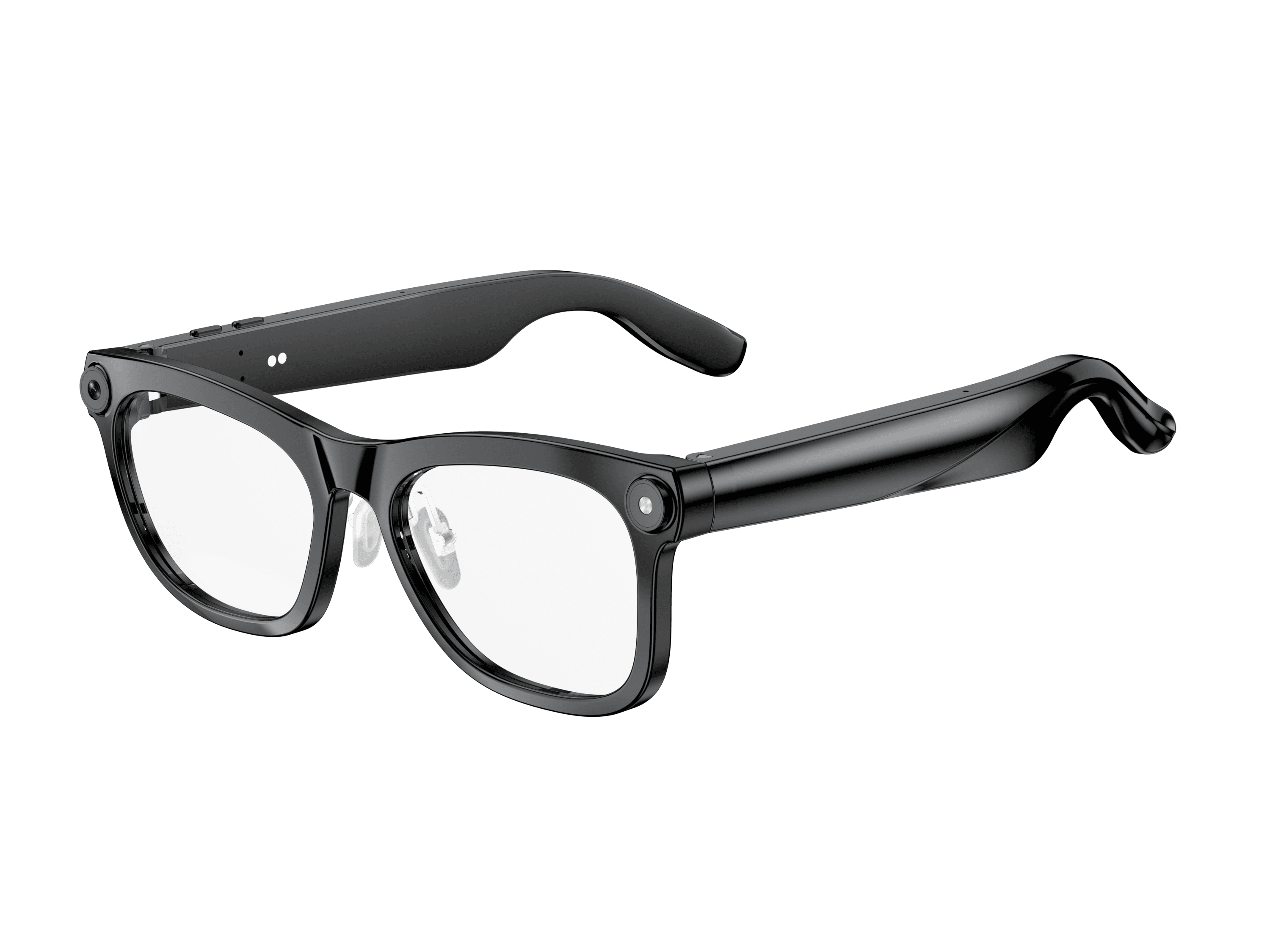 OXIVUE M02C$109 at checkout | 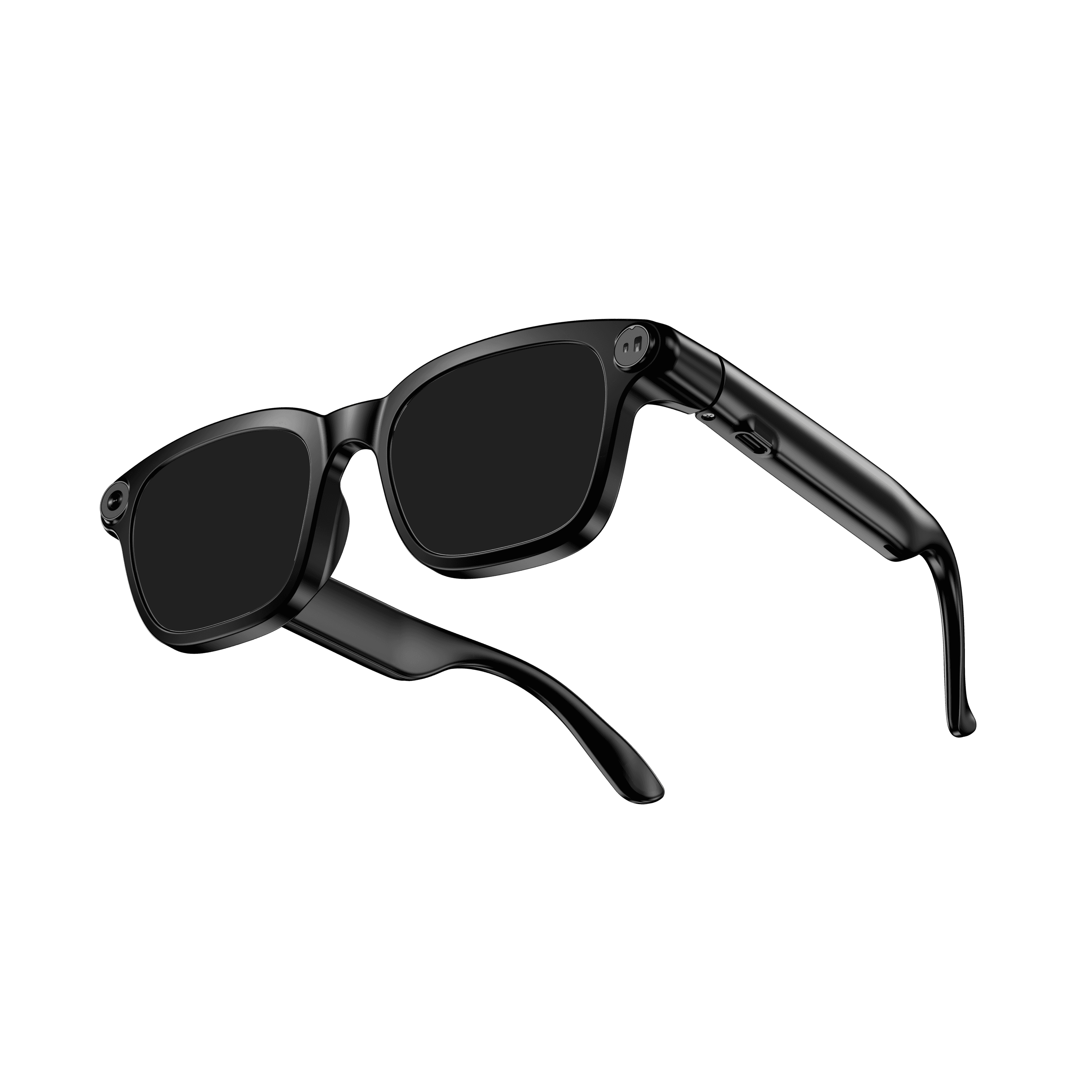 OXIVUE M08$99 at checkout | 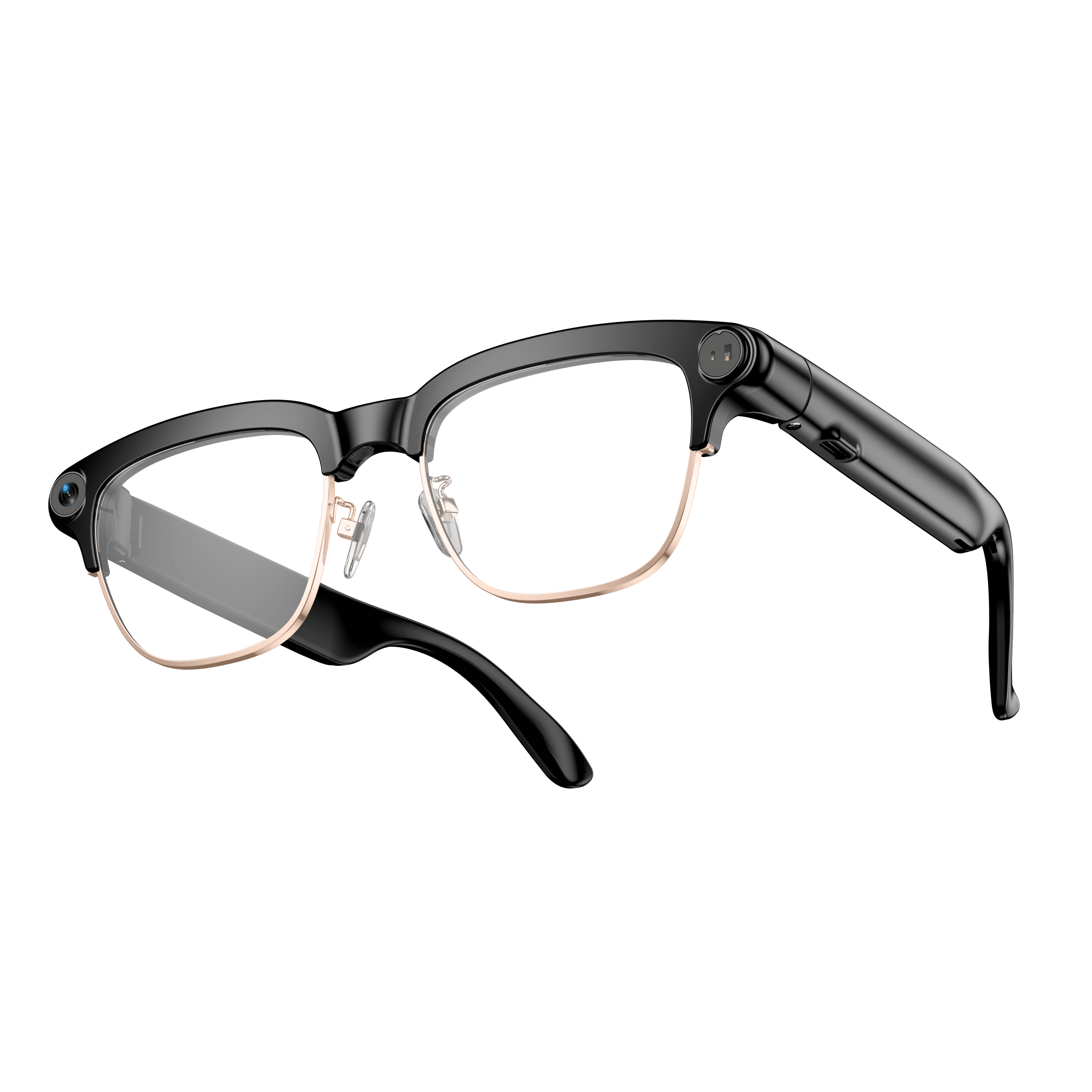 OXIVUE M08C$119 at checkout | |
|---|---|---|---|
| Camera | 8 MP | 8 MP | 8 MP |
| Weight | ~41 g | ~42 g | ~42 g |
| Water rating | IP65 | — | — |
| Lenses | Sunglasses · Photochromic · Clear | Sunglasses · Photochromic · Clear | Sunglasses · Photochromic · Clear |
| Translation | 40+ languages | 40+ languages | 40+ languages |
| Visual AI | Yes | — | — |
| Metal trim | — | — | Gold · Silver |
From each frame’s product page. Every model: open-ear audio, Bluetooth 5.4, no subscription. Full spec table
What these frames won’t do
- No prescription lenses yet, on any model. If you need vision correction all day, these can't replace your glasses.
- No display. Nothing appears in your view; you hear answers and capture photos and video.
- Open-ear speakers leak some sound at high volume and won't block out a loud train or a windy road the way sealed earbuds do.
- Translation, music, calls and the assistant need your phone nearby and connected. Translation pauses after each sentence, and only you hear the translated audio; the other person reads the reply on your phone.
- M02C: IP65 resists dust and water jets, not immersion. No swimming, no saltwater.
Check these before you order: see the warranty and refund policy.