Hiking · 2026
Hiking sunglasses: choose for the light, the climb and the long day
Hiking sunglasses are chosen by the light you walk in, how they sit on climbs and descents, their weight and what a rain or sweat rating really covers. This page gives you that checklist, then shows the two OXIVUE camera sunglasses, the M02C ($159) and M14 ($199), for a hiker who also wants a camera and open-ear audio, and says plainly who should buy plain hiking sunglasses instead.
Still deciding? Get the M02C and M14 comparison in your inbox, with your new-customer price already applied.
One email with the comparison, one follow-up a few days later. Unsubscribe any time.
What a trail asks of sunglasses
A hike asks different things of sunglasses than a city day. The light changes a lot, from shade under trees to open ridgeline, and sometimes to bright snow or rock. You climb, descend and look down for long stretches. You sweat, and now and then you get rained on. And you carry the pair for hours, so weight counts.
Four questions sort most pairs quickly. What lens will you be looking through in the light you hike in? Does the pair stay put on a climb and a steep descent? What does the water rating actually cover? And do you want a camera or audio in the frame? The rest of this page takes them in order.
Light from canopy to ridgeline
The lens is the most important decision. Bright snow and exposed high ground are among the hardest conditions for any sunglasses, and what you need from a lens there, such as its polarisation and UV figures, has to come from the maker. A listing that says “mountain” or “glacier” without figures has told you nothing you can check.
Light also changes across a single day. Tree cover, a dull start and a bright summit can all happen on one route, so think about whether a lens that suits one of those will be wrong for another. Some hikers keep two pairs, and some choose a lens they can change.
Be clear about our own position. We do not publish a polarisation, UV or impact figure for any OXIVUE lens, and this guide makes no claim about them or about eye protection. The M02C takes interchangeable lenses, and the product page shows which are in stock. The M14 has a fixed one-piece shield in smoke, blue mirror, ice-blue mirror or sunset-red mirror, with no clear option. Our photochromic guide explains how a light-adapting lens behaves.
Staying put on climbs and descents
On a long climb you tilt your head down, sweat runs, and a pair that is a little loose starts to slide. Check four things with the hat and pack straps you actually hike in.
- Grip at the nose and arms. Sweat makes a smooth pair slide. Pads and arm tips that stay grippy matter more than any line on the box.
- Looking down. You spend a lot of a hike watching your feet. A pair that slips when you tilt your head will slip all day.
- Hat brim and pack straps. Check that the arms sit cleanly under a cap and that nothing on the pack presses on the frame.
- Weight. Grams you do not notice at the car are noticeable at the fifth hour. A frame that carries a camera, speakers and a battery always weighs more than one that carries none.
OXIVUE has one size per model, and no smaller or women’s-specific version. If your usual sunglasses are noticeably smaller than the M14’s 150 x 56 x 169 mm, measure them against it before you order. The comparison page lists every frame side by side.
Rain, sweat and the water rating
A rating such as IPX4 or IP65 tells you what a pair was tested against. It is not a statement that the pair is waterproof, and none of ours is. Our guide to whether smart glasses are waterproof goes through the letters.
- IPX4 covers splashes from any direction. That is rain and sweat. It does not cover immersion.
- IP65 covers dust and jets of water. It is a step up from splashes, and it still does not cover immersion.
- No published rating means we cannot tell you what a pair survives. The M08 family has none, which is why we start with the M02C for a hiker who may meet rain.
The practical rule is simple: put the pair in a case before a stream crossing or a downpour, wipe it after a wet or sweaty day and let it dry. Never hold it under a tap.
Where OXIVUE frames fit a hike
OXIVUE makes AI camera sunglasses with open-ear audio, not dedicated hiking sunglasses. Two of our frames suit a trail, and they are different enough that the choice is easy.
| M02C | M14 | |
|---|---|---|
| List price | $159 | $199 |
| Weight | About 41 g | 52 g |
| Shape | Two-lens frame | One-piece wrap-around shield, 150 x 56 x 169 mm |
| Lens | Interchangeable | Fixed, dark, four colourways |
| Water rating | IP65 (dust and water jets, not immersion) | IPX4 (splash and rain, not immersion) |
| Listening / calls | 7 h / 4 h | 4 h / 7 h |
| Camera | 8 MP | 8 MP Sony IMX219, 4 GB onboard memory |
Prices are list prices, checked 2026-11-21. For most hikes the M02C is the easier pick: it is lighter, it has the higher water rating, it listens for longer and its lenses can be changed. The M14 is for the hiker who wants a wrap shape on exposed ground and accepts 4 hours of listening and a lens that cannot be swapped. Our smart glasses for hiking guide goes deeper on cold, battery and what works without a signal.
Battery and a long day
A hike can be longer than any listening time on a spec sheet. The M02C is rated at 7 hours of listening and the M14 at 4 hours of listening or 7 hours of calls, and neither charges on the trail unless you carry a power bank. Use audio in bursts, turn it off when you do not need it, and charge before you leave. If your route is longer than the rated time, plan for the pair to run out and carry what you need without it.
Translation goes through the free companion app on your phone, so it depends on the phone and on your connection. Nothing here belongs in a safety plan. Carry a map and whatever the route needs, and treat the glasses as an extra.
When to buy plain hiking sunglasses instead
Skip our frames and buy dedicated hiking sunglasses if any of these is true. It will save you money and a disappointing day.
- You hike on snow, glacier or high exposed ground. The lens is the job, and we publish no polarisation, UV or impact figure.
- You want the lightest possible pair. A frame with a camera, speakers and a battery always weighs more.
- You need prescription lenses. No OXIVUE frame takes them.
- Your route is long and has no way to charge. A pair with no battery never runs out.
- You expect a lens for one specific condition. We make no claim about lens performance beyond the shape and tint on each product page.
Camera, sound and other people on the trail
The camera on both frames is an 8 MP sensor in the front of the frame, and capture starts only with a touch on the temple, so a photo is always deliberate. Photos and video go to your phone through the companion app. It records other people as well as the view, so tell them before you film, follow the rules of the place you are in and stop when you are asked.
The speakers sit beside your ears and leave them open, so you can still hear other hikers, a rider on the same trail and what is around you. Keep the volume low enough to do that. These glasses do not track distance, heart rate or position, and there is no navigation in them, so keep a map, a watch or your phone for those.
Shipping, refunds and warranty.Free shipping from $99, so every single pair qualifies; below that it is $9.99. US orders typically arrive in 5–9 business days and international orders in 9–14 business days after shipment, with import VAT or duties outside the US paid by the recipient. No refunds except transit damage (replaced or refunded); faults are repaired or replaced under the 2-year warranty; change of mind and unmet expectations are not refundable. See the shipping policy, return policy and warranty, or ask on the support page.
Frequently asked questions
What should I look for in hiking sunglasses?
Look for a pair that suits the light you hike in, stays put on climbs and descents, is light enough to forget by midday and copes with sweat and rain. Bright snow and exposed ridgelines are hard on any lens, so ask what the maker publishes about the lens. Ours are camera sunglasses, so they suit a hiker who also wants a camera and open-ear audio.
Are OXIVUE sunglasses good for hiking?
They suit a hiker who wants a camera and open-ear audio, not one who only wants plain sunglasses. The M02C is about 41 g with an IP65 rating and 7 hours of listening, and the M14 is a 52 g wrap shield with an IPX4 rating. A camera, speakers and a battery add weight, so expect them to feel heavier than a plain pair. Try your usual route before you rely on them.
Do OXIVUE sunglasses protect against glare from snow or high altitude?
We cannot say. We do not publish a polarisation, UV or impact figure for any OXIVUE lens, so we make no claim about glare, snow or altitude, and nothing in this guide says these glasses protect your eyes. If those conditions are your main reason for buying, choose a pair whose maker publishes the figures you need and check them on every pair you compare, ours included.
Which is better for hiking, the M02C or the M14?
For most hikes the M02C: it is lighter at about 41 g, has the higher IP65 rating, gives 7 hours of listening and takes interchangeable lenses. Choose the M14 if you want a wrap shape for exposed ground and accept 4 hours of listening and a fixed, dark shield in four colours. Both have an 8 MP camera and open-ear speakers. The M02C lists at $159 and the M14 at $199.
Will the battery last a full hiking day?
Not with continuous audio, so plan around it. The M02C is rated at 7 hours of listening and the M14 at 4 hours of listening or 7 hours of calls. Neither charges on the trail unless you carry a power bank, so use audio in bursts, switch it off when you do not need it and charge before you leave. A day longer than the rated listening time needs a plan.
Can I wear OXIVUE glasses in rain or when I sweat on a climb?
Yes, within their ratings. The M02C is rated IP65, which covers dust and jets of water, and the M14 is rated IPX4, which covers splashes from any direction. Neither is waterproof, and neither should be submerged or rinsed under a tap, so cross streams with them in a case or off your face. Wipe the pair after a wet or sweaty day and let it dry.
OXIVUE frames side by side
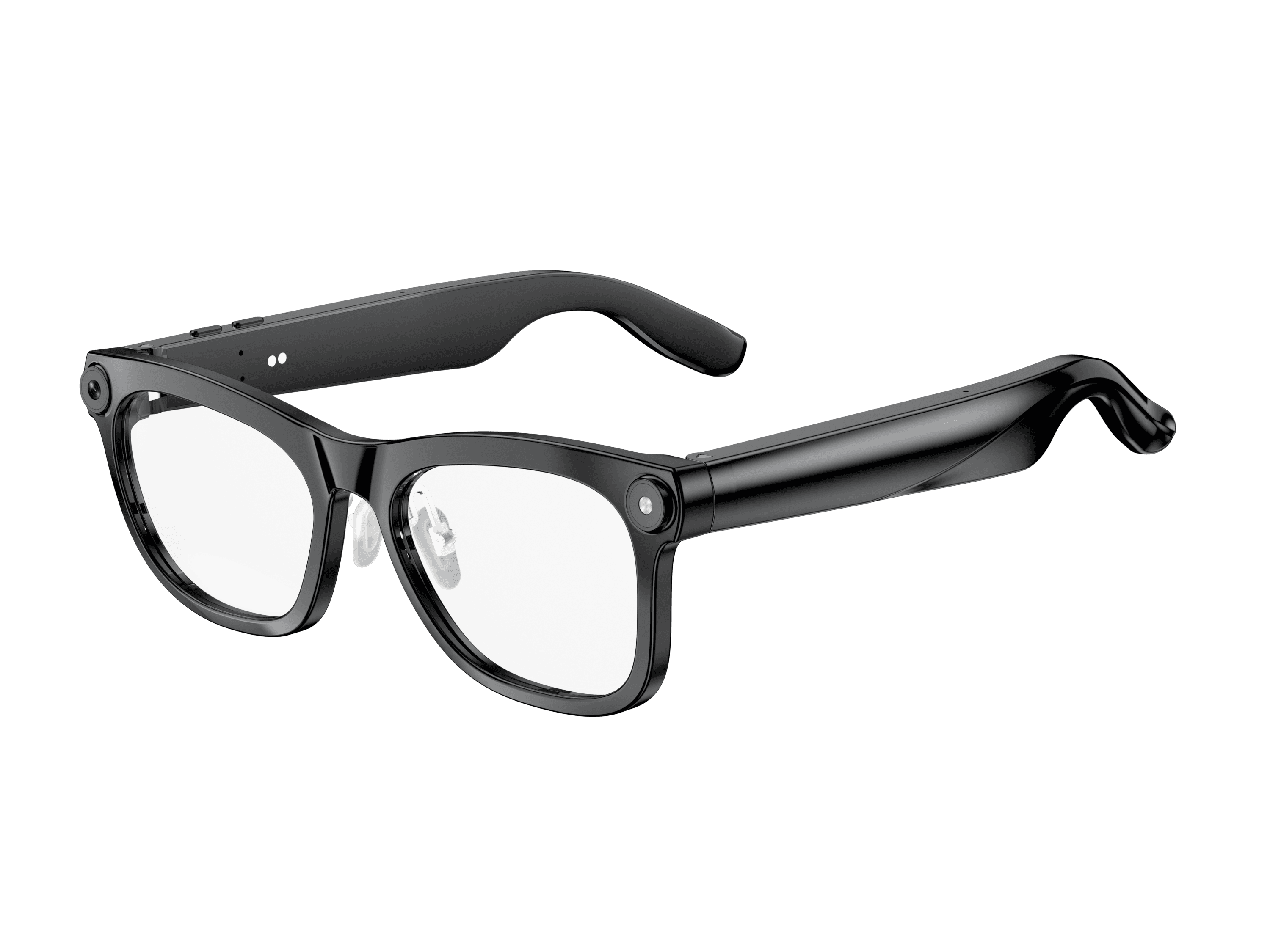 OXIVUE M02C$109 at checkout | 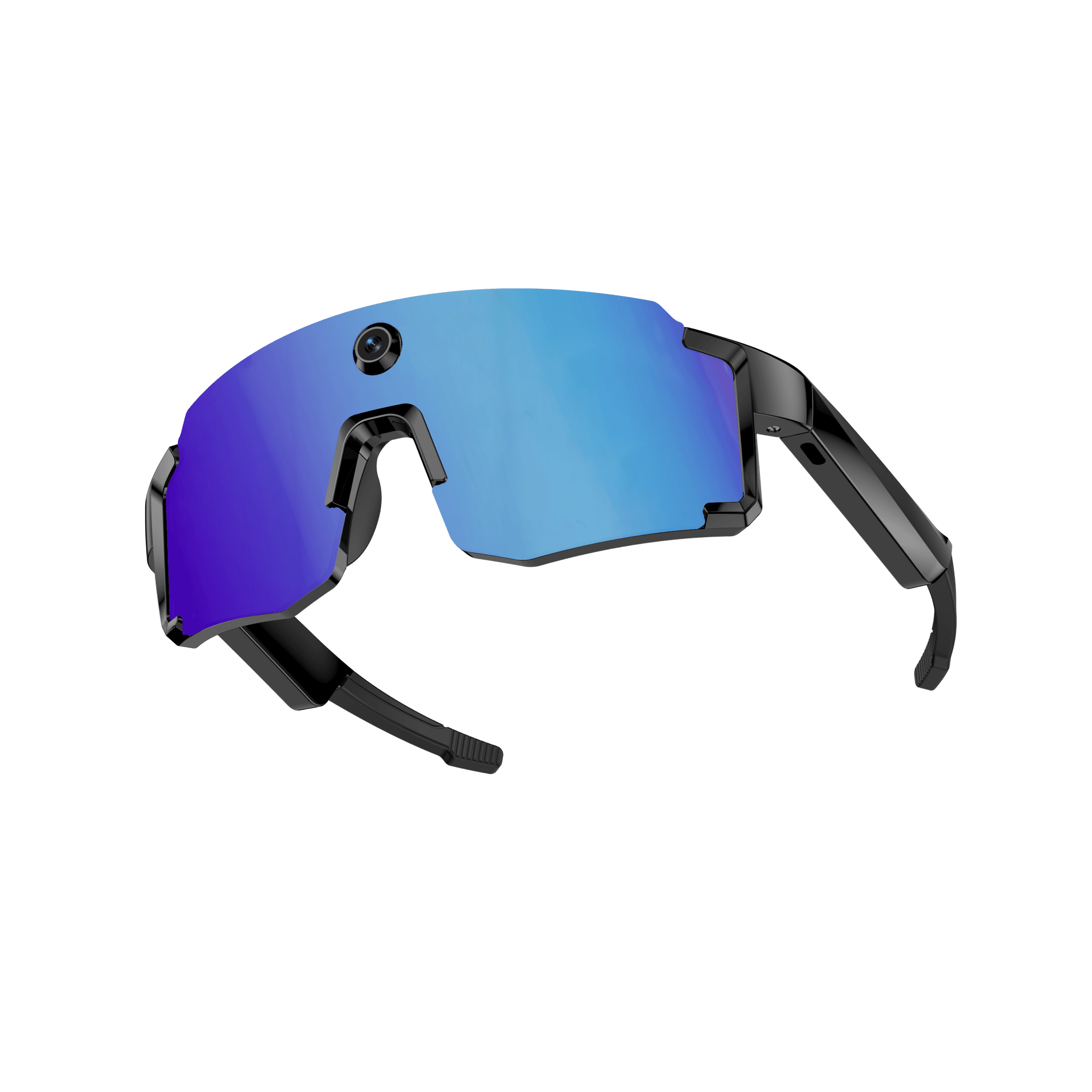 OXIVUE M14$149 at checkout | |
|---|---|---|
| Camera | 8 MP | 8 MP |
| Weight | ~41 g | 52 g |
| Water rating | IP65 | IPX4 |
| Lenses | Sunglasses · Photochromic · Clear | Fixed wrap shield · 4 colours |
| Translation | 40+ languages | 139 languages |
| Visual AI | Yes | — |
| Onboard memory | — | 4 GB onboard |
From each frame’s product page. Every model: open-ear audio, Bluetooth 5.4, no subscription. Full spec table
What these frames won’t do
- No prescription lenses yet, on any model. If you need vision correction all day, these can't replace your glasses.
- No display. Nothing appears in your view; you hear answers and capture photos and video.
- Open-ear speakers leak some sound at high volume and won't block out a loud train or a windy road the way sealed earbuds do.
- Translation, music, calls and the assistant need your phone nearby and connected. Translation pauses after each sentence, and only you hear the translated audio; the other person reads the reply on your phone.
- M02C: IP65 resists dust and water jets, not immersion. No swimming, no saltwater.
- M14: one-piece shield, so the lens can't be swapped for clear or photochromic.
- M14: IPX4 covers splash, spray and rain only, and at 52 g it is heavier than the 41–42 g frames.
Check these before you order: see the warranty and refund policy.