Display glasses · 2026
Heads up display glasses, what a HUD shows and where it falls short
Heads up display glasses put speed, directions or captions in your line of sight. This guide explains what a HUD is, sets sports and smart models side by side from the makers' own pages (checked October 31, 2026), and spells out the limits: price, battery, prescriptions and cameras.
Still deciding? Get the M02C, M08 and M08C comparison in your inbox, with your new-customer price already applied.
One email with the comparison, one follow-up a few days later. Unsubscribe any time.
1. What heads up display glasses are
Heads up display glasses place a small piece of information, such as your speed, a turn arrow or a line of caption, in your line of sight, so you can read it without looking down at a phone or a watch. The name comes from the displays used in aircraft cockpits and some cars, and the idea on glasses is the same: a glance, not a screen.
That is the line between a HUD and other display glasses. A HUD is small, sits to one side or in a corner of your view, and carries short text and icons. Tethered video glasses, which work as a personal screen for a phone or laptop, are a separate category covered in smart glasses with display, and the wider label of augmented reality is sorted in augmented glasses (AR).
Makers build the overlay in different ways and describe it differently. ENGO’s US store (checked October 31, 2026) describes a high-brightness OLED display and says the display “projects 3-5 meters ahead.” Meta’s launch post for the Ray-Ban Display (updated September 30, 2025; checked October 31, 2026) calls its display “full-color, high-resolution” and says it sits off to the side and is not on all the time. Even Realities says the G2 lenses are built to align with the display layer. Those descriptions are not like for like, which is why the sections below keep the groups apart.
2. Three kinds of HUD glasses, with figures from the makers’ own pages
This guide sorts display glasses that fit the HUD idea into three groups: sports data glasses, smart glasses with a display, and work wearables. The grouping is ours; the figures are the makers’. Their pages (checked October 31, 2026) show a wide spread in price and battery. The table gives what each page says and nothing more.
| Group and model | What the maker’s page says | Price listed |
|---|---|---|
| Sports data: ENGO engo3 | OLED display; 40+ metrics, with pace, heart rate and power named; double tap on the branch switches dashboards; battery listed at 20+ hours on the engo3 Cyclist and 24 hours on the Titanium; pairs with Apple Watch (Series 4+), Garmin and phones (compatibility list on its page) | $399.95 (the page lists models from $399.95 to $759.95) |
| Sports data: Julbo EVAD.2 | Head-up display for heart rate, speed, time and more, up to six data points at once; Bluetooth to a phone, smartwatch or bike computer; Strava segments | Not shown on the page we read |
| Smart glasses: Meta Ray-Ban Display | Full-color display off to the side, not always on; messages, video calls, camera viewfinder, walking directions (beta, select cities), live captions, translation for select languages; Neural Band wristband control; up to six hours mixed use, up to 30 hours total with the charging case | Announced from $799 with the Neural Band |
| Smart glasses: Even Realities G2 | 36 g; camera-free; IP65; teleprompter, turn-by-turn directions, translation in 35 languages, notifications; up to two days of battery; custom lenses -12.00 to +12.00 | From $599 (the R1 ring is listed separately at $249) |
| Work wearables: Vuzix M400 and LX1 | M400 labelled “IP 67 Ruggedized” with a “Swap & Go Battery”; LX1 labelled “Full-Shift Battery” and “High Res Display”; no battery hours, display figures or prices on the page | Not shown on the page we read |
Prices are each maker’s own and can change. The Meta figure comes from its launch post, which was updated September 30, 2025, so check meta.com for the current price and where the glasses are sold. Julbo’s EVAD.2 page shows a Buy now link but no price, so we leave that cell empty rather than copy a number from a retailer. The Vuzix page we read is a category listing, not a product page, and does not use the term head-up display.
Two patterns show up. The sports models are described as showing data from a watch, bike computer or phone you already own, which is why ENGO’s page lists Apple Watch, Garmin and phone compatibility. The smart models are described around messages, directions, captions and translation, and they are listed here at $599 and $799. For one of them in detail, see our Meta Ray-Ban Display guide.
3. What a HUD is actually useful for
A HUD earns its price when you need a number or a short line of text while your hands, eyes or attention are busy. The makers’ own pages point to five uses.
- Pacing and training.ENGO’s US store lists 40+ metrics and names pace, heart rate and power; Julbo’s EVAD.2 page lists options such as power, pace, distance, altitude and cadence, up to six at once. Both pages describe data arriving from a phone, watch or bike computer, so the glasses act as a second screen for data you already have.
- Directions.Even Realities lists turn-by-turn directions in your peripheral view. Meta’s launch post lists walking directions, labelled beta and limited to select cities.
- Captions and translation.Meta’s launch post lists live captions and translation for select languages; Even Realities lists translation in 35 languages. Reading text in the lens is something an audio-only pair does not do.
- Teleprompter. Even Realities lists a voice controlled teleprompter, a use that depends on text in your view.
- Filtered notifications.Both Even Realities (alerts “that truly matter”) and Meta (messages from WhatsApp, Messenger, Instagram and the phone) describe seeing an alert or message in the lens.
A HUD shortens a glance; it does not remove one. If you plan to wear display glasses while you drive or ride, follow local rules and use your own judgment, and read can you drive with smart glasses first.
4. Limits to check before you pay
Across the pages we read (checked October 31, 2026), the same limits come up: price, battery, prescription support, camera and availability. Each one decides whether a HUD suits you.
- Price. Among the models with a price on the pages we read, the engo3 is $399.95, the Even G2 is from $599 and the Meta Ray-Ban Display was announced from $799. Julbo and Vuzix show none on the pages we read.
- Battery.Meta lists up to six hours of mixed use (up to 30 hours total with the charging case), Even Realities up to two days, and ENGO 20+ hours for the engo3 Cyclist and 24 hours for the Titanium. Each is the maker’s own figure under its own conditions, so do not treat them as like for like.
- Prescription.Even Realities lists custom lenses from -12.00 to +12.00. ENGO’s FAQ for readers who wear prescription glasses says: “For other vision corrections, contact lenses are required.” Meta’s launch post says the glasses feature Transitions lenses and does not describe prescription options, so use Meta’s store page and our Meta Ray-Ban Display guide for lens details.
- Camera.Even Realities calls the G2 camera-free by design. Meta’s launch post lists a camera viewfinder among the things its display shows. If a camera near other people matters to you, this is the line to read.
- Specs the page leaves out.Meta’s launch post does not state the display’s resolution, field of view or brightness as figures, and Julbo’s EVAD.2 page has an “Optimal Autonomy” heading but gives no battery figure, weight or water rating (all checked October 31, 2026). Check the maker’s product page, or ask the maker, before you order if one of those decides it for you.
- Availability.Meta’s launch post (September 2025) described a start at limited US retailers with demos, and one ENGO model showed as sold out when we looked. Check stock and where each pair is sold.
5. How to choose without a winner
These products do different jobs, so we do not rank them. A short set of rules covers most choices.
- You run or ride and own a Garmin or Apple Watch. Look at a sports HUD first and read its compatibility list line by line before you order.
- You want messages, captions and an assistant in the lens.Look at the smart group, and try a pair where a demo exists. Meta’s launch post (September 2025) invited readers to book an in-person demo.
- You want no camera at all.Even Realities describes the G2 as camera-free; check each other model’s page for a camera line. For captions on the lens versus translation you hear, see our Even G2 alternatives page.
- You need rugged, shift-length gear. The Vuzix page we read positions the LX1 for hands-free work such as picking, fulfillment and manufacturing, and the M400 for field service and inspections. Ask the vendor for specifications and pricing, because the page gave no prices or battery hours.
- You wear prescription glasses.Check each maker’s lens page before you order, because the answers above range from custom lenses to contact lenses.
6. If you do not need a display: where OXIVUE fits
No OXIVUE frame has a display, so none of them is a HUD. OXIVUE publishes this guide and sells the frames below, so weigh this section accordingly.
A HUD lets you read; our frames let you listen. The M08 is $99 at checkout for one pair, with an 8 MP camera, open-ear speakers and microphones, about 42 g, and 7 hours of listening or 4 hours of calls, in a sun, photochromic or clear lens. The M02C is $109 at checkout, is rated IP65 (dust and water jets, not immersion) and has a voice-activated visual assistant that describes what you are looking at.
Calls and phone audio arrive by voice, not as text in the lens. Both frames offer 40+ languages of translation through the companion app: the translated audio is heard only by the wearer, and the other person reads the reply on your phone (see translation). Capture starts only with a visible touch on the temple, so ask before you record people. If reading in the lens is the point of your search, one of the displays above is the product you are looking for, not ours.
Shipping, refunds and warranty. Free shipping from $99. US orders typically arrive in 5–9 business days. International orders take 9–14 business days after shipment. Import VAT or duties outside the US are paid by the recipient. No refunds except transit damage (replaced or refunded); faults are repaired or replaced under the 2-year warranty; change of mind and unmet expectations are not refundable. Read the refund policy. None of our frames take prescription lenses. Compare every model on the comparison page.
Frequently asked questions
What are heads up display glasses?
They are glasses that show a small overlay of information, such as speed, heart rate, directions or captions, in your line of sight, so you read it without looking down at a phone or watch. Sports models such as ENGO's engo3 focus on training data, while smart models such as Meta's Ray-Ban Display and Even Realities' G2 show messages, directions and translation. A HUD is a glanceable overlay, not a screen for watching video. Maker pages were checked October 31, 2026.
How much do heads up display glasses cost?
Listed starting prices run from $399.95 to $799 on the maker pages we read (checked October 31, 2026). ENGO's US store lists the engo3 at $399.95 and other models up to $759.95, Even Realities lists the G2 from $599, and Meta's September 2025 launch post lists the Ray-Ban Display from $799 with its Neural Band. Julbo's EVAD.2 page shows no price. Check each maker's page for the current figure, and for extras such as Even's R1 ring, which is listed separately at $249.
Can you wear heads up display glasses with a prescription?
Sometimes, and it depends on the maker. Even Realities lists custom lenses from -12.00 to +12.00 for the G2. ENGO's FAQ for readers who wear prescription glasses says: “For other vision corrections, contact lenses are required.” Meta's launch post says the Ray-Ban Display glasses feature Transitions lenses and does not describe prescription options (checked October 31, 2026), so use Meta's store page for lens details. Check the maker's lens page before you order. OXIVUE frames take no prescription lenses.
Are heads up display glasses good for cycling and running?
Yes, that is the use the sports makers describe. ENGO's US store lists 40+ metrics, names pace, heart rate and power, and says dashboards switch with a double tap on the branch. Julbo's EVAD.2 page says it shows up to six data points at once from a phone, smartwatch or bike computer over Bluetooth. Check the compatibility list first, because the data comes from a device you already own.
Do heads up display glasses have a camera?
Some do and some do not. Even Realities describes the G2 as camera-free by design. Meta's launch post lists a camera viewfinder with zoom among the things the Ray-Ban Display shows (checked October 31, 2026). OXIVUE's frames have a camera and open-ear audio but no display, and capture starts only with a visible touch on the temple.
Do OXIVUE glasses have a heads up display?
No. No OXIVUE frame has a display. The M08 is $99 at checkout for one pair, with an 8 MP camera and open-ear audio, and the M02C is $109 at checkout with an IP65 rating and a voice-activated visual assistant. Calls and phone audio arrive by voice, not as text in the lens, and translation through the companion app is heard by the wearer while the other person reads the reply on your phone. None of our frames take prescription lenses.
Are heads up display glasses the same as AR glasses?
Not exactly. In this guide a HUD means a small overlay of data or text in your view. Augmented reality is a broader label, and tethered video glasses, which behave more like a screen than an overlay, are a separate category. Our guide to augmented glasses sorts the types and lists makers' prices.
OXIVUE frames side by side
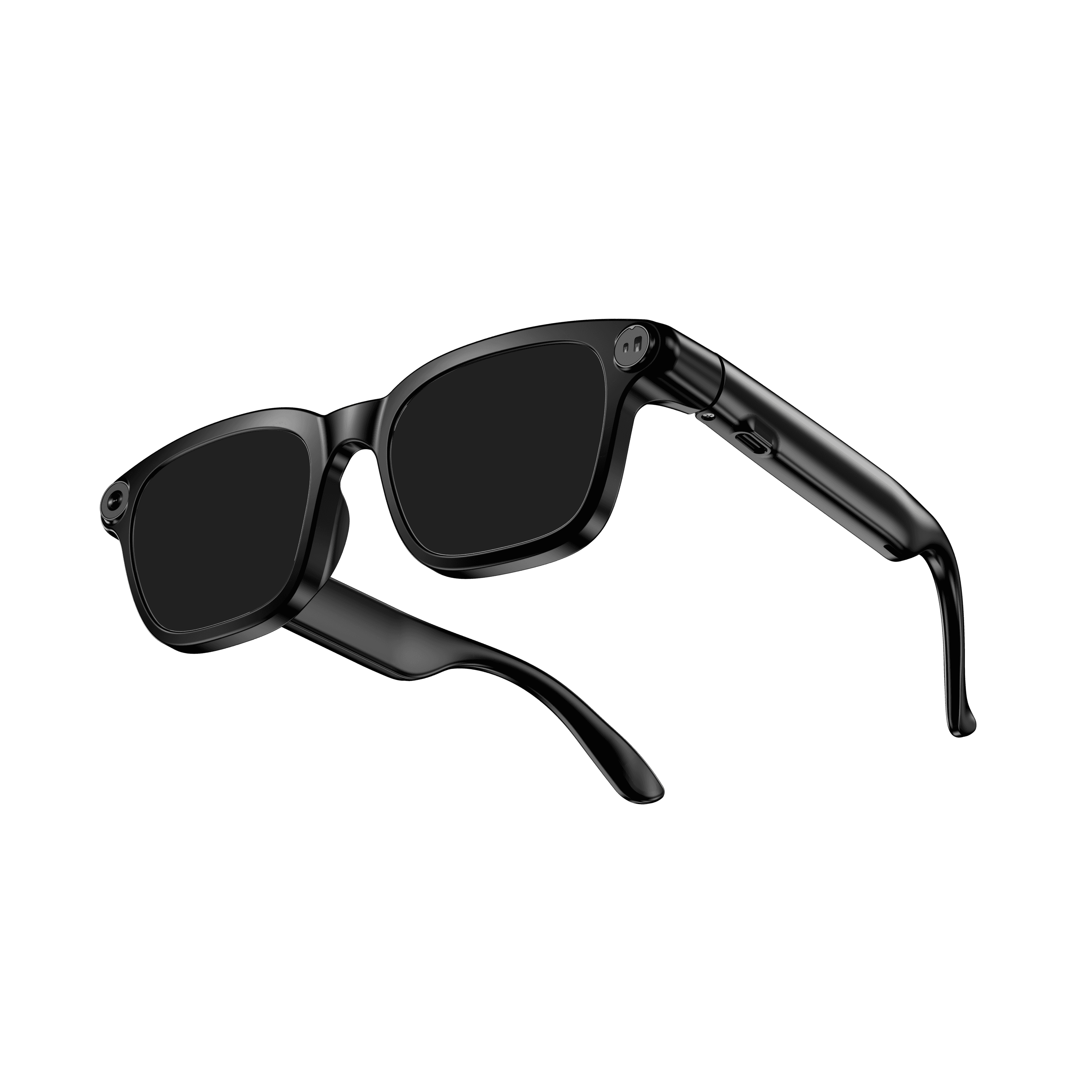 OXIVUE M08$99 at checkout | 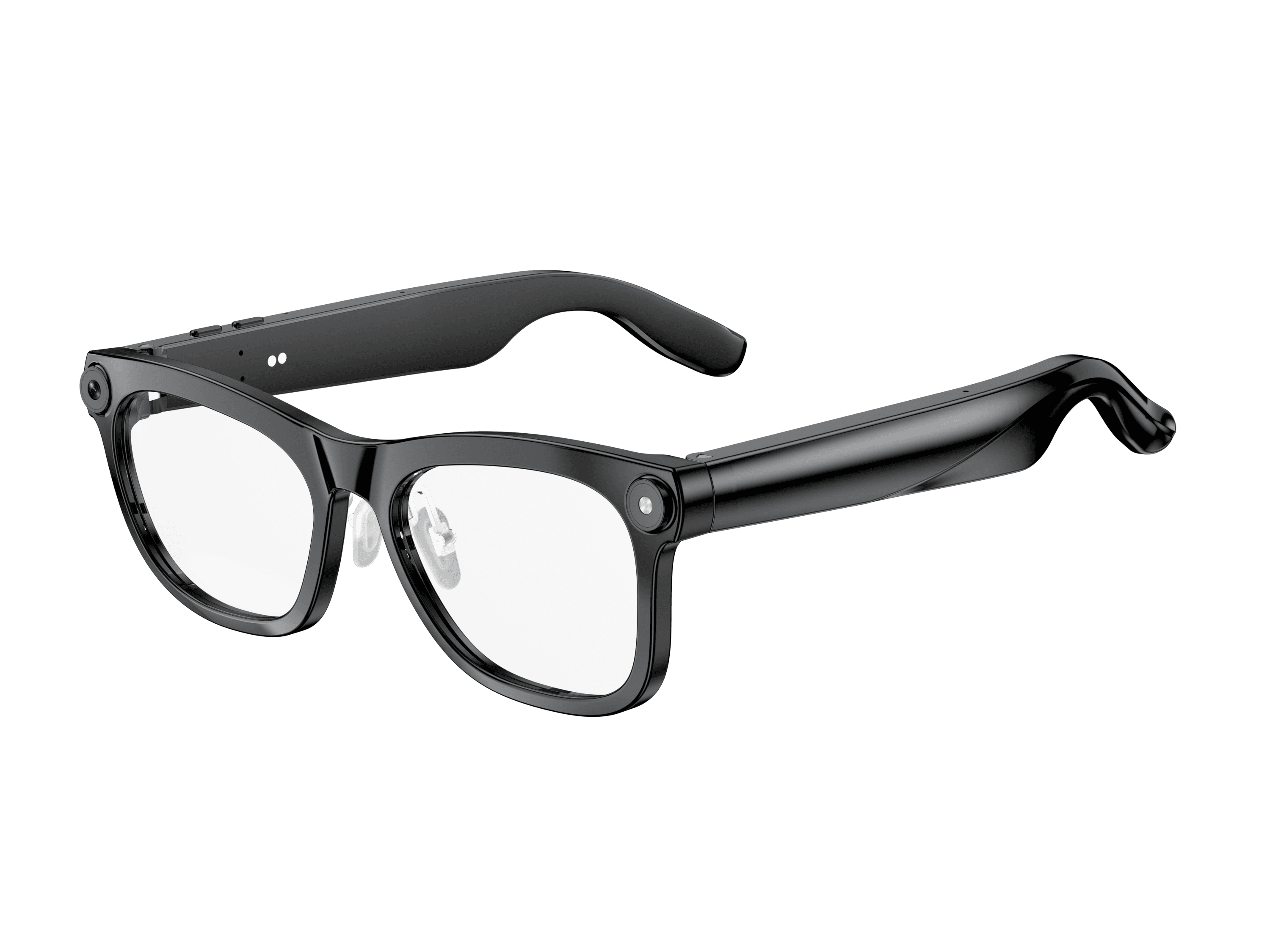 OXIVUE M02C$109 at checkout | 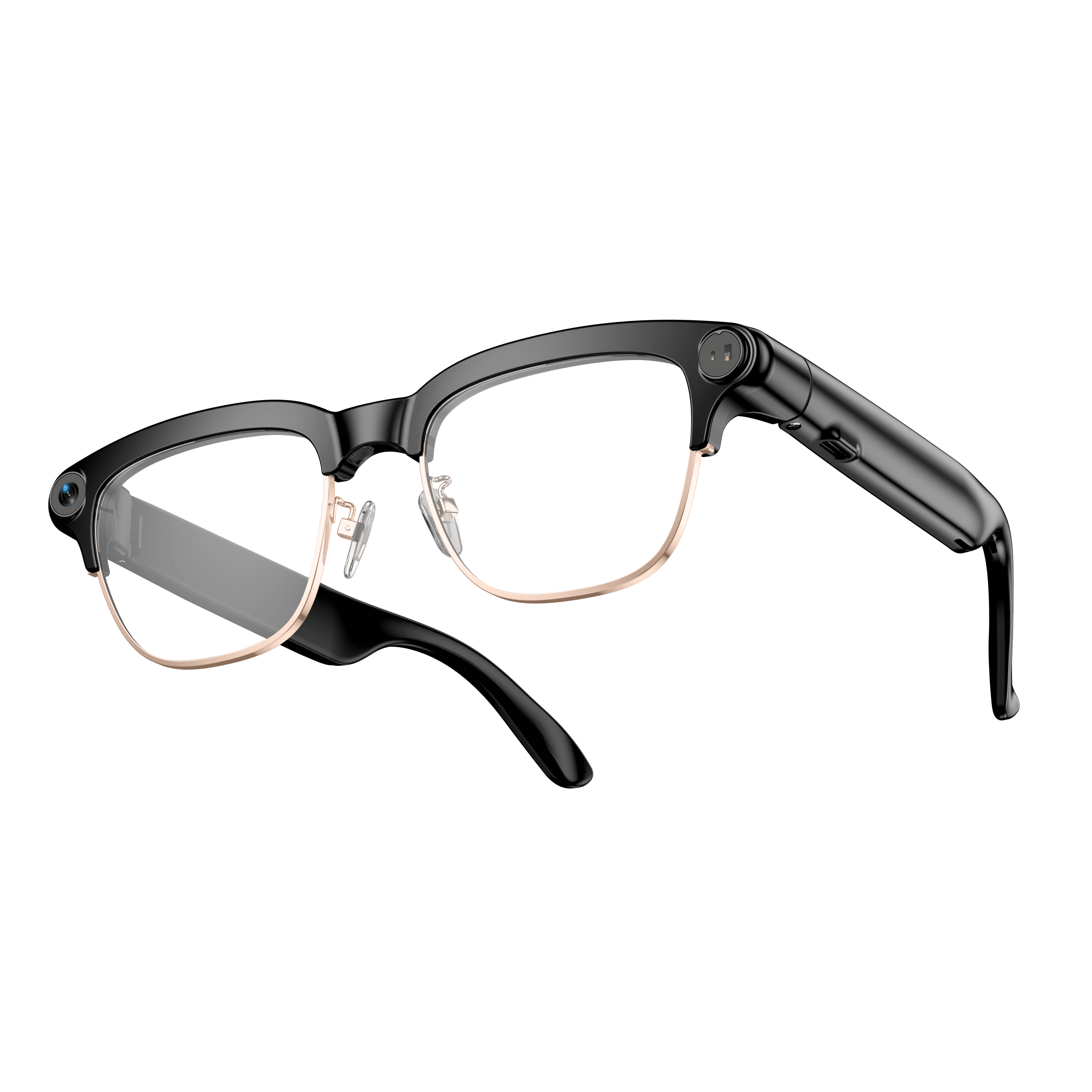 OXIVUE M08C$119 at checkout | |
|---|---|---|---|
| Camera | 8 MP | 8 MP | 8 MP |
| Weight | ~42 g | ~41 g | ~42 g |
| Water rating | — | IP65 | — |
| Lenses | Sunglasses · Photochromic · Clear | Sunglasses · Photochromic · Clear | Sunglasses · Photochromic · Clear |
| Translation | 40+ languages | 40+ languages | 40+ languages |
| Visual AI | — | Yes | — |
| Metal trim | — | — | Gold · Silver |
From each frame’s product page. Every model: open-ear audio, Bluetooth 5.4, no subscription. Full spec table
What these frames won’t do
- No prescription lenses yet, on any model. If you need vision correction all day, these can't replace your glasses.
- No display. Nothing appears in your view; you hear answers and capture photos and video.
- Open-ear speakers leak some sound at high volume and won't block out a loud train or a windy road the way sealed earbuds do.
- Translation, music, calls and the assistant need your phone nearby and connected. Translation pauses after each sentence, and only you hear the translated audio; the other person reads the reply on your phone.
- M08: no published water rating, so keep it out of heavy rain and spray.
Check these before you order: see the warranty and refund policy.