Halliday · price and specs · 2026
Halliday smart glasses: what they cost and what they do
Halliday makes camera-free smart glasses with a built-in display, now in a second generation called the G2. This page collects the price, the specs and the shipping status from Halliday's own pages, and what Android Police, Engadget and The Gadgeteer reported. Each source is named and dated.
Still deciding? Get the M02C, M08 and M08C comparison in your inbox, with your new-customer price already applied.
One email with the comparison, one follow-up a few days later. Unsubscribe any time.
1. What Halliday smart glasses are
Halliday smart glasses put a small display in your line of sight and pair with a phone app. They have no built-in camera, so they show text on the display and play audio, and they do not take photos or video. There are two generations. The original was covered at CES in January 2025, and TechCrunch (January 8, 2025) described a small module called the DigiWindow, mounted in the frame above the right eye. The second generation, the G2, was covered in July 2026 by Engadget (July 21, 2026) and The Gadgeteer (July 22, 2026), and puts a display in both lenses.
The homepage at hallidayglobal.com (checked October 31, 2026) describes the G2 and does not mention the original model. It pitches a feature set called Meeting Flow, and the page says translation and Meeting Flow work with more than 45 languages. Engadget’s write-up describes a meeting mode in which a series of AI agents analyze the conversation, the proactive assistant can answer questions, and a summary and transcript are delivered to the app afterwards. Meetings are a use Halliday pitches on its homepage.
2. How much do Halliday glasses cost?
Halliday’s G2 product page shows USD $599with the non-prescription lenses selected (checked October 31, 2026), and also lists single-vision and premium prescription lens options. The Gadgeteer (July 22, 2026) and Engadget (July 21, 2026) both give $599 as the retail price. Prescription choices and Halliday’s own offers change the total, and the wording about them differs between the homepage, the product page and its FAQ, so treat the total at Halliday’s own checkout as the real number.
The original model was priced differently. TechCrunch (January 8, 2025) reported $489 at full price, and Android Police (October 15, 2025) gave $499 at the time of its review. Early reservation terms for the G2 were also reported in July; the Halliday pages we read (checked October 31, 2026) do not repeat them, so check the site for what applies now.
Outside the US, Halliday’s shipping policy says international shipments may be subject to import duties, taxes and customs fees, which are the customer’s responsibility. The policy page (checked October 31, 2026) does not describe a shipping fee, so confirm that at checkout too.
3. Halliday G2 specs, as Halliday states them
Everything in this table comes from hallidayglobal.com and its G2 product page, read on October 31, 2026. We have not tested the glasses.
| Halliday G2 (maker’s page, checked October 31, 2026) | |
|---|---|
| Price | From USD $599 (non-prescription lenses selected); confirm the total at checkout |
| Display | Binocular waveguide, dual microLED optical engines, green, 600 × 300 pixels per eye, 25.2° field of view, up to 1,600 nits peak |
| Camera | None: “No. Halliday G2 does not have a built-in camera.” (homepage FAQ) |
| Weight | 49 g |
| Battery | “Regular use for 12 hours”; 210 mAh; magnetic charging |
| Audio | Open-ear speaker array; four-microphone array |
| Translation and Meeting Flow | More than 45 languages; system language English only in the current version |
| Lenses | Non-prescription option: high-transmission lenses, included in the base price. Single-vision and premium prescription options (SPH -10.00 to +2.00 D, CYL -4.00 to +4.00 D) |
| In the box | G2 glasses, Premium Case, lens care cloth, magnetic charging cable, the Halliday app |
| Warranty | 12 months |
Two notes on reading it. A 12-hour “regular use” rating is the maker’s figure, and Android Police found the original’s battery life short of Halliday’s claim (below). And the display is listed as green at 600 × 300 pixels per eye, so it is a single-colour display. For how this display style compares with others, see our guide to smart glasses with a display.
4. The original Halliday glasses vs the G2
Search results mix the two, and the facts differ. Here is how the sources we read line them up.
| Original Halliday glasses | Halliday G2 | |
|---|---|---|
| Reported price | $489 (TechCrunch, January 2025); $499 (Android Police, October 2025) | From USD $599 (Halliday, checked October 31, 2026) |
| Display | Small display module above the right eye (“DigiWindow”) | Binocular waveguide, both lenses |
| Weight | Roughly 35 g (The Gadgeteer, July 2026) | 49 g (Halliday) |
| Camera | None (TechCrunch, Android Police) | None (Halliday) |
| Battery claim | 12 hours of all-day use, as Halliday claimed (Android Police) | 12 hours of regular use (Halliday) |
| Independent verdict | Android Police: 5/10 | Launch coverage only in the sources we read |
5. Are Halliday glasses shipping, and where?
For non-prescription G2 orders, Halliday’s own pages (checked October 31, 2026) say yes. The homepage says the first batch, orders placed by September 15, began shipping on September 15, and that later non-prescription orders are expected to ship three days after ordering. The homepage says prescription orders were expected to start shipping in October, typically four to six weeks after ordering, and the product page repeats the four to six weeks. The banner says “first-batch shipping from September” without a year; Engadget and The Gadgeteer both reported in July that shipments were expected in September.
Delivery estimates differ by page. The product page says an order usually arrives within one to two weeks of shipping, while the shipping policy gives 8 to 15 business days for the US and Canada and 7 to 12 for Europe, and calls its estimates approximate. The policy lists countries across North America, Europe, Asia and Oceania and tells buyers elsewhere to contact support. It also excludes military bases and P.O. boxes.
6. What outlets reported
We paraphrase each outlet and link it. Dates are publication dates.
- Android Police (Andy Boxall, October 15, 2025): 5/10, reviewing the original glasses. The reviewer liked the comfortable, light frame and its styling. The criticisms were the display, a small projector above the right-hand lens that you have to look up to see, and that glance up is noticeable to people around you, plus weak speakers, a hard-to-use smart ring, AI features that did not feel compelling, and battery life well short of Halliday’s claim. The reviewer wrote that they could not find a reason to put them on, and recommended the Ray-Ban Meta to readers who want to try smart glasses.
- Engadget (Daniel Cooper, July 21, 2026): news on the G2, not a test. Based on an interview with Halliday’s COO, it says the first model was almost universally panned and reports the COO admitting to many mistakes, including too little testing and inexperience with manufacturing, while still defending the original display choice as right for 2024. The writer disagreed on that point. It says the G2 puts waveguides in both lenses for a bigger field of view and better readability, and the writer hoped to test them before launch.
- The Gadgeteer (Vincent Nguyen, July 22, 2026): launch coverage of the G2. It lists the $599 hardware price, the camera-free design, the display specs, the 49 g weight against roughly 35 g for the first generation, and the AI plans covered below.
TechRadar and Tom’s Guide also appear in search results with pieces on Halliday’s glasses, but their pages did not load in full for us, so we do not summarise them. The sources we could read are the 2025 review of the first model and launch-stage coverage of the G2; none of them is a long-term test of a shipping G2. Newer reviews may exist, so search for one before you pay.
7. Subscriptions and credits
The Gadgeteer (July 22, 2026) reported that Halliday’s AI features run on separate plans: a free tier that caps recording at 120 minutes, and paid plans from $10 to $99 a month. Halliday’s homepage and G2 product page (checked October 31, 2026) do not describe plans or credits, and do not say whether the app needs a subscription. That gap matters because the sticker price may not be the full cost of using the AI features. Read the plan terms in Halliday’s app or site before you order. Our guide to smart glasses with no recurring fee explains where those fees usually sit.
8. Where OXIVUE fits, and where it does not
OXIVUE makes a different kind of glasses, so this is a short section. None of our frames has a display, so they cannot show captions or prompts in the lens. None takes prescription lenses, and none runs Meta AI. If what you want is a camera and open-ear audio rather than text in your eyeline, the M08 is $99 at checkout (listed $149) for one pair, with an 8 MP camera, open-ear directional speakers, about 42 g of weight and 7 hours of listening or 4 hours of calls. Translation across 40+ languages runs through the companion app; the translated audio is heard only by you, and the other person reads the reply on your phone. There is no subscription. Captures start only when you touch the temple, and you should ask before you record people. Two or more pairs in one order are 50% off all eyewear. Compare every frame on the comparison page, or read our Halliday alternatives guide for the display-versus-camera trade in more detail.
If a camera at the office is the problem, our guide to camera-free smart glasses for work covers the policy side, and the meetings guide covers capture and transcription.
9. Before you order a pair of Halliday glasses
- The total. Confirm the price at checkout, including any launch offer, prescription lens choice and shipping fee.
- The plan.Find the current subscription or credit terms for the AI features, since Halliday’s G2 page does not state them.
- The date. Check the shipping estimate for your country and for prescription lenses, which Halliday lists separately from non-prescription orders.
- The paperwork.Halliday lists a 12-month warranty. Read its shipping and return policies yourself, and remember that import taxes outside the US are the buyer’s to pay.
- The seller. Amazon and eBay listings for Halliday glasses appear in search results. We did not check them, so confirm the model, the seller and the warranty before you pay a third party.
Shipping, refunds and warranty.Free shipping from $99. US orders typically arrive in 5–9 business days. International orders take 9–14 business days after shipment. Import VAT or duties outside the US are paid by the recipient. No refunds except transit damage (replaced or refunded); faults are repaired or replaced under the 2-year warranty; change of mind and unmet expectations are not refundable. None of our frames take prescription lenses. Read the refund policy, the shipping policy and the warranty terms, or compare every model on the comparison page.
Frequently asked questions
How much do Halliday glasses cost?
From $599 for the G2, the price on Halliday's product page with the non-prescription lenses selected (checked October 31, 2026); the page also lists single-vision and premium prescription lens options. Prescription choices and Halliday's own offers change the total, and the site words them differently in different sections, so read the total at checkout. TechCrunch reported $489 for the original model in January 2025, and Android Police gave $499 at the time of its October 2025 review. Halliday's shipping policy says duties and taxes on international orders are the customer's responsibility.
Are Halliday glasses good?
The original scored 5/10 at Android Police on October 15, 2025: the reviewer liked the comfort and design and disliked the display position, speakers, battery and AI features. Engadget reported in July 2026 that Halliday's COO acknowledged mistakes with that model. The G2 moves to waveguides in both lenses, but the outlets we read (checked October 31, 2026) covered its launch rather than testing a shipping unit, so we have no independent verdict on a shipping G2 to report.
Do Halliday smart glasses have a camera?
No. Halliday's homepage FAQ says the G2 does not have a built-in camera (checked October 31, 2026), and TechCrunch and Android Police reported the same for the original. They use a display, a four-microphone array and open-ear speakers instead, so they show text and play audio but do not take photos or video. For a camera, the OXIVUE M08 is $99 at checkout, with an 8 MP camera and no display.
Do Halliday glasses need a subscription or credits?
Possibly. The Gadgeteer (July 22, 2026) reported that Halliday's AI runs on separate plans, with a free tier that caps recording at 120 minutes and paid plans from $10 to $99 a month. Halliday's homepage and G2 product page (checked October 31, 2026) do not describe plans or credits, so confirm the current terms with Halliday before you order.
What is the difference between the original Halliday glasses and the G2?
A display in both lenses instead of one small module. The original had a display module called the DigiWindow above the right eye (TechCrunch, January 8, 2025). The G2 has a binocular waveguide display, and Halliday's site shows $599 against the $489 to $499 reported for the original. It weighs 49 g, against roughly 35 g for the first generation per The Gadgeteer. Neither has a camera, and Halliday quotes 12 hours of regular use for the G2.
Are Halliday glasses available now, and where do they ship?
Yes, for non-prescription orders, according to Halliday's own site. Its pages (checked October 31, 2026) say the first batch began shipping on September 15 and later non-prescription orders ship about three business days after ordering. The homepage says prescription orders were expected to start shipping in October, and the product page says they ship four to six weeks after ordering. The shipping policy lists countries across North America, Europe, Asia and Oceania, and delivery estimates differ between pages.
Can Halliday glasses have prescription lenses?
Yes. Halliday's product page (checked October 31, 2026) offers a single-vision and a premium prescription lens option, with a listed range of SPH -10.00 to +2.00 D and CYL -4.00 to +4.00 D, and its FAQ says 1.74 index lenses add $100. Check the lens price at checkout. The page describes prescription lenses as final sale unless defective or shipped in error. None of OXIVUE's frames take prescription lenses.
OXIVUE frames side by side
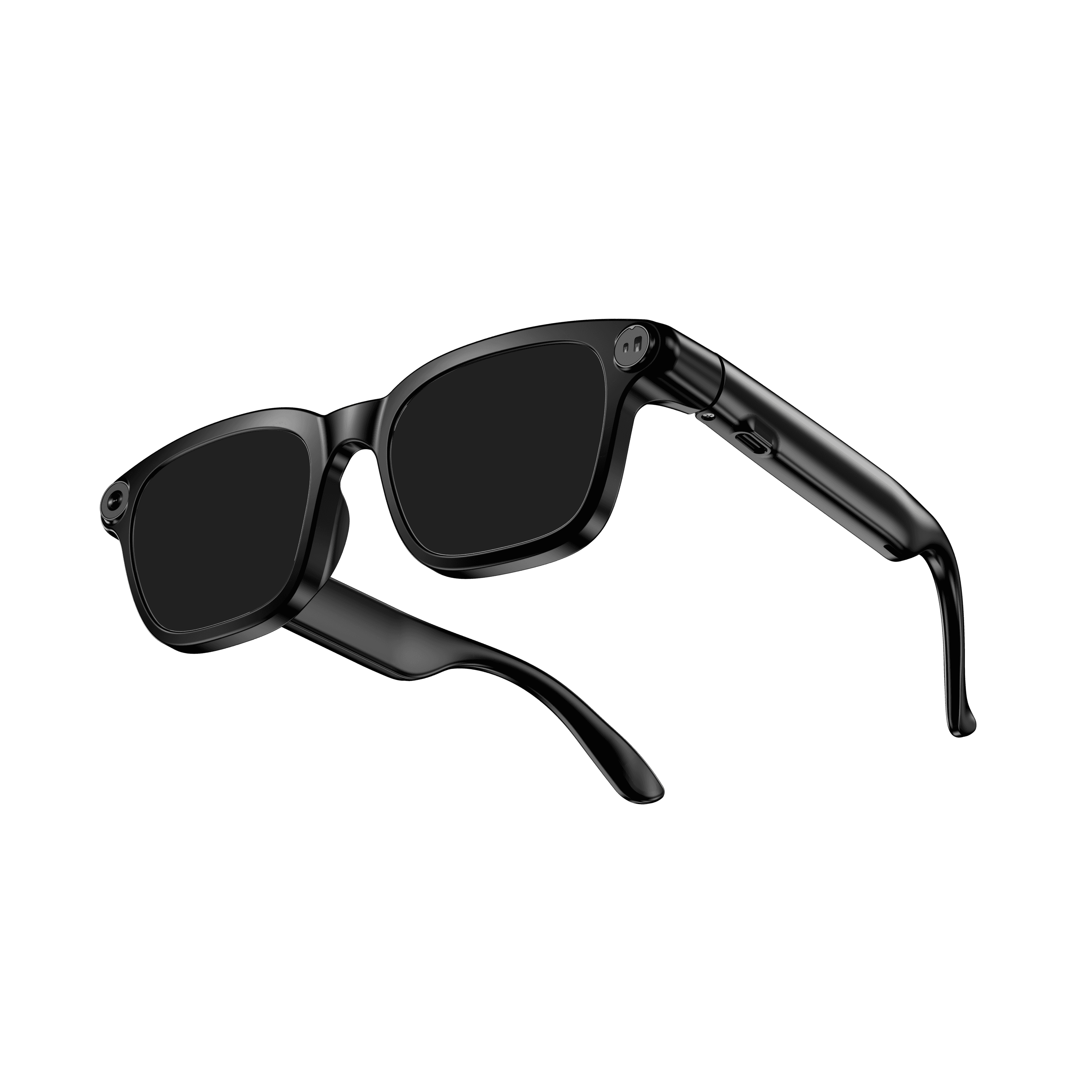 OXIVUE M08$99 at checkout | 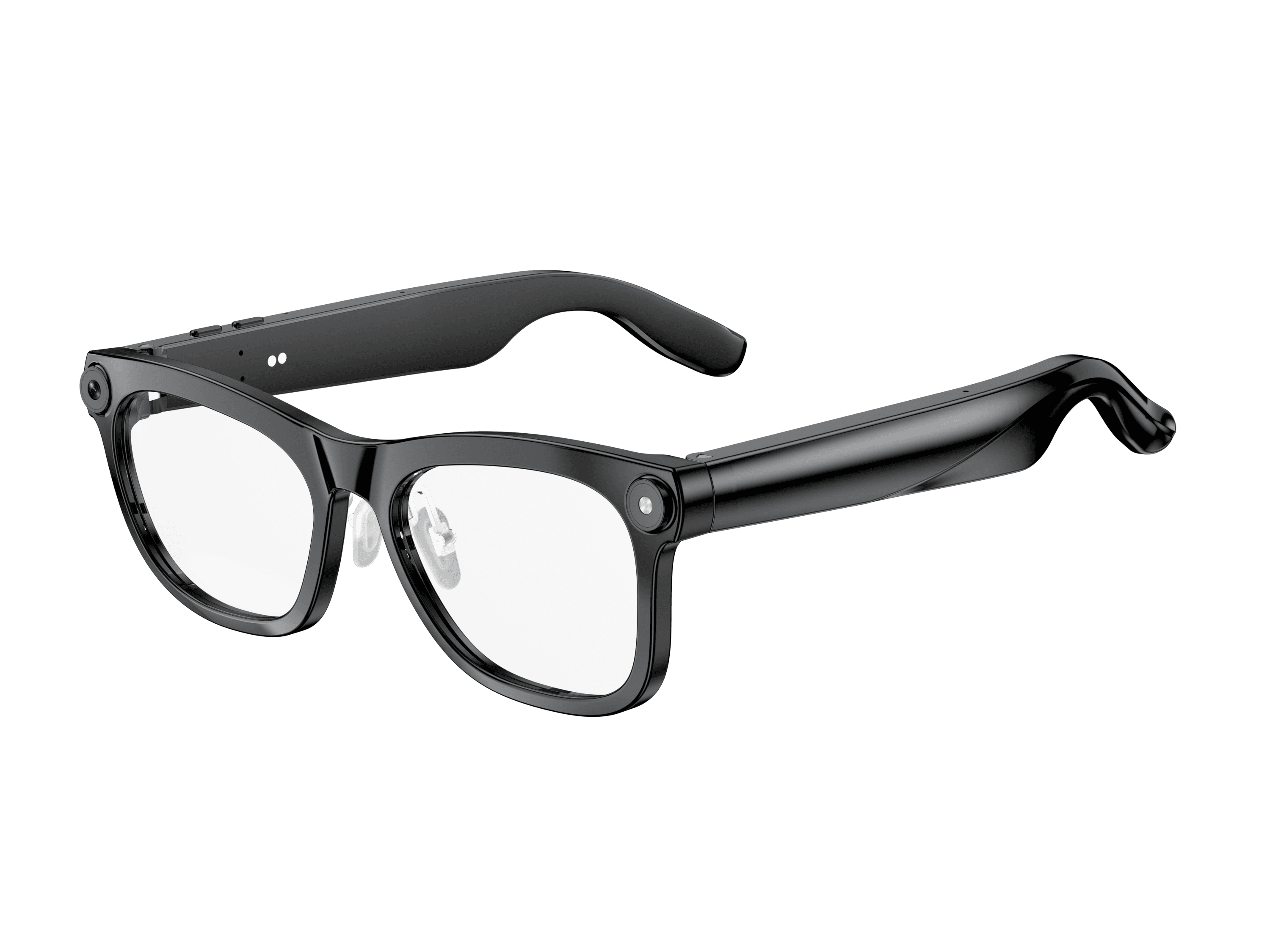 OXIVUE M02C$109 at checkout | 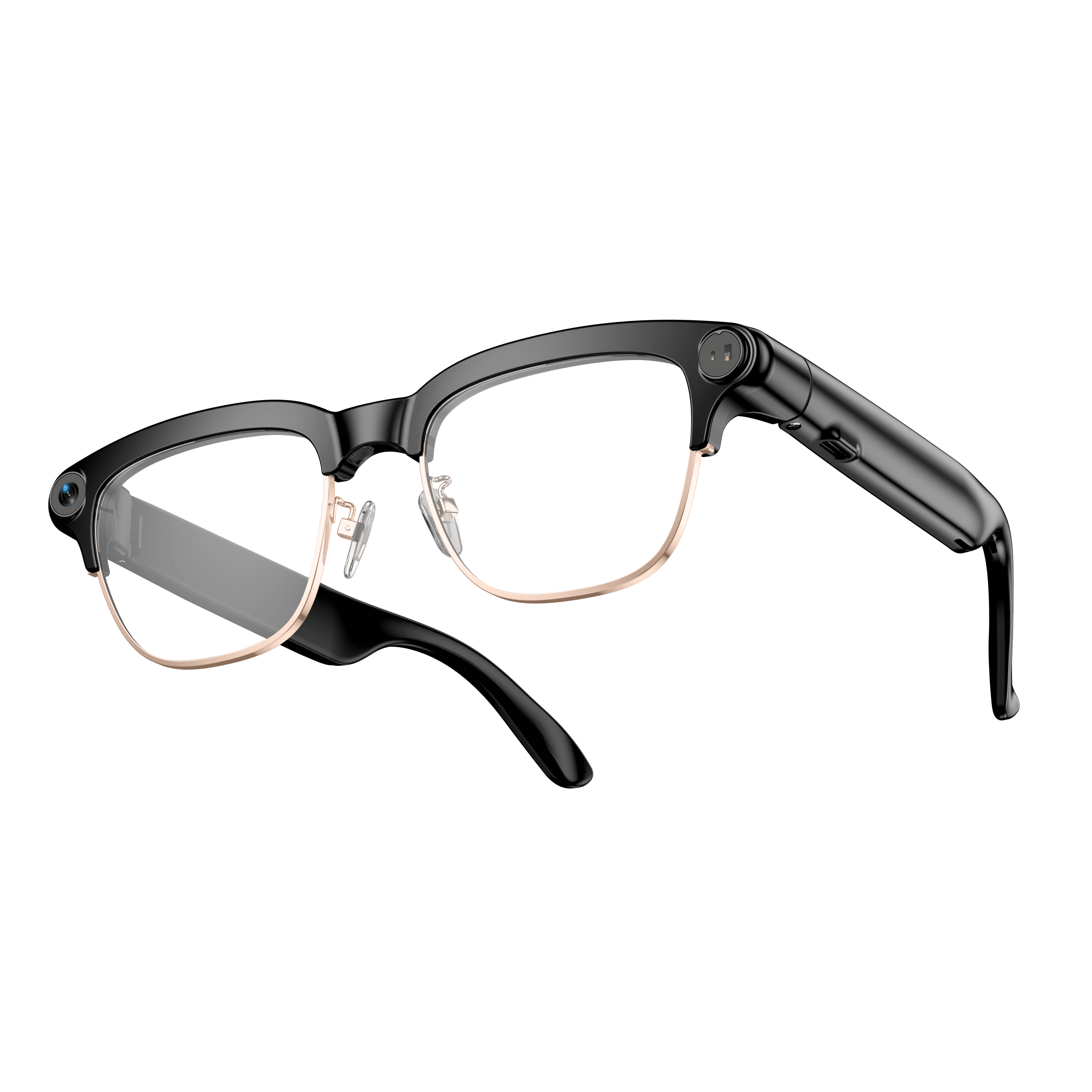 OXIVUE M08C$119 at checkout | |
|---|---|---|---|
| Camera | 8 MP | 8 MP | 8 MP |
| Weight | ~42 g | ~41 g | ~42 g |
| Water rating | — | IP65 | — |
| Lenses | Sunglasses · Photochromic · Clear | Sunglasses · Photochromic · Clear | Sunglasses · Photochromic · Clear |
| Translation | 40+ languages | 40+ languages | 40+ languages |
| Visual AI | — | Yes | — |
| Metal trim | — | — | Gold · Silver |
From each frame’s product page. Every model: open-ear audio, Bluetooth 5.4, no subscription. Full spec table
What these frames won’t do
- No prescription lenses yet, on any model. If you need vision correction all day, these can't replace your glasses.
- No display. Nothing appears in your view; you hear answers and capture photos and video.
- Open-ear speakers leak some sound at high volume and won't block out a loud train or a windy road the way sealed earbuds do.
- Translation, music, calls and the assistant need your phone nearby and connected. Translation pauses after each sentence, and only you hear the translated audio; the other person reads the reply on your phone.
- M08: no published water rating, so keep it out of heavy rain and spray.
Check these before you order: see the warranty and refund policy.