AI glasses brands · 2026
Mira AI glasses: what they are, what they cost, and what to check first
Mira AI glasses are smart glasses that listen, turn speech into transcripts and show answers on a display, with no camera. People searching the name want the price, the specs and an honest view of the privacy trade-off. This guide sets out what the maker's own page and dated news coverage say, marks what we could not confirm, and says plainly where OXIVUE is a different kind of product.
Still deciding? Get the M02C and M08 comparison in your inbox, with your new-customer price already applied.
One email with the comparison, one follow-up a few days later. Unsubscribe any time.
1. What Mira AI glasses are
Mira AI glasses are smart glasses built around conversation rather than photography. According to the maker’s own page, trymira.com (checked October 31, 2026), they have a microphone, dual speakers and a dual waveguide display, and they have no camera. The page says they turn what is said into transcripts you can search later, translate speech and answer questions, and that AI agents can handle tasks such as sending an email once you confirm. Gizmodo and Pulse 2.0 both report that the company was previously called Halo (checked October 31, 2026).
The glasses work with a phone app that the page calls a command center: you review, export and search transcripts and summaries there. A custom-fitted ring with gesture control is described on the same page. One honesty note before the details: OXIVUE sells camera glasses and publishes this page, so every Mira fact below is attributed and dated, and we have not tested the glasses. Where we quote a spec, it is the maker’s claim, and the maker’s footer says its battery, weight and performance figures come from internal testing.
2. Price, ordering and availability
The maker lists two versions: non-prescription glasses at $649 and prescription glasses at $749(trymira.com, checked October 31, 2026). The page offers one colour, black. Its FAQ says non-prescription orders ship within 72 hours and that the next prescription batch ships in November. On phones, the page is direct: “We only support iOS right now.”
Three things we did not find stated on the page: a price for the ring, whether the ring comes with the glasses, and shipping costs or the list of countries served. The FAQ says core features, including transcription, note-taking and translation, are unlimited and free, and that unlimited AI use is included for free. Terms have changed since the launch coverage. Articles from late 2025 and early 2026 quote different prices from the page today, and AfroTech (January 16, 2026) described an optional paid subscription for unlimited AI responses, while the maker’s page now says unlimited AI use is included for free. That is why this guide takes every price and spec from the maker’s page alone, and why you should confirm what you are buying on trymira.com.
On protection, the page lists a one-year warranty and a trial return policy, and says a $100 prescription lens production and installation cost is non-refundable. Read those terms on the maker’s site before you order, because they are the maker’s to state, not ours.
3. The specs the maker lists
Everything in this list is from trymira.com on October 31, 2026, and is the maker’s claim:
- Weight. 39 g.
- Battery. 20 hours, and up to 7 days of use per charge. The page gives two full-charge times in different places: 40 minutes and under 2 hours.
- Display.Dual waveguide display; the page says “The display is fully private.”
- Audio. Dual speakers and a microphone.
- Camera.None; the page states “No camera.”
- Lenses. Prescription and progressive lenses are offered.
- Response time. The page says under 500 ms.
- Translation. 60+ languages.
If a display is the feature you are really shopping for, our smart glasses with a display guide covers that category more broadly.
4. Mira next to two OXIVUE frames
The table is a fact sheet, not a verdict. These are different kinds of glasses: one is built to listen and transcribe, the other pair to capture and to talk to your phone. Mira figures are the maker’s, from trymira.com, checked October 31, 2026.
| Mira (maker’s page) | OXIVUE M08 | OXIVUE M02C | |
|---|---|---|---|
| Price | $649 non-prescription · $749 prescription | $99 at checkout (one pair) | $109 at checkout (one pair) |
| Camera | None | 8 MP | Sony IMX219 8 MP, dual stabilisation |
| Display | Dual waveguide display | None | None |
| Prescription lenses | Offered, including progressive | No | No |
| Phone | iOS only for now, per the maker | Phone with the free companion app | Phone with the free companion app |
| Weight | 39 g (maker’s internal testing) | About 42 g | About 41 g |
| Battery | 20 hours (maker’s internal testing) | 7 h listening / 4 h calls | 7 h listening / 4 h calls |
| Translation | 60+ languages | 40+ languages via the companion app | 40+ languages via the companion app |
| Extras | Gesture ring described on the page | Open-ear speakers; a touch on the temple starts a capture | Voice-activated visual AI; IP65 (not immersion); magnetic charging |
| Warranty | One year, per the maker | 2-year limited on the frame | 2-year limited on the frame |
OXIVUE prices checked 2026-10-31; checkout price may change. The two battery rows are not measured the same way, so do not read them as a like-for-like ranking.
5. What it listens to, and the privacy questions
Mira’s central design choice is that it listens. The maker’s FAQ says the glasses “can listen to your entire day,” and also says “All audio is instantly and permanently deleted, and only the transcription is saved for your use.” Elsewhere the page says conversations are not used for training and are not sold. The page we read does not say whether the microphone runs continuously or starts when the wearer asks, and it does not describe consent from the other people in a conversation or any indicator showing when the glasses are listening (checked October 31, 2026).
Gizmodo’s James Pero (December 12, 2025, checked October 31, 2026) wrote that the smart glasses “don’t have cameras, but they do come equipped with microphones that are on perpetually.” That is the author’s characterization, and the article we read does not quote Mira saying so. Of smart glasses in general, he wrote that “it’s the idea that they can be recorded without their consent” that bothers people. The same article reports Mira saying it does not store audio recordings or use them to train AI.
None of this settles the law. Consent rules for recording audio differ by state and country. Our guide to smart glasses recording laws by state explains the US picture, and how to tell if smart glasses are recording covers the bystander side. This is general information, not legal advice. With any wearable that listens or records, ask before you capture a private conversation.
6. Who is behind Mira, and the other Mira
The founders are AnhPhu Nguyen and Caine Ardayfio, who met in Harvard’s makerspace, according to General Catalyst’s post dated November 24, 2025 (checked October 31, 2026). General Catalyst says it leads the seed round, and Pulse 2.0 (November 25, 2025) reports $6.6 million. AfroTech (January 16, 2026) reported a first batch of 300 glasses, with another 1,000 to be released by the end of January. We could not confirm a headquarters city or a founding year from the pages we read, so we do not state either.
A second company called Mira turns up in the same search results. Mira Guide (mira.guide) says on its home page that it was designed and built by a team in Germany and describes a knowledge-management product for shop-floor teams (checked October 31, 2026). Its smart-glasses page, titled “Industrial Smart Glasses for Hands-Free SOPs | Mira Guide,” describes glasses for industrial and field service teams that capture video and audio, and calls them “a native extension of Mira Guide.” Neither page we read mentions trymira.com. If you arrive at either from a search for Mira smart glasses, check the domain before you buy or book a demo.
7. Reviews and what to look for
A Google search for Mira AI glasses turns up launch coverage, founder videos and a subreddit, r/MIRAGlasses, whose Google snippet calls it the “official subreddit for the MIRA AI smart glasses” (seen October 31, 2026; we have not read its threads). We have not read an independent hands-on review, and OXIVUE has not tested the glasses, so we do not rate them.
The maker’s page carries customer quotes about translation and transcription accuracy. We cannot verify them, and one quote on any product page is a data point, not a test. If you are deciding, look for a review that measures battery life over a full week against the maker’s 20-hour figure, tests transcription in a noisy room and with several speakers, says how often the glasses actually listen, and checks the app on a phone like yours. For the wider picture of how listening and camera glasses differ, see AI glasses vs smart glasses.
8. Where OXIVUE fits, and where it does not
OXIVUE frames are not a replacement for Mira, and we would not tell you to swap one for the other. Our frames have no display, no prescription lenses and no Meta AI. What they have is a camera that starts a capture only when you touch the temple, open-ear speakers and microphones, and a free companion app for translation, the assistant and files. Ask before you record anyone. Our how AI glasses work guide explains the parts.
The M02C ($109 at checkout for one pair) has a Sony IMX219 8 MP camera with dual stabilisation, voice-activated visual AI that describes what you look at, IP65 (dust and water jets, not immersion) and magnetic charging. The M08 ($99) has an 8 MP camera at about 42 g. Both come with a choice of sun, photochromic or clear lenses, list 7 hours of listening and 4 hours of calls, and translate 40+ languages through the companion app, where the translated audio is heard only by the wearer and the other person reads the reply on your phone. Two or more pairs in one order are 50% off all eyewear.
Shipping, refunds and warranty. Free shipping from $99. US orders typically arrive in 5–9 business days. International orders take 9–14 business days after shipment, and import VAT or duties outside the US are paid by the recipient. No refunds except transit damage (replaced or refunded); faults are repaired or replaced under the 2-year warranty; change of mind and unmet expectations are not refundable. None of our frames take prescription lenses. Read the refund policy or compare every model on the comparison page.
Frequently asked questions
How much do Mira AI glasses cost?
$649 for non-prescription glasses and $749 for prescription glasses, according to the maker's site (checked October 31, 2026). The page describes a gesture-control ring but lists no ring price and does not say whether it is included. We also did not find shipping costs or the list of countries it ships to. Prices and terms change, so confirm everything on trymira.com before you order. OXIVUE has no connection with Mira.
Do Mira AI glasses have a camera?
No. The maker's page states "No camera," and General Catalyst, which led the seed round, says the glasses capture audio only (checked October 31, 2026). Per the maker, they do have a microphone and a display. Gizmodo's December 12, 2025 article describes them, in the author's words, as glasses without cameras but with microphones that are on perpetually, so the privacy questions concern what is said near the wearer, not what the glasses see.
Do Mira AI glasses work with Android?
Not according to the maker. Its FAQ says "We only support iOS right now," and the page describes the app as available on iOS and desktop (checked October 31, 2026). Support can change, so check trymira.com before ordering if you use an Android phone. OXIVUE's glasses are a different product and pair with a phone through their own free companion app.
Are Mira AI glasses always listening?
They can listen all day, by the maker's own description. Its FAQ says the glasses "can listen to your entire day" and that audio is deleted right away, with only the transcription saved (checked October 31, 2026). The page we read does not say whether listening is continuous or started by the wearer. Gizmodo (December 12, 2025) wrote that the microphones are on perpetually. Ask before wearing any listening device in a private conversation.
Is Mira the same company as Mira Guide?
Not as far as we could tell. Mira Guide (mira.guide) offers a knowledge-management product for shop-floor teams and says on its home page that it was designed and built by a team in Germany. It also has a smart-glasses page that calls the glasses "a native extension of Mira Guide." Neither page we read mentions trymira.com (checked October 31, 2026). Check the domain before you buy, book a demo or share any details.
Are there reviews of Mira AI glasses?
We have not read an independent hands-on review, so we do not rate the glasses. A Google search turns up launch coverage, founder videos and a community subreddit. Gizmodo's December 12, 2025 article raises privacy concerns about the design. The maker's own page carries customer quotes that we cannot verify. When you read a review, look for tests of battery life, transcription accuracy in a noisy room and how often the glasses actually listen.
Does OXIVUE make glasses like Mira?
No. OXIVUE glasses have an 8 MP camera, open-ear speakers and microphones, with no display, no prescription lenses and no Meta AI. A capture starts only with a touch on the temple, and the M02C adds voice-activated visual AI that describes what you look at. One pair is $99 at checkout for the M08 and $109 for the M02C.
OXIVUE frames side by side
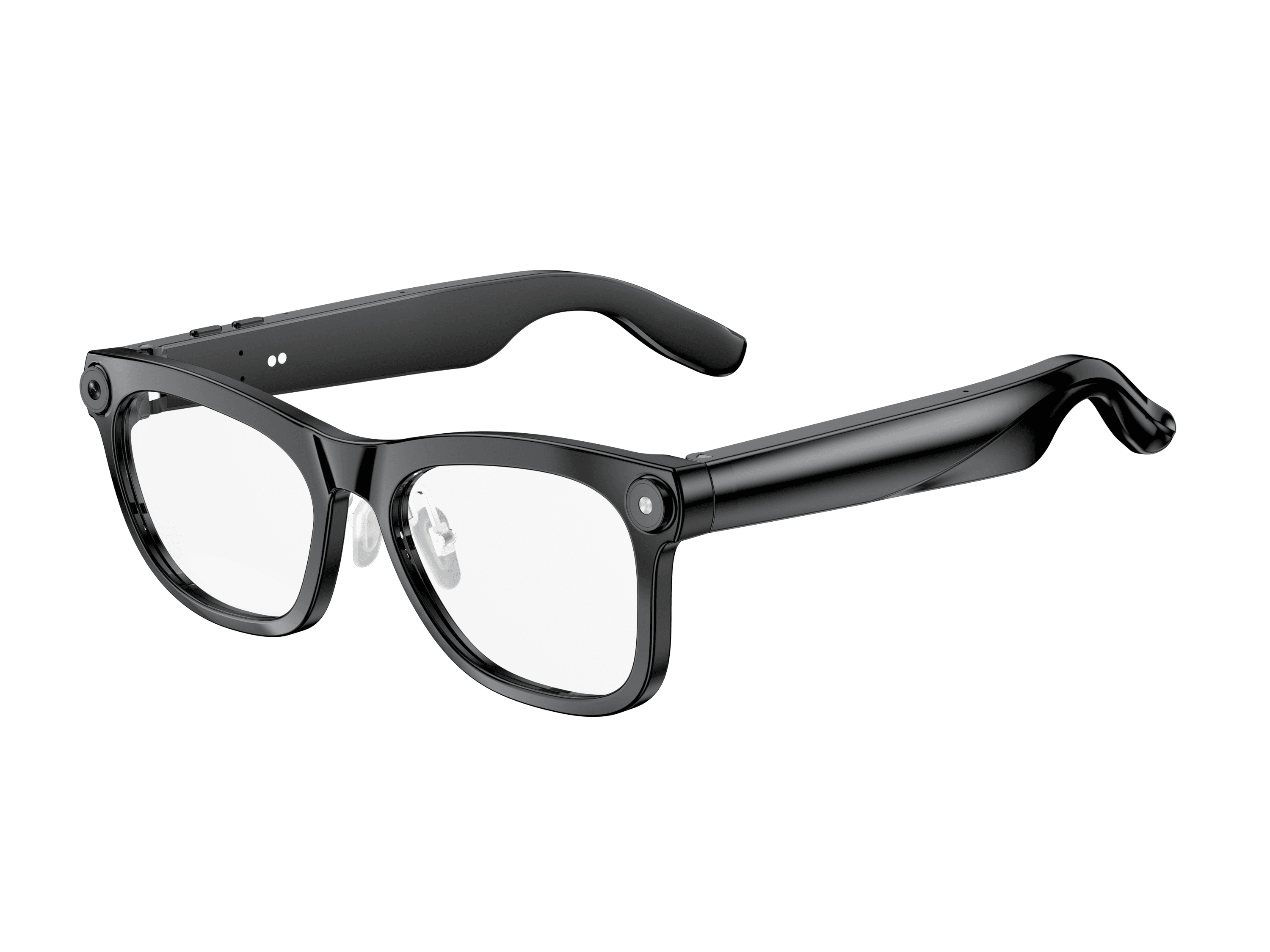 OXIVUE M02C$109 at checkout | 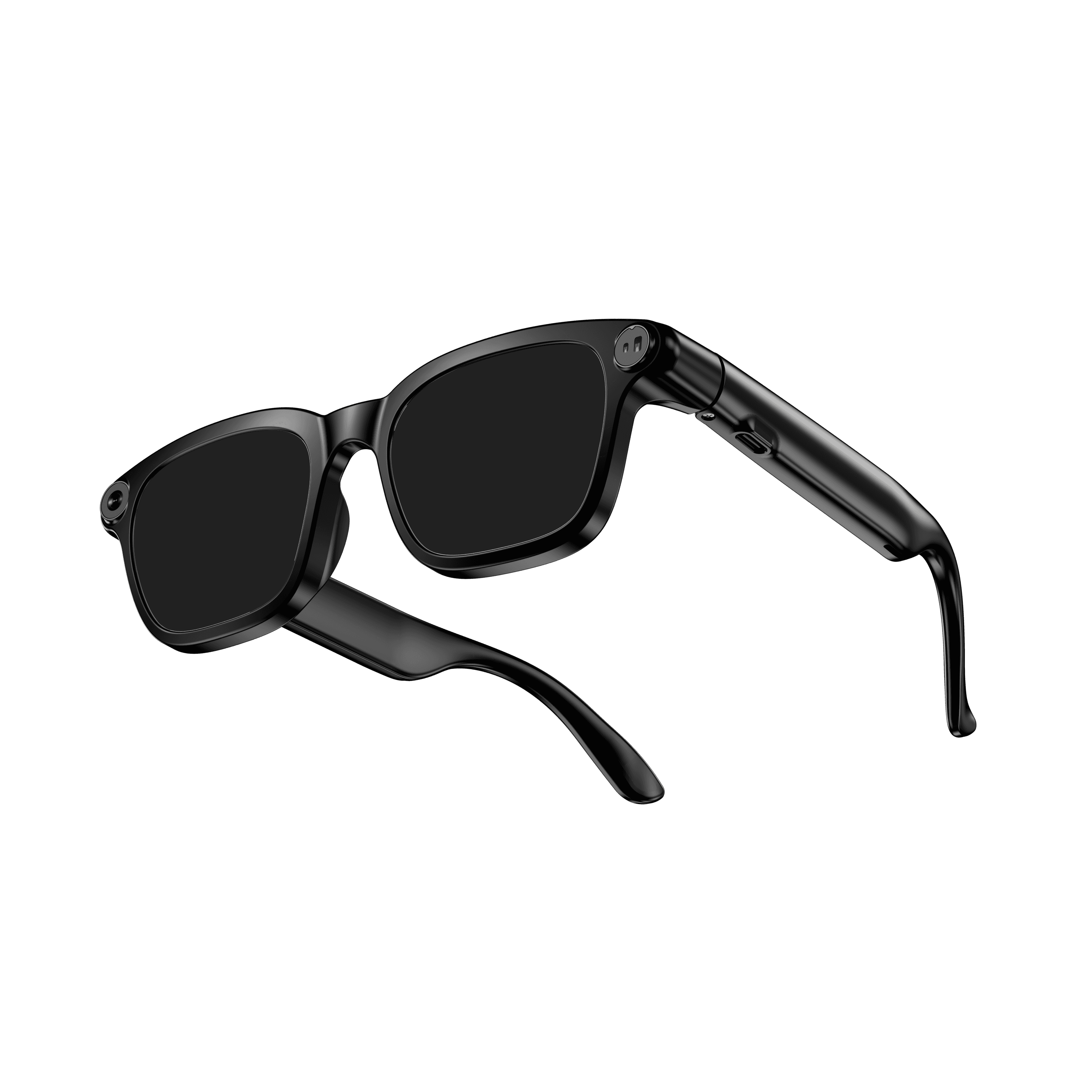 OXIVUE M08$99 at checkout | |
|---|---|---|
| Camera | 8 MP | 8 MP |
| Weight | ~41 g | ~42 g |
| Water rating | IP65 | — |
| Lenses | Sunglasses · Photochromic · Clear | Sunglasses · Photochromic · Clear |
| Translation | 40+ languages | 40+ languages |
| Visual AI | Yes | — |
From each frame’s product page. Every model: open-ear audio, Bluetooth 5.4, no subscription. Full spec table
What these frames won’t do
- No prescription lenses yet, on any model. If you need vision correction all day, these can't replace your glasses.
- No display. Nothing appears in your view; you hear answers and capture photos and video.
- Open-ear speakers leak some sound at high volume and won't block out a loud train or a windy road the way sealed earbuds do.
- Translation, music, calls and the assistant need your phone nearby and connected. Translation pauses after each sentence, and only you hear the translated audio; the other person reads the reply on your phone.
- M02C: IP65 resists dust and water jets, not immersion. No swimming, no saltwater.
- M08: no published water rating, so keep it out of heavy rain and spray.
Check these before you order: see the warranty and refund policy.