AI wearables · 2026
AI wearables explained: choose the form first, then the brand
An AI wearable is any device you wear that uses AI to hear, see, translate or answer. This page sorts the main forms (glasses, pendants, wrist devices, rings, earbuds) by what each can sense and how it replies, then shows where AI glasses fit and what the OXIVUE frames, from $149 to $199, do.
Still deciding? Get the M02C, M08 and M14 comparison in your inbox, with your new-customer price already applied.
One email with the comparison, one follow-up a few days later. Unsubscribe any time.
What an AI wearable is
An AI wearable is a device you wear that uses AI to take something in (sound, pictures, motion) and give something back (an answer, a translation, a summary, a nudge). Most of them lean on a phone for the heavy lifting, so the wearable is better thought of as a sensor and a way to talk to the AI than as a computer in its own right.
You will see the same idea sold as wearable AI devices, AI gadgets or smart wearables. A list of products hides the question that matters first: where on your body should the AI sit? That one choice decides what it can perceive, how it talks to you and whether you will actually keep it on.
OXIVUE publishes this page and makes only glasses. For that reason we describe the other forms by category and do not name other makers or quote their prices or specs. If you are weighing a particular product, read its own page.
The main forms
Each form puts the AI in a different place. This table is about the form, not any one product, so read “usually” as a rule of thumb rather than a spec.
| Form | Where it sits | What it can usually take in | How it usually answers |
|---|---|---|---|
| Glasses | On the face, at eye height, speakers by the ears | What you are looking at, your voice, sound around you | Audio in your ears; some add a display in the lens, many do not |
| Pendant or clip-on pin | On the chest or clothing | Mostly sound, sometimes pictures from chest height | Often through a phone app afterwards |
| Wrist device (watch or band) | On the wrist, where you glance down | Your voice and movement; body sensors on many models | A screen, taps and vibration |
| Ring | On a finger | Movement and body sensors; little room for more | Mostly through a phone app |
| Earbuds and headphones | In or over the ears | Your voice and the sound around you | Audio only |
Two things follow from the table. First, only glasses sit where your eyes are, so they are the form that can work from what you are actually looking at. Second, the forms that answer on a screen ask you to look at something, while the forms that answer in audio let you keep your eyes where they are.
How to choose a form
Four questions get you to a form faster than any list.
- What should the AI use as input? What you see, what you hear, or what your body does. Each form favours one of these.
- How do you want the answer? In your ears, on a screen, or as a note you read later. If you do not want to look at anything, audio forms fit.
- Will you wear it all day? A device you take off by lunchtime does little. Weight and looks matter more than they seem to on a spec sheet.
- Who else is affected? Anything with a microphone or camera captures other people, so think about where you will wear it and tell people when it matters. See the last section.
If your answers point at what you see, audio replies and all-day wear, you are describing glasses. If they point at body sensing or a glanceable screen, you are describing a wrist device or a ring, and no pair of glasses will replace that.
Where glasses fit
Glasses are the form built around vision. The camera sits at eye height, so a photo shows roughly what you were looking at, and the speakers sit beside your ears, so you hear the AI without covering them. That suits a few jobs well: capturing a moment hands-free, getting a translation while you talk to someone, and asking a question about what is in front of you.
It also helps that glasses are already something people wear all day. Our AI eyewear guide covers the frame-first way to buy them, and AI powered smart glasses explains what the AI actually does. If you are deciding between glasses and earbuds specifically, read smart glasses vs earbuds. For cameras across several forms, see the wearable camera guide.
What OXIVUE glasses do
OXIVUE makes four AI glasses. They share an 8 MP camera, open-ear directional speakers, microphones and Bluetooth 5.4. They weigh 41 to 52 g, and there is no subscription for the glasses or the companion app. Capture starts only with a touch on the temple.
| M08 | M02C | M08C | M14 | |
|---|---|---|---|---|
| List price | $149 | $159 | $169 | $199 |
| Weight | ~42 g | ~41 g | ~42 g | 52 g |
| Translation | 40+ languages | 40+ languages | 40+ languages | 139 languages |
| Lens | Sun, photochromic or clear | Sun, photochromic or clear | Sun, photochromic or clear; gold or silver trim | Fixed one-piece shield, 4 colourways |
| Water rating | Not published | IP65 | Not published | IPX4 |
Prices are list prices, checked 2026-11-21.The assistant in the M08, M02C and M08C companion app runs on OpenAI’s GPT models. Translated audio is heard only by the wearer, and the other person reads the reply on your phone. The M02C’s visual AI is voice-activated and can describe what you are looking at. Compare them in full on the comparison page, or start with the M08, M02C, M08C or M14 pages.
What they do not do
- No display. There is nothing to read in the lens. Answers come as audio, and translated replies for the other person appear on your phone.
- No prescription lenses. No OXIVUE frame takes them.
- No body sensing. OXIVUE glasses are not a fitness or health tracker, and we make no health claims for them.
- A phone in range. Translation, the assistant and file transfer go through the companion app on a nearby phone.
- No carrying case or charging dock in the box. You get the glasses, a magnetic charging cable, a manual and a lens cloth.
Cameras, microphones and other people
Every wearable with a microphone or camera captures other people, whatever form it takes. Tell people before you record them, follow the rules of the place you are in, and stop when asked. Capture on OXIVUE glasses starts only with a touch on the temple, so it is always deliberate. If you are on the other side of the camera, our guide on how to tell if smart glasses are recording explains what to look for.
Shipping, refunds and warranty.Free shipping from $99, so every single pair qualifies; below that it is $9.99. US orders typically arrive in 5–9 business days and international orders in 9–14 business days after shipment, with import VAT or duties outside the US paid by the recipient. No refunds except transit damage (replaced or refunded); faults are repaired or replaced under the 2-year warranty; change of mind and unmet expectations are not refundable. See the shipping policy, return policy and warranty, or ask on the support page.
Frequently asked questions
What are AI wearables?
AI wearables are devices you wear that use AI to hear, see, translate, summarise or answer, usually with a phone doing part of the work. They come in several forms: glasses, pendants or clip-on pins, wrist devices, rings and earbuds. The form decides what the device can sense and how it tells you the answer, so choose the form before you choose a brand.
Are AI glasses an AI wearable?
Yes. AI glasses are one form of AI wearable: a frame with a camera, open-ear speakers and microphones that you wear on your face. OXIVUE makes four, the M08, M02C, M08C and M14, listed from $149 to $199. They answer through audio and your phone screen, because none of them has a display in the lens.
Which AI wearable should I buy?
Pick the form that matches the input you want the AI to use. If you want it to work from what you are looking at and hear answers in your ears, choose glasses. If you mainly want a screen you glance at, a wrist device suits that better. There is no single best AI wearable, because the right form depends on how you will wear it and how you want it to reply.
Do AI wearables need a phone?
Many do, so check before you buy. OXIVUE glasses need the free companion app on a phone that is nearby and connected for translation, the assistant and file transfer. Our support page lists iOS 14 and later and Android 9 and later over Bluetooth 5.4. The app does not need a Meta, Facebook or Instagram account, and there is no subscription for the glasses or the app.
How much do AI glasses cost?
OXIVUE AI glasses list from $149 to $199: M08 $149, M02C $159, M08C $169 and M14 $199. Each has an 8 MP camera and open-ear audio. Prices were checked on 2026-11-21 and the price at checkout may change. Shipping is free from $99, so a single pair qualifies. We do not quote other makers or other wearable forms here, so compare them on each maker's own page.
Is it okay to wear an AI wearable with a camera or microphone around other people?
Not automatically. A device that records sound or pictures captures other people too, so tell them, follow the rules of the place you are in and stop when asked. On OXIVUE glasses, capture starts only with a touch on the temple. That makes it a deliberate action, but it does not replace asking. Take the device off in places where recording is not welcome.
OXIVUE frames side by side
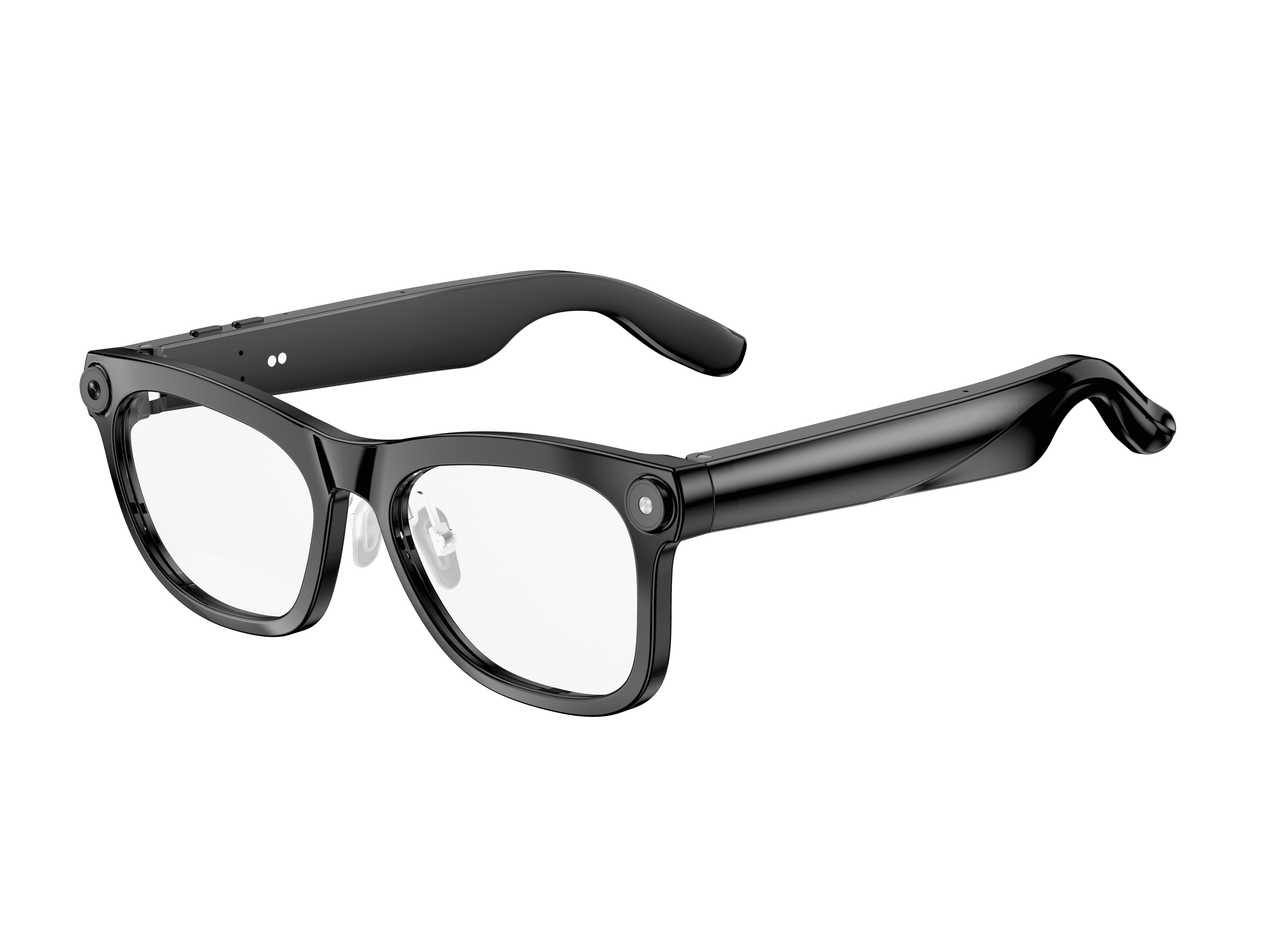 OXIVUE M02C$109 at checkout | 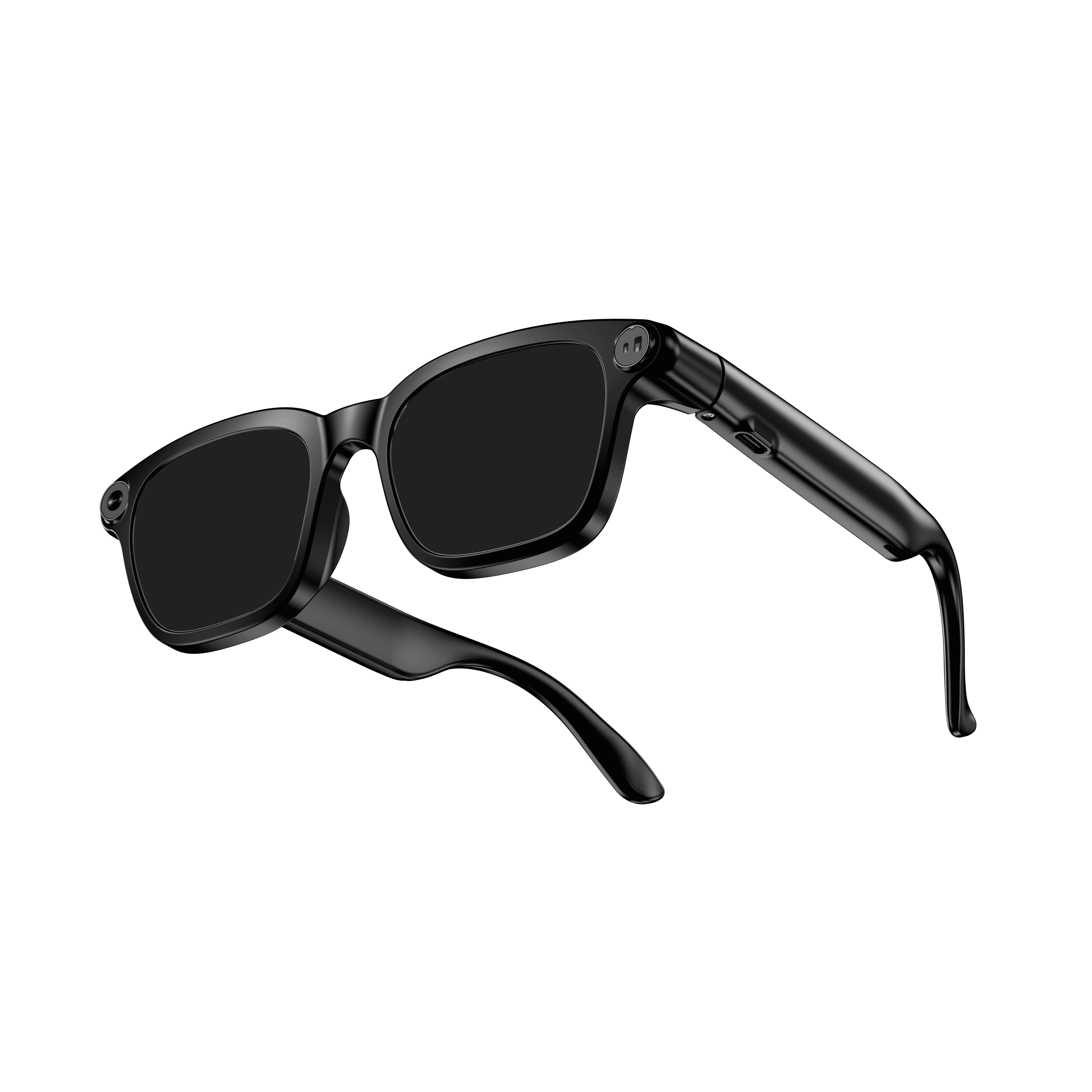 OXIVUE M08$99 at checkout | 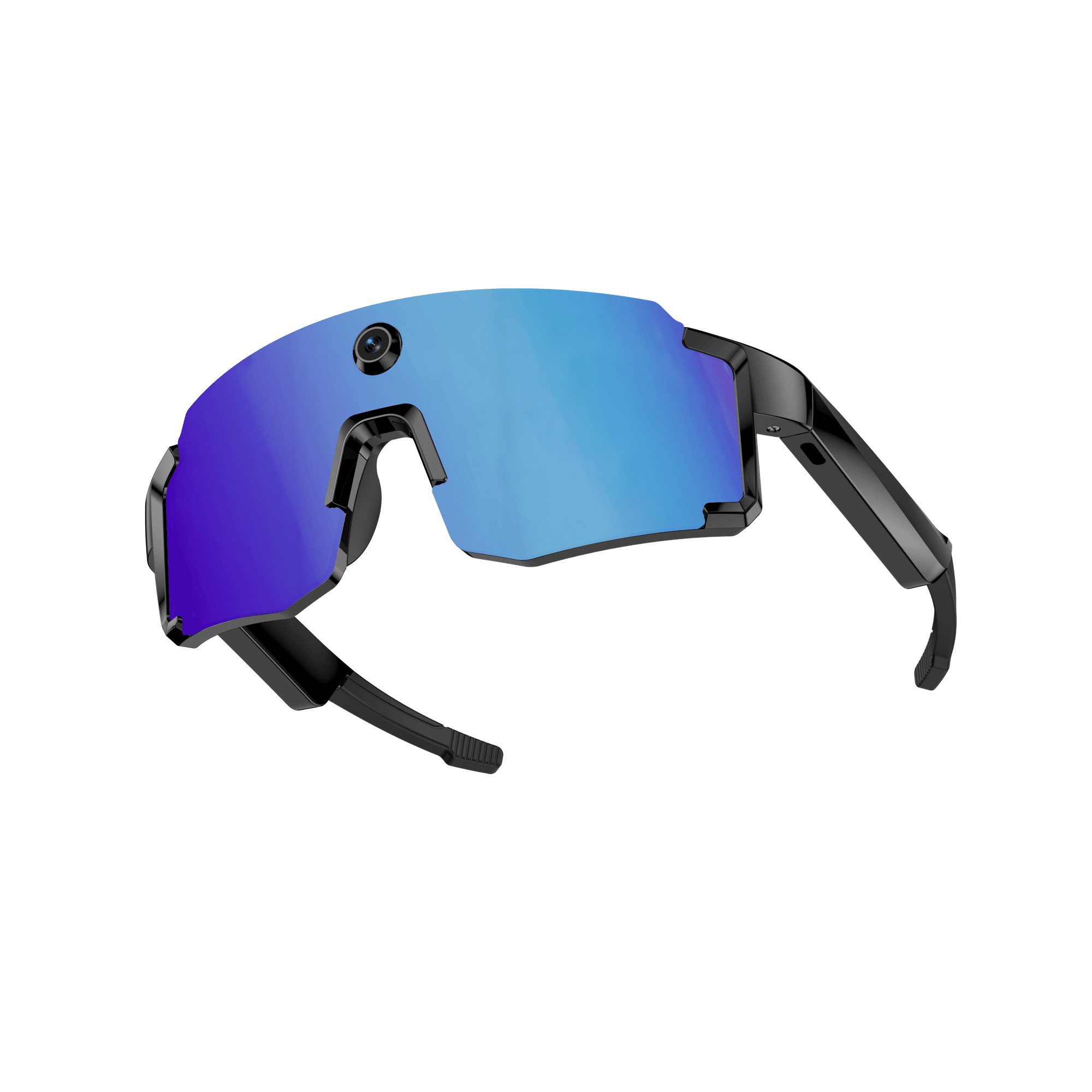 OXIVUE M14$149 at checkout | |
|---|---|---|---|
| Camera | 8 MP | 8 MP | 8 MP |
| Weight | ~41 g | ~42 g | 52 g |
| Water rating | IP65 | — | IPX4 |
| Lenses | Sunglasses · Photochromic · Clear | Sunglasses · Photochromic · Clear | Fixed wrap shield · 4 colours |
| Translation | 40+ languages | 40+ languages | 139 languages |
| Visual AI | Yes | — | — |
| Onboard memory | — | — | 4 GB onboard |
From each frame’s product page. Every model: open-ear audio, Bluetooth 5.4, no subscription. Full spec table
What these frames won’t do
- No prescription lenses yet, on any model. If you need vision correction all day, these can't replace your glasses.
- No display. Nothing appears in your view; you hear answers and capture photos and video.
- Open-ear speakers leak some sound at high volume and won't block out a loud train or a windy road the way sealed earbuds do.
- Translation, music, calls and the assistant need your phone nearby and connected. Translation pauses after each sentence, and only you hear the translated audio; the other person reads the reply on your phone.
- M02C: IP65 resists dust and water jets, not immersion. No swimming, no saltwater.
- M08: no published water rating, so keep it out of heavy rain and spray.
- M14: one-piece shield, so the lens can't be swapped for clear or photochromic.
- M14: IPX4 covers splash, spray and rain only, and at 52 g it is heavier than the 41–42 g frames.
Check these before you order: see the warranty and refund policy.