Fishing · 2026
Sunglasses for fishing: cut the glare, keep them on, keep them dry
Sunglasses for fishing are chosen by glare control, fit under a hat brim, grip with wet hands and what the water rating really covers. This page gives you that checklist, then shows the two OXIVUE camera sunglasses, the M02C ($159) and M14 ($199), for an angler who also wants a camera and open-ear audio, and says plainly who should buy plain fishing sunglasses instead.
Still deciding? Get the M02C and M14 comparison in your inbox, with your new-customer price already applied.
One email with the comparison, one follow-up a few days later. Unsubscribe any time.
What fishing sunglasses have to do
Fishing puts a pair of sunglasses through a particular set of jobs: reduce the glare coming off the water, stay on your face when you lean, cast or net a fish, survive wet hands and spray, and remain comfortable for hours under a cap. A pair that does the first job and fails the others spends the day in your pocket.
Five questions sort most pairs quickly. How does the lens deal with glare off water? Does the pair sit under your usual hat? Does it stay in place when your face is wet? What does the water rating actually cover? And do you want anything else in the frame, such as a camera or speakers? The rest of this page takes them in order.
Glare, tint and polarisation
Light bouncing off a flat water surface is the main thing a fishing lens is bought for. The usual answer is a polarised lens, which is built to cut that reflected glare. If your fishing depends on seeing into the water, such as sight fishing or reading the bottom in clear shallows, buy a pair whose maker states that the lens is polarised, and check it.
Tint is the other half. A darker lens helps in strong light and a lighter one helps on grey days and at the edges of the day. Maker descriptions of which tint suits which water are claims, so ask what a pair is designed for and compare it with where you fish.
Be clear about our own position. We do not publish a polarisation, UV or impact figure for any OXIVUE lens, and this guide makes no claim about them. The M14 has a fixed one-piece shield in smoke, blue mirror, ice-blue mirror or sunset-red mirror. The M02C takes interchangeable lenses, and the product page shows which are in stock. Neither is sold as a polarised lens.
Fit, hat brims and wet hands
Fit decides whether a pair gets worn. Try it with the cap or hat you actually fish in, because the top edge of the frame and the arms meet the hat in a way a bare-headed fitting never shows. Then check the things that change when you are wet.
- Grip at the nose and arms. Sweat and spray make a smooth pair slide. Nose pads and arm tips that stay grippy matter more than any line on the box.
- Looking down. You spend a lot of a fishing day with your head tipped forward, rigging, watching a float or checking a line. A pair that slips when you look down will slip all day.
- Wet-hand handling. You will take them off and put them back on with slippery fingers. A frame you can hold firmly is a frame you do not drop into the water.
- A strap. A retainer strap is an inexpensive precaution for any pair, but check that the arms can take one. We do not sell a strap for ours.
OXIVUE has one size per model, and no smaller or women’s-specific version. If your usual sunglasses are noticeably smaller than the M14’s 150 x 56 x 169 mm, measure them against it before you order. The comparison page lists every frame side by side.
Splash, rain and what a rating means
Fishing is wet, so a rating you understand is worth having. A rating such as IPX4 or IP65 tells you what a pair was tested against. It is not a statement that the pair is waterproof, and none of ours is. Our guide to whether smart glasses are waterproof goes through the letters.
- IPX4 covers splashes from any direction. That is rain, spray off an oar and wet hands. It does not cover immersion.
- IP65 covers dust and jets of water. It is a step up from splashes, and it still does not cover immersion.
- No published rating means we cannot tell you what the pair survives, and you should keep it away from water.
The practical rule is simple: wipe the pair after use, let it dry, and never dunk it or hold it under a tap. A pair that goes over the side is a lost pair. This guide is about freshwater days; we do not recommend our frames for saltwater and publish no saltwater rating.
Where OXIVUE frames fit a day on the water
OXIVUE makes AI camera sunglasses with open-ear audio, not dedicated fishing sunglasses. Two of our frames suit a day on freshwater, and they are different enough that the choice is easy.
| M02C | M14 | |
|---|---|---|
| List price | $159 | $199 |
| Weight | About 41 g | 52 g |
| Shape | Two-lens frame | One-piece wrap-around shield, 150 x 56 x 169 mm |
| Water rating | IP65 (dust and water jets, not immersion) | IPX4 (splash and rain, not immersion) |
| Lens | Interchangeable | Fixed shield, four colourways |
| Listening / calls | 7 h / 4 h | 4 h / 7 h |
| Camera | 8 MP | 8 MP Sony IMX219 |
Prices are list prices, checked 2026-11-21. For a long day on a bank or a lake with a lot of listening, the M02C is the easier pick: it is lighter, it carries the higher water rating, and it listens for longer. The M14 is for the angler who wants a wrap shape that stays put in wind on a boat, and who accepts 4 hours of listening and a lens that cannot be swapped. The M08 family has no published water rating, so for a day beside water we would start with the M02C.
For the camera side of the day, our smart glasses for fishing guide covers what capture looks like on the water, and the sports sunglasses with camera guide explains the wrap shield.
When to buy plain fishing sunglasses instead
Skip our frames and buy dedicated fishing sunglasses if any of these is true. It will save you money and a disappointing day.
- You sight fish or read water. Glare control is the job, and we publish no polarisation figure.
- You fish salt water or from a boat that takes spray all day. Our ratings are for splash, rain and jets, not for that.
- You want the lightest possible pair. A frame that carries a camera, speakers and a battery always weighs more than one that carries none.
- You need prescription lenses. No OXIVUE frame takes them.
- You expect a lens made for one specific condition. We make no claim about lens performance beyond the shape and tint on each product page.
If you are shopping for someone else, the sunglasses with camera guide sorts the whole range by what each frame is for.
Camera, sound and the people beside you
The camera on both frames is an 8 MP sensor in the front of the frame, and capture starts only with a touch on the temple. It records the people near you as well as the water, so tell the person in the next boat or on the next peg before you film, follow the rules of the place you fish and stop when you are asked. Photos and video go to your phone through the free companion app.
The speakers sit beside your ears and leave them open, so you can still hear the water, an engine and the person next to you. Keep the volume low enough to do that. These glasses do not track weather, depth or anything on a fish finder, so your phone and your usual tools keep those jobs.
Shipping, refunds and warranty.Free shipping from $99, so every single pair qualifies; below that it is $9.99. US orders typically arrive in 5–9 business days and international orders in 9–14 business days after shipment, with import VAT or duties outside the US paid by the recipient. No refunds except transit damage (replaced or refunded); faults are repaired or replaced under the 2-year warranty; change of mind and unmet expectations are not refundable. See the shipping policy, return policy and warranty, or ask on the support page.
Frequently asked questions
What should I look for in sunglasses for fishing?
Look for a pair that cuts glare, stays put and copes with water. That means a lens made for glare off water, a fit that works under a hat brim, grip that survives wet hands and sweat, and a splash or rain rating you understand. Judge any pair by how it behaves on the bank or boat, not by the label. Ours are camera sunglasses, so they suit an angler who also wants a camera.
Are OXIVUE sunglasses polarised for fishing?
We do not publish a polarisation figure for any OXIVUE lens, so we make no such claim. Polarised lenses are the usual choice for cutting glare off water, and if reading the water matters to you, such as sight fishing, buy a pair that the maker states is polarised. Our M02C and M14 suit an angler who wants a camera and open-ear audio and accepts that.
Can I wear the OXIVUE M02C or M14 in the rain or spray?
Yes, within their ratings. The M02C is rated IP65, which covers dust and jets of water, and the M14 is rated IPX4, which covers splashes from any direction. Neither is waterproof, and neither should be submerged or dropped in the water. The M08 has no published water rating, so for a day beside water we point you to the M02C first.
Which OXIVUE frame is better for fishing, the M02C or the M14?
For most anglers the M02C: it weighs about 41 g, has the higher IP65 rating, and gives 7 hours of listening. The M14 is a 52 g one-piece wrap shield with an IPX4 rating, 4 hours of listening and a fixed shield in four colours, so choose it if you want the wrap shape on a windy boat. Both have an 8 MP camera and open-ear speakers.
Will open-ear speakers let me hear the water and other anglers?
Mostly, yes. Open-ear speakers sit beside your ears instead of inside them, so you can hear the water, a boat engine or a person speaking next to you. Keep the volume low enough to do that, and take the glasses off or turn audio off when you need full attention, such as on a slippery bank. Strong wind is loud on any open-ear pair, ours included.
Are OXIVUE glasses good for saltwater fishing?
We do not recommend them for saltwater and publish no saltwater rating. The M02C and M14 are rated only for dust, rain, jets or splashes, and neither is waterproof. Salt spray is a harsher test than the ratings describe. If you fish salt water, treat our frames as a camera and audio option for a dry shore day and use dedicated fishing sunglasses on the boat.
OXIVUE frames side by side
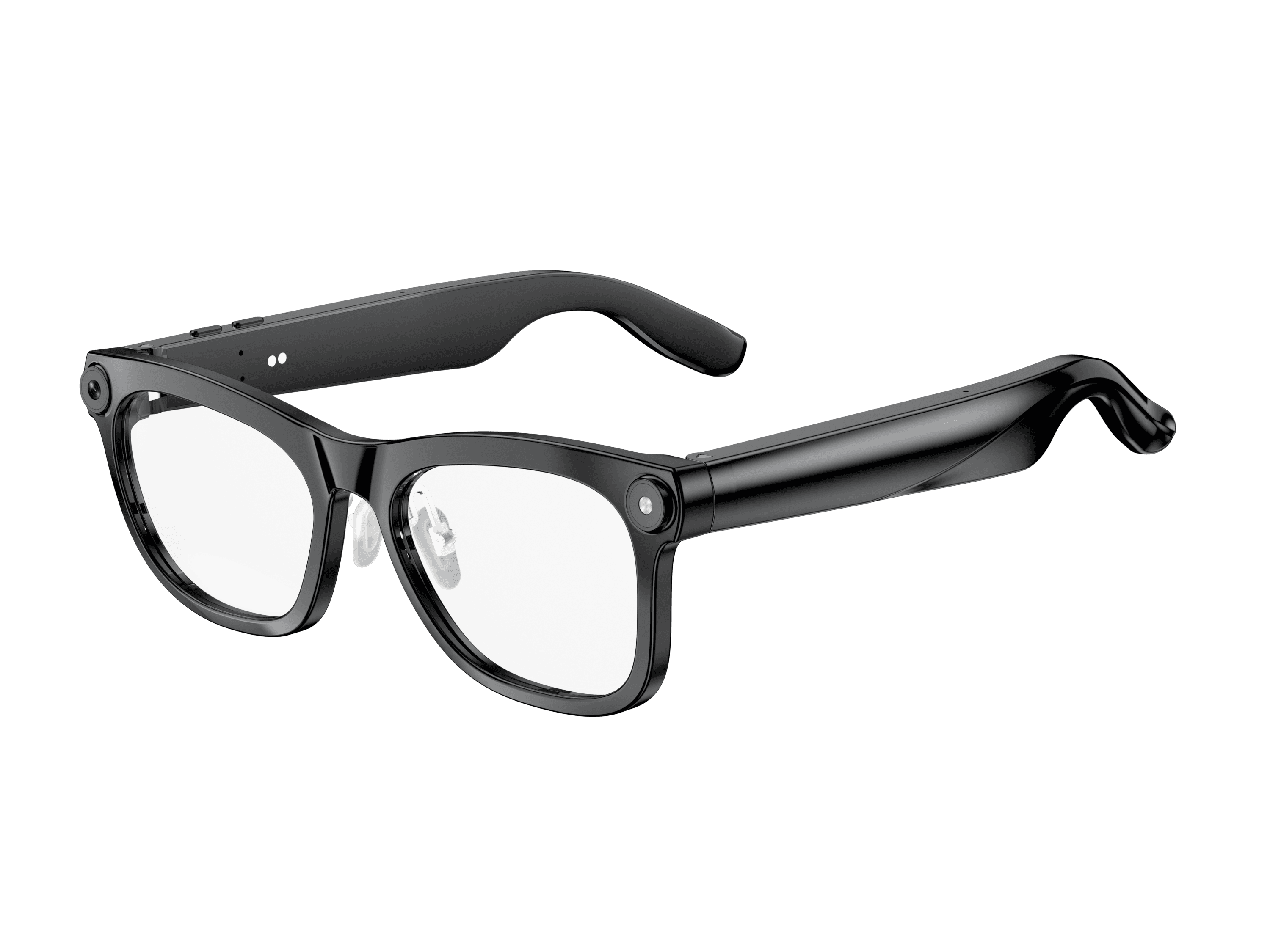 OXIVUE M02C$109 at checkout | 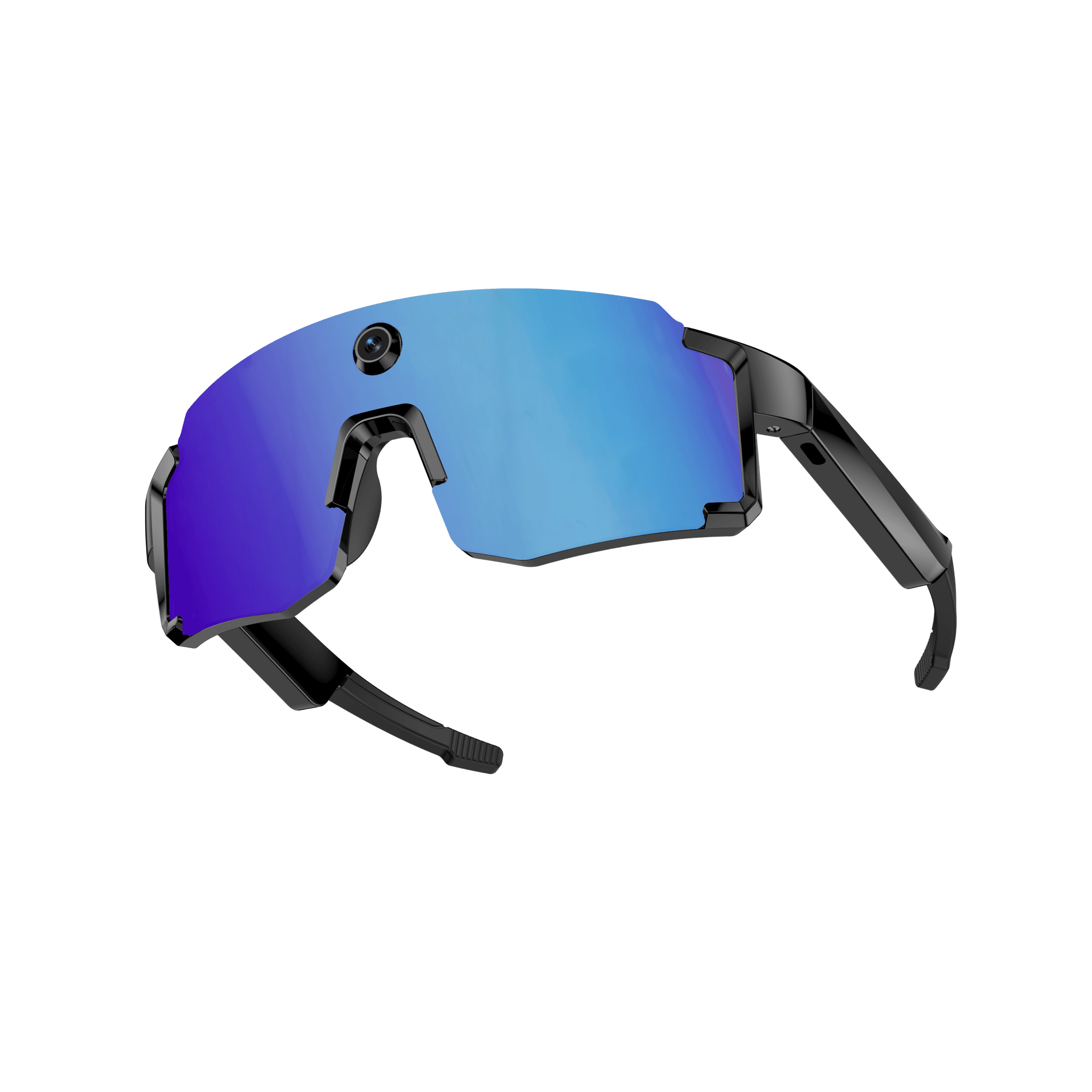 OXIVUE M14$149 at checkout | |
|---|---|---|
| Camera | 8 MP | 8 MP |
| Weight | ~41 g | 52 g |
| Water rating | IP65 | IPX4 |
| Lenses | Sunglasses · Photochromic · Clear | Fixed wrap shield · 4 colours |
| Translation | 40+ languages | 139 languages |
| Visual AI | Yes | — |
| Onboard memory | — | 4 GB onboard |
From each frame’s product page. Every model: open-ear audio, Bluetooth 5.4, no subscription. Full spec table
What these frames won’t do
- No prescription lenses yet, on any model. If you need vision correction all day, these can't replace your glasses.
- No display. Nothing appears in your view; you hear answers and capture photos and video.
- Open-ear speakers leak some sound at high volume and won't block out a loud train or a windy road the way sealed earbuds do.
- Translation, music, calls and the assistant need your phone nearby and connected. Translation pauses after each sentence, and only you hear the translated audio; the other person reads the reply on your phone.
- M02C: IP65 resists dust and water jets, not immersion. No swimming, no saltwater.
- M14: one-piece shield, so the lens can't be swapped for clear or photochromic.
- M14: IPX4 covers splash, spray and rain only, and at 52 g it is heavier than the 41–42 g frames.
Check these before you order: see the warranty and refund policy.