Hearing glasses · 2026
Hearing aid glasses: which are real hearing aids, and which are audio glasses
A search for hearing aid glasses turns up three different products: over-the-counter hearing glasses such as Nuance Audio, smart glasses with a speech feature such as Ray-Ban Meta, and audio glasses that play sound through open-ear speakers or bone conduction. This guide separates them using FDA’s own pages, the makers’ pages and HearingTracker’s reviews, all checked on October 31, 2026, and says plainly where OXIVUE sits: our frames are audio glasses, not hearing aids.
Still deciding? Get the M02C, M08 and M08C comparison in your inbox, with your new-customer price already applied.
One email with the comparison, one follow-up a few days later. Unsubscribe any time.
1. Three products share the search “hearing aid glasses”
Of the three, the OTC hearing glasses are the ones sold as hearing aids in the sources we checked. Most of the top results we recorded for this search on October 31, 2026 were about Nuance Audio, over-the-counter (OTC) hearing glasses that HearingTracker reports received FDA clearance. The other two are smart glasses with a speech feature, such as Ray-Ban Meta, and audio glasses that play sound through open-ear speakers or bone conduction. HearingTracker says Ray-Ban Meta glasses are not hearing aids, and no FDA page we read treats bone conduction audio glasses as one.
The line between them is regulatory. FDA describes a hearing aid as a medical device intended to help with hearing loss and worn behind or within the ear canal (checked October 31, 2026; the page is marked current as of May 3, 2023). Its over-the-counter category is for adults 18 and older with perceived mild to moderate hearing loss, is “NOT for the treatment of severe or profound hearing loss”, and can be bought without a prescription, online or in stores. Prescription hearing aids are available only through a licensed hearing health care professional and, per FDA, may be appropriate for all levels of hearing loss and all ages.
FDA’s separate consumer update on sound amplifiers (checked October 31, 2026; current as of May 4, 2023) says personal sound amplification products are “regulated as consumer electronics and not medical devices”, are meant for people with normal hearing, and “are not alternatives to hearing aids”. So the useful test for any pair of glasses is whether its maker sells it as a hearing aid, and for whom. The table sorts the options on that test.
| Kind | Example | What the source says | Sold as a hearing aid? | Price (checked October 31, 2026) |
|---|---|---|---|---|
| Prescription hearing aids | Fitted by a licensed professional | FDA: available only through a licensed hearing health care professional; may be appropriate for all levels of hearing loss and all ages | Yes | Not checked; ask the provider |
| OTC hearing glasses | Nuance Audio | Maker: “designed for those with mild to moderate hearing loss” | Yes: HearingTracker describes it as FDA-cleared OTC hearing glasses | From $699 on nuanceaudio.com |
| Smart glasses with a speech feature | Ray-Ban Meta (Gen 2) | HearingTracker: not hearing aids and not designed to compensate for hearing loss | No | From $379 on meta.com |
| Bone conduction audio glasses | Various audio brands | FDA’s list of hearing aid styles does not name bone conduction | Not described as one in the sources we read | Check the maker’s site |
| Open-ear audio glasses | OXIVUE M08 | Open-ear directional speakers and microphones for music and calls | No | $99 at checkout, one pair |
A fourth group, AR glasses that show live captions on a display, appears on HearingTracker’s hearing glasses index (checked October 31, 2026). It is a different technology again, and none of the OXIVUE frames in this guide has a display.
2. OTC hearing glasses: what Nuance Audio is and is not
Nuance Audio is the product in this guide that its maker sells as hearing glasses. The maker’s own pages (checked October 31, 2026) describe “an innovative assistive listening device designed for those with mild to moderate hearing loss”, with speakers built into the frames, and sell it with prescription or Transitions lenses in square and Panthos shapes. Every model listed carries a “From” price of $699.00. A phone app lets you adjust volume and reduce background noise, and the glasses are sold online and in stores. The page text we read does not state battery life, microphone count or FDA wording (a footer link points to a battery page we did not read), so those come from the HearingTracker review below.
HearingTracker’s review, written by an audiologist and updated September 21, 2026, describes the glasses as FDA-cleared preset OTC devices and gives the strengths and limits in plain terms. Paraphrased:
- Who it suits.Adults with mild to moderate hearing difficulties who also wear, or plan to wear, prescription glasses and are comfortable using a smartphone app, per the review’s verdict.
- Battery.The review reports Nuance’s claim of about 8 hours and gives 6 to 8 hours under normal use, and lists the glasses as “not really an all-day solution”.
- Sound. Six microphones. Preset programs rather than a fitting personalised to a hearing test, reduced speech benefit in noisy settings, and larger head sizes can reduce the gain.
- Limits the review reports. No Bluetooth audio streaming or hands-free calls, and an IPX4 water rating, so care is needed around water.
FDA says that if you suspect more severe or profound hearing loss than the OTC category covers, you should consult a licensed hearing health care professional. FDA’s OTC page also links an explainer on “FDA Registered” and “FDA Certified” statements, which it says may be misleading, and which is worth reading before you trust any listing that uses them.
3. Smart glasses with a speech feature: Ray-Ban Meta
Ray-Ban Meta glasses are not hearing aids, according to HearingTracker. Its article on Ray-Ban Meta (Gen 2) in lab testing (checked October 31, 2026; the page shows an editor’s update from July 2026 and no named author or original date) says the glasses are not hearing aids and were not designed to compensate for hearing loss. It describes a speech-enhancement feature called Conversation Focus and calls the directional microphones “genuinely impressive”, but concludes the glasses are best suited to people at the very low end of needing hearing help and still fall below good-quality OTC and prescription hearing aids. Its July 2026 update reports that Meta has begun limiting use of that feature, so check Meta’s help pages for the terms that apply to you.
Meta’s Ray-Ban Meta (Gen 2) product page (checked October 31, 2026) lists the glasses from $379, and the page text as fetched does not mention hearing aids or hearing features. Prices differ by style and lens, so “from” is all we confirmed.
4. Bone conduction hearing glasses
No FDA page we read treats bone conduction glasses as hearing aids. FDA’s OTC page describes OTC hearing aids as air-conduction devices that need no implant or surgery, and its list of hearing aid styles (behind-the-ear, receiver-in-canal, in-the-ear, in-the-canal and completely-in-the-canal, current as of November 14, 2022) does not name bone conduction (both checked October 31, 2026). We found no FDA statement about bone conduction audio glasses either way. Bone conduction does exist in medical hearing aids in another form: HearingTracker’s page on bone-anchored hearing aids (undated, checked October 31, 2026) describes a surgically implanted device, which is a different product from a consumer audio frame.
That does not make them bad products. It means they should be judged as audio glasses: how much sound leaks, how the bass compares, whether they are comfortable for a day, and how they cope with wind. Our bone conduction sunglasses vs open-ear speakers guide compares the two designs, and headphone glasses covers the wider audio-glasses choice. If you are buying because of hearing loss, a hearing health professional is the right first call.
5. Open-ear audio glasses, and where OXIVUE fits
OXIVUE publishes this guide and sells open-ear audio glasses, so read this section with that in mind. Our frames are not hearing aids and are not a substitute for one. The M08 is $99 at checkout for a single pair. It weighs about 42 g and has open-ear directional speakers and microphones, listed at 7 hours of listening and 4 hours of calls, plus an 8 MP camera that starts a capture only when you touch the temple. Ask before you record other people. It comes with a sun, photochromic or clear lens.
What it does not have matters here. There is no display, so nothing appears in your field of view. None of our frames take prescription lenses. OXIVUE publishes no hearing-loss feature for any frame. If you wear a behind-the-ear hearing aid, the temple arm rests on the same ear, so try the fit before relying on the glasses; our smart glasses for seniors guide says more. For music and calls that leave your ears open to the room, they work as audio glasses; see glasses with speakers for what open-ear sound is like, or smart glasses vs earbuds if you are weighing them against earbuds.
The M02C($109 at checkout) adds a voice-activated visual assistant that can describe what you are looking at. OXIVUE does not publish which AI model powers the M02C’s voice-activated visual assistant, and it is not a medical or assistive device. Our guide for blind and low-vision users says more. Compare every model on the comparison page.
6. How to choose, and when to see a professional
- If you think your hearing has changed, see a hearing health professional before buying any glasses. FDA advises seeing a doctor, preferably an ENT, for example for ear pain, drainage, a sudden change in hearing, being really dizzy or ringing in only one ear, and consulting a licensed hearing health care professional if you suspect severe or profound loss.
- If you have perceived mild to moderate loss and already wear, or plan to wear, prescription glasses,Nuance Audio’s maker says its glasses are designed for mild to moderate hearing loss, and HearingTracker’s verdict points to that group (both checked October 31, 2026). Check the battery figure, the app, the lens options and the seller’s own terms, since the review lists battery life and the lack of Bluetooth streaming among the limits.
- If you want music, calls, a camera or an assistant and do not have hearing loss, audio or smart glasses are the category, and the hearing question does not come into it. Pick on weight, battery, lenses and price.
- If a listing says “hearing aid glasses” and gives no maker, no FDA wording and no lens or battery figures,treat it with caution and read FDA’s note on “FDA registered” claims first. For older readers shopping for a family member, our smart glasses for seniors guide covers what to check on usability.
Shipping, refunds and warranty. Free shipping from $99. US orders typically arrive in 5–9 business days. International orders take 9–14 business days after shipment. Import VAT or duties outside the US are paid by the recipient. No refunds except transit damage (replaced or refunded); faults are repaired or replaced under the 2-year warranty; change of mind and unmet expectations are not refundable. None of our frames take prescription lenses. Read the refund policy, see the shipping policy or the warranty page.
Frequently asked questions
What does a hearing aid do for you?
A hearing aid is a medical device meant to help with hearing loss, and FDA says it is worn behind or within the ear canal (checked October 31, 2026). FDA's consumer update on hearing aids and personal sound amplifiers adds that hearing aids are intended for impaired hearing, while personal sound amplification products are regulated as consumer electronics and meant for people with normal hearing. Glasses can be sold as hearing aids, as Nuance Audio's are (HearingTracker describes them as FDA-cleared OTC devices), but open-ear audio glasses, including OXIVUE's, are not hearing aids.
How much does Nuance Audio cost?
From $699, according to Nuance Audio's own site (checked October 31, 2026), where every listed model carries a "From" price of $699.00. The page lists square and Panthos shapes in several colours, with prescription or Transitions lenses. HearingTracker's review, updated September 21, 2026, says they retail for $699 with prescription lenses and that lens upgrades cost extra. Retailer prices and lens options can differ, so check the maker's current listing. OXIVUE's frames are audio glasses, not an alternative to a hearing aid.
Are Ray-Ban Meta glasses hearing aids?
No. HearingTracker's article on Ray-Ban Meta (Gen 2) in lab testing (checked October 31, 2026) says the glasses are not hearing aids and were not designed to compensate for hearing loss. It describes a speech-enhancement feature called Conversation Focus, says the glasses are best suited to people at the very low end of needing hearing help, and finds them below good-quality over-the-counter and prescription hearing aids. Meta's own Ray-Ban Meta (Gen 2) page (checked October 31, 2026) lists them from $379 and, as fetched, does not mention hearing aids.
Do bone conduction glasses work as hearing glasses?
No FDA page we read treats bone conduction glasses as hearing aids. FDA's page on over-the-counter hearing aids describes them as air-conduction devices, and its list of hearing aid styles does not name bone conduction (both checked October 31, 2026). We make no claim about whether bone conduction glasses help anyone's hearing. HearingTracker's page on bone-anchored hearing aids describes a surgically implanted product, a different category from consumer audio glasses. Judge bone conduction glasses on sound, comfort and leak, and if hearing loss is the reason you are choosing, ask a hearing health professional first.
Do I need a prescription or a hearing test to buy hearing glasses?
Not a prescription, for over-the-counter hearing aids. FDA says they are intended for people 18 and older with perceived mild to moderate hearing loss and are sold without a prescription or a licensed professional's involvement, in stores or online (checked October 31, 2026). Nuance Audio's page links an online screening test but does not say one is required. FDA advises seeing a doctor, preferably an ENT, for example for ear pain, drainage, a sudden change in hearing, being really dizzy or ringing in one ear.
Are OXIVUE glasses hearing aids?
No. OXIVUE frames are open-ear audio glasses: directional speakers and microphones for music and calls, plus a camera that starts only when you touch the temple. They have no display, take no prescription lenses, and are neither hearing aids nor a substitute for one. A single pair of the M08 is $99 at checkout and the M02C is $109.
Can blind people use AI glasses?
It depends on the glasses and on what you need them to do. The OXIVUE M02C ($109 at checkout) has a voice-activated visual assistant that can describe what you are looking at, but it is not a medical or assistive device and needs the paired phone and companion app. OXIVUE does not publish which AI model powers the M02C's voice-activated visual assistant. Our guide for blind and low-vision users sets out what we do and do not claim.
OXIVUE frames side by side
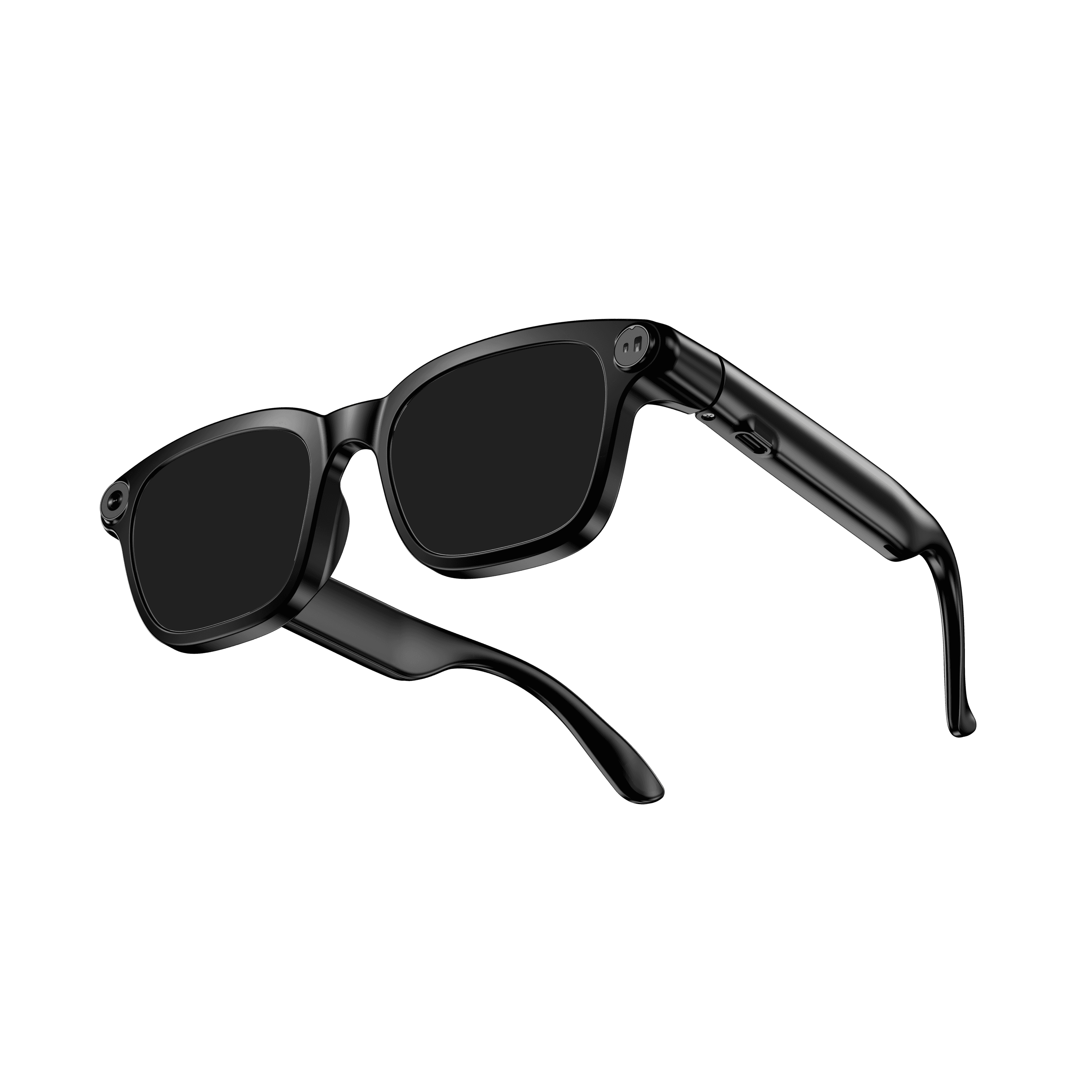 OXIVUE M08$99 at checkout | 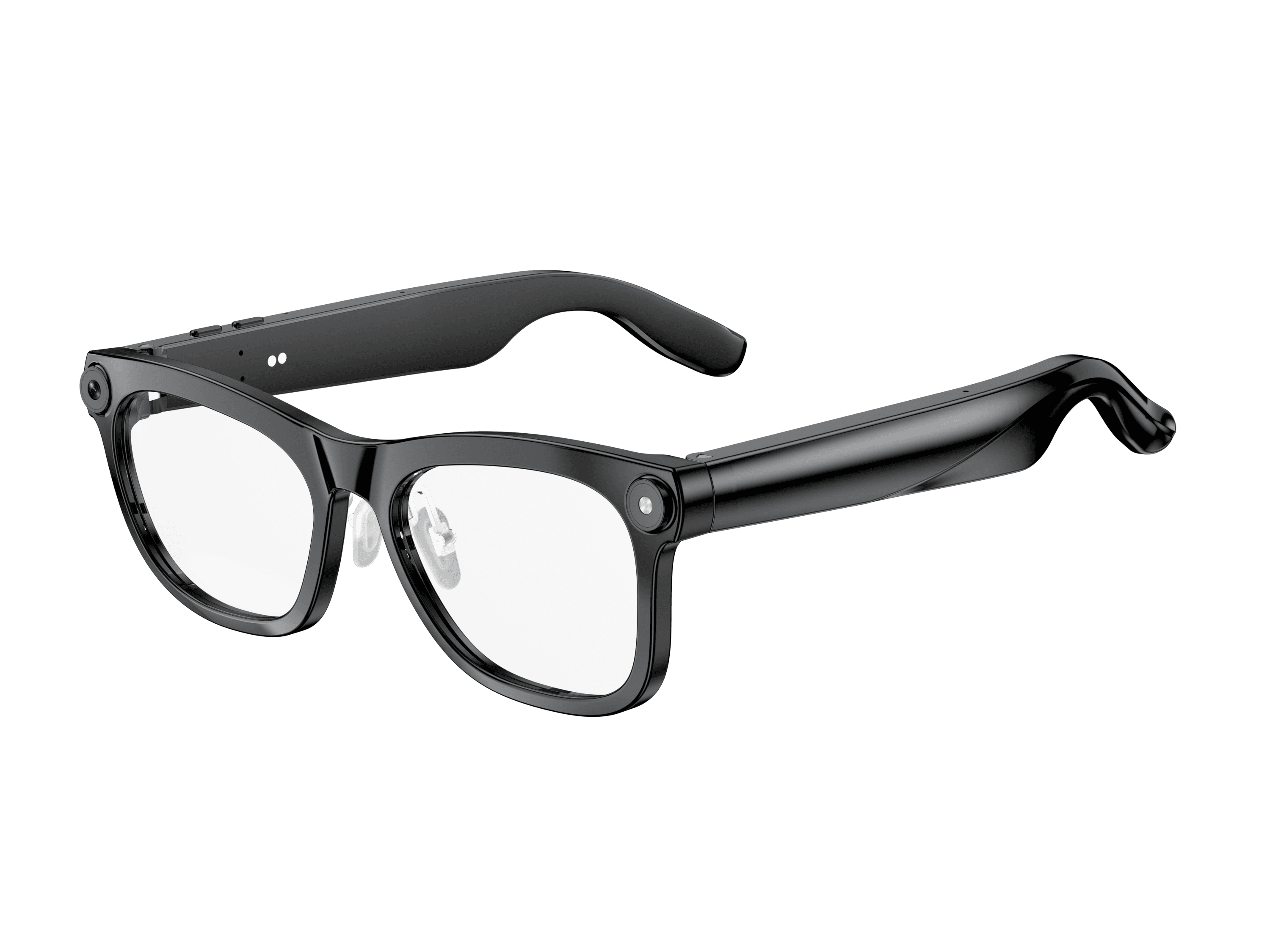 OXIVUE M02C$109 at checkout | 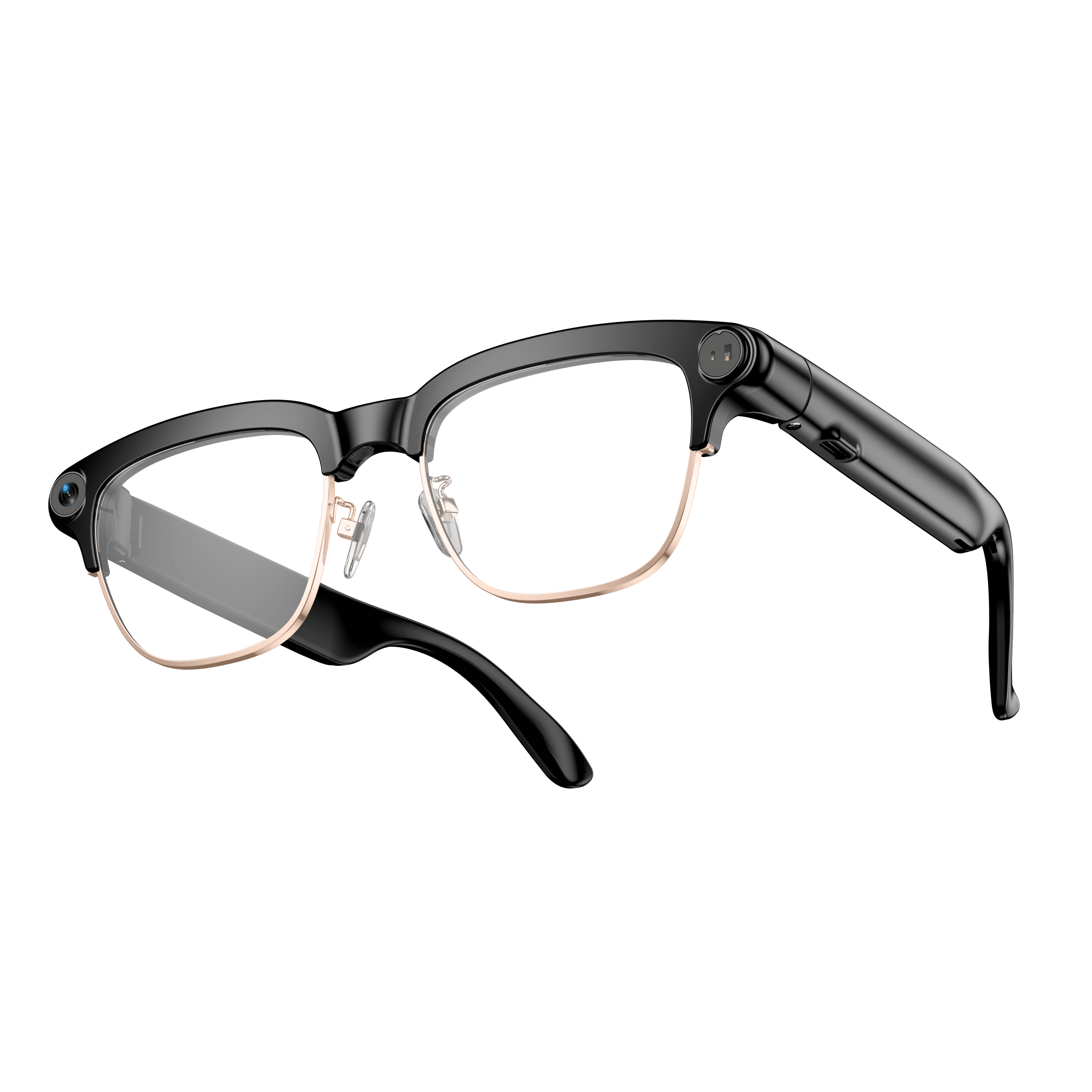 OXIVUE M08C$119 at checkout | |
|---|---|---|---|
| Camera | 8 MP | 8 MP | 8 MP |
| Weight | ~42 g | ~41 g | ~42 g |
| Water rating | — | IP65 | — |
| Lenses | Sunglasses · Photochromic · Clear | Sunglasses · Photochromic · Clear | Sunglasses · Photochromic · Clear |
| Translation | 40+ languages | 40+ languages | 40+ languages |
| Visual AI | — | Yes | — |
| Metal trim | — | — | Gold · Silver |
From each frame’s product page. Every model: open-ear audio, Bluetooth 5.4, no subscription. Full spec table
What these frames won’t do
- No prescription lenses yet, on any model. If you need vision correction all day, these can't replace your glasses.
- No display. Nothing appears in your view; you hear answers and capture photos and video.
- Open-ear speakers leak some sound at high volume and won't block out a loud train or a windy road the way sealed earbuds do.
- Translation, music, calls and the assistant need your phone nearby and connected. Translation pauses after each sentence, and only you hear the translated audio; the other person reads the reply on your phone.
- M08: no published water rating, so keep it out of heavy rain and spray.
Check these before you order: see the warranty and refund policy.